When does fashion stop being worn and start being watched ?
Today, fashion doesn’t only dress bodies, it occupies museum vitrines, theater stages, and white-cube galleries. A McQueen gown displayed under glass at the V&A, a Rick Owens look shown beneath chandeliers at the Musée de la Mode de la Ville de Paris: these juxtapositions reinforce a shift from utility to reverence. In recent years, it has acquired an expositional dimension that brings it closer to performance art. A fashion show is no longer just a runway presentation: it’s installation, scenography, manifesto. And when garments once designed for movement become still, preserved between marble walls, an inevitable question arises: is it still fashion, or has it become art?
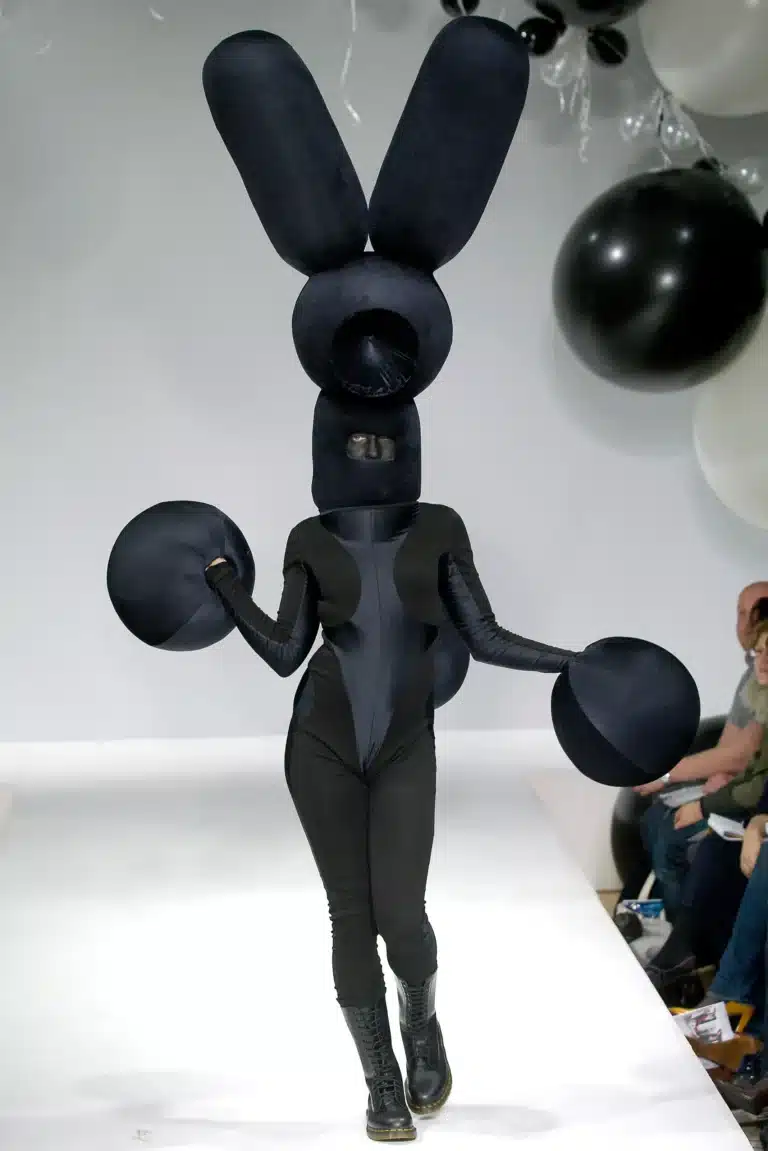
In 2007, Gareth Pugh had already shown multiple collections at London Fashion Week, yet the English designer claimed he hadn’t sold a single dress. His creations were conceived as runway experiments, often unwearable, more akin to sculpture or performance art. This is by no means new. The same has been said of Rei Kawakubo, Iris van Herpen, and Maison Margiela. However, considering big names such as Jean-Paul Gaultier have insisted that what they do is not art, it begs the question: well, is it?
While the origin of runway shows remains debated, their evolution reflects a shift from function to spectacle. Long before they existed, clothes were displayed in miniature form on fashion dolls during the late medieval period. By the late 19th and early 20th century, “fashion parades” were common in Parisian couture salons. Charles Frederick Worth is credited as one of the first designers to show creations on live models. Hence, the live performance element of fashion shows was born. The French term for model, mannequin, reflects that early function. By the 1920s, American retailers staged theatrical fashion shows with narrative structures. The first fashion week took place in 1943 in New York, offering alternatives to Parisian fashion during wartime. By the mid-1980s, the Big Four, New York, Milan, Paris, and London, were fully established.
We’ve come a long way from miniature mannequins, but the same can be said for art shows. Though “immersive” has become something of a buzzword, fashion’s embrace of theatrical and sensorial formats remains undeniable. As non-traditional art forms like installation, performance, or participatory art proliferate, fashion presentations have become increasingly conceptual.
Alexander McQueen’s SS01 show, Voss, was staged inside a massive display case. The audience could see the models, but the models couldn’t see out. Two decades later, Demna’s Winter 22 Balenciaga show, staged in a snowglobe, echoed this setup. From broken iPhone invitations to artificial snowstorms affecting the models’ walk, the presentation was performance art in itself. Given that performance is ephemeral, museums typically preserve its remains: documentation, costumes, props. Why not a Balenciaga dress?
John Galliano, for Margiela’s Artisanal FW22, created a full-blown theatrical piece, Cinema Inferno, in collaboration with British company Imitating the Dog. Gucci’s 2020 Cruise collection, My Body, My Choice, was shown at the Capitoline Museums in Rome, home to the Capitoline Wolf and Colossus of Constantine.
Recent exhibitions reinforce this performative drift. Paris has hosted two major retrospectives in the past few months: Balenciaga by Demna and Rick Owens’ Temple of Love. In Rome, Dolce & Gabbana unveiled a lavish exhibition. Leigh Bowery’s subversive designs have been spotlighted at the Tate Modern. Most notably, the Louvre, after 231 years, launched its first fashion exhibit: Louvre Couture, pairing 65 outfits and 30 accessories with works from its collection. Dior and Balenciaga juxtaposed with neoclassical sculptures and oil paintings, an encounter between textile and canvas, runway and museum wall. Meanwhile, the Met’s Superfine: Tailoring Black Style delves into fashion as a medium for identity and politics. The Costume Institute has staged these themed shows annually since 1971, well before Anna Wintour turned the Met Gala into a cultural juggernaut.
As the lines blur between fashion and fine art, it’s no surprise that many designers transition toward the latter. Take Martin Margiela, who graduated from Antwerp’s Royal Academy of Fine Arts in 1979. After leaving his label in 2009, he dedicated a decade to art, culminating in a 2021 exhibition at Lafayette Anticipations. Simply titled Martin Margiela, the show echoes his fashion ethos: minimalism, upcycling, and absence. Artworks included lacquered nails, dust paintings, a fur-covered bus stop, and blank spaces denoting missing pieces. Curator Rebecca Lamarche-Vadel described them as “ghosts,” emphasizing the idea of a show in flux.
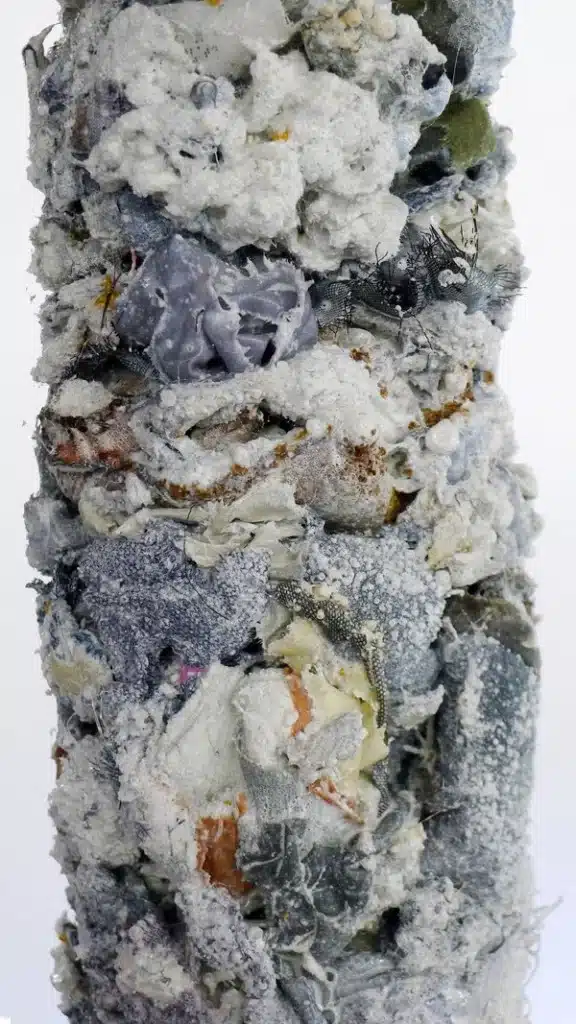
Helmut Lang followed a similar path. Leaving fashion in 2005, he turned to abstract sculpture, using repurposed materials from his destroyed fashion archive. His work has been exhibited across Europe and the US, including collaborations with Jenny Holzer and Louise Bourgeois.
For Rick Owens and Michèle Lamy, a home renovation project became a furniture line and art practice. Their brutalist, eclectic designs, crafted from plywood, alabaster, marble, and moose antlers, have been shown at the Musée d’Art Moderne, Centre Pompidou, and MOCA. “I always think of clothes architecturally,” said Owens in Office Magazine. “I like distorting the body; I like the body taking up space in a different way than it’s supposed to.”
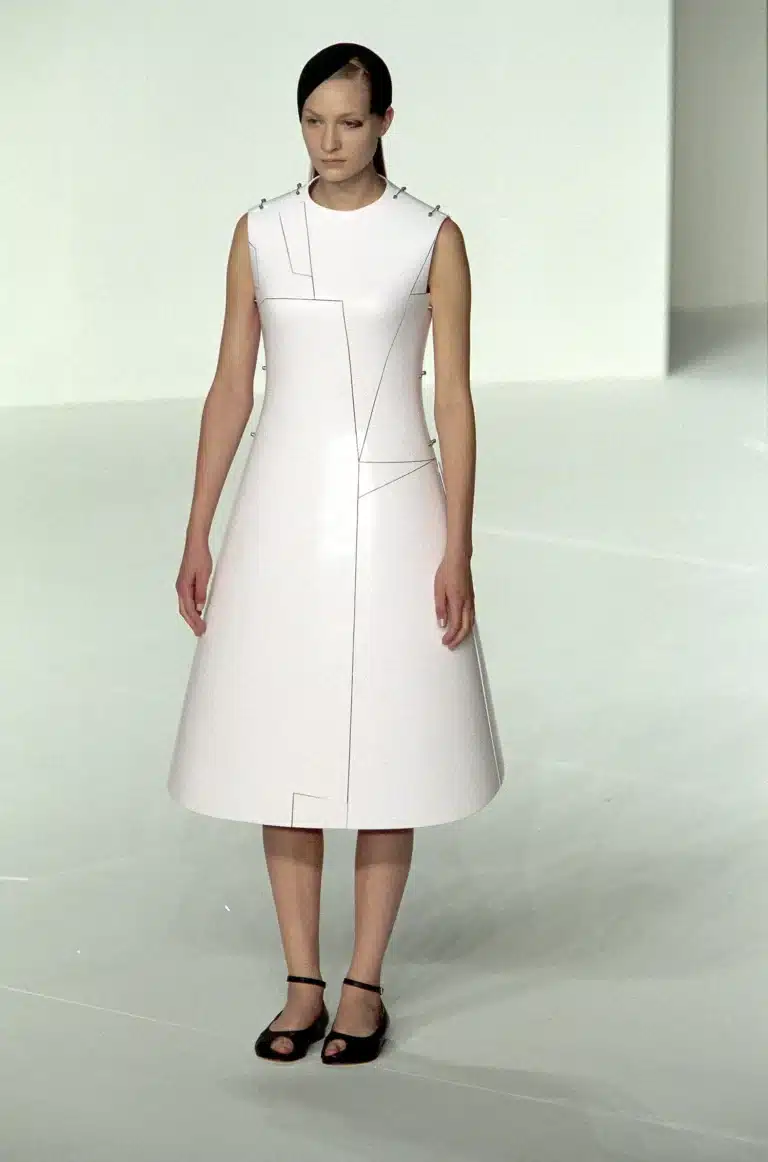
Hussein Chalayan, twice named British Designer of the Year, similarly fuses fashion, architecture, and technology. His shows often feature wearable structures: his FW98 collection saw models with cones fixed to their heads, faces and bodies covered in black, walking in a surreal, digital landscape of geometric shapes and distorted visuals. For his SS2000 collection, he introduced a remote-controlled dress, and in his FW2000 show, collapsible furniture-as-garment. Since the 1990s, Chalayan has exhibited in museums and biennales, often working across film, installation, and teaching.
Were these designers using fashion as a stepping stone, or will they return to it? Some, like Stephen Sprouse, Vivienne Westwood, Karl Lagerfeld, Issey Miyake, and Kenzo, moved adjacent to the art world but never fully left fashion. Perhaps, as Lamy put it, “Architecture, clothing, furniture, it’s all the same.”
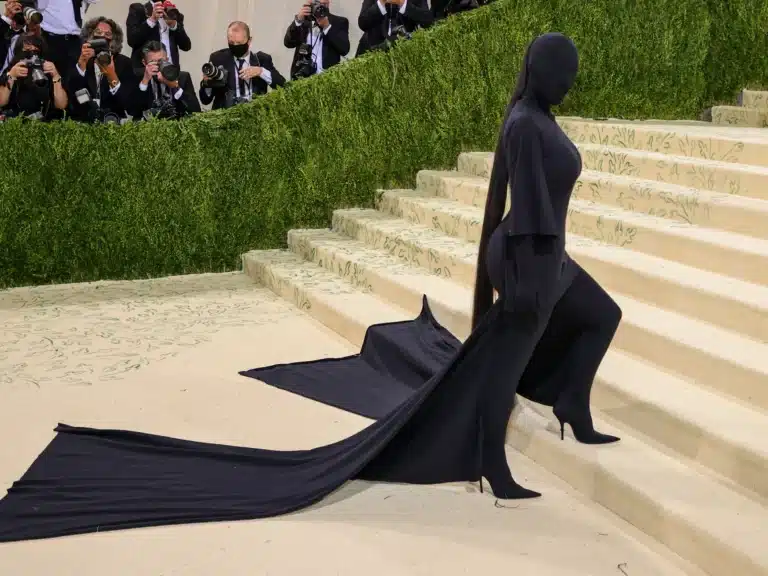
Returning to fashion as a live performance, one might argue the Met Gala can be seen as a fashion show within a museum, an attempt to elevate the ephemeral to the status of art. Not everyone agrees. Tom Ford, in a conversation with former New York Magazine editor Amy Odell for her book Anna: The Biography, called it “a costume party.” Marie Claire, in contrast, described it as the night where “haute couture intersects with history to create the ultimate cultural moment, all in the name of art.” Critics might see it as a parody, designed for memes more than memory.
But the question goes beyond fashion. Who decides what belongs in art history? Who said fashion must fade like trends? Helmut Lang’s archive may be gone, but it became sculpture. Demna’s old Balenciaga rejection email now hangs in his farewell exhibition.
In the digital age, we’re better equipped than ever to preserve what once felt fleeting. Whether worn or encased in glass, fashion that captures the spirit of its time deserves to be preserved. This desire to maintain is not without consequence. Yet as fashion enters the museum, something else happens: a freeze. In preserving garments, we may also be preserving distance. The body vanishes, replaced by an aura. What does this say about our time? Perhaps a desire to hold on, to archive, to elevate the fleeting into permanence, echoing a broader cultural instinct to sacralize experience rather than live it.
But maybe that’s the point: fashion, like memory, is not just meant to be worn, but to be witnessed, reinterpreted, re-seen. Again and again.
Credits
Written by Nacho Pajin @nachopajin