In summer, nothing can really be hidden anymore. Dressing becomes a confrontation.
The body is exposed, layers disappear and the garment becomes more direct, almost brutal. There is no distance left, no space to disappear behind structure or accumulation.
The paradox is that dressing is no longer about protection, it’s about revealing something.
But what does it mean to dress properly ?
Under the stifling heat of a scorching summer day, we reveal. We have to choose. Not in a moral sense. Not in a classical sense. “Proper” is not about correctness, but alignment. To dress properly is to be aligned with what you project. To construct a presence, to choose how you appear when nothing can be concealed.
It is not about what you wear, but the position you take through it.
Some need disappearance.
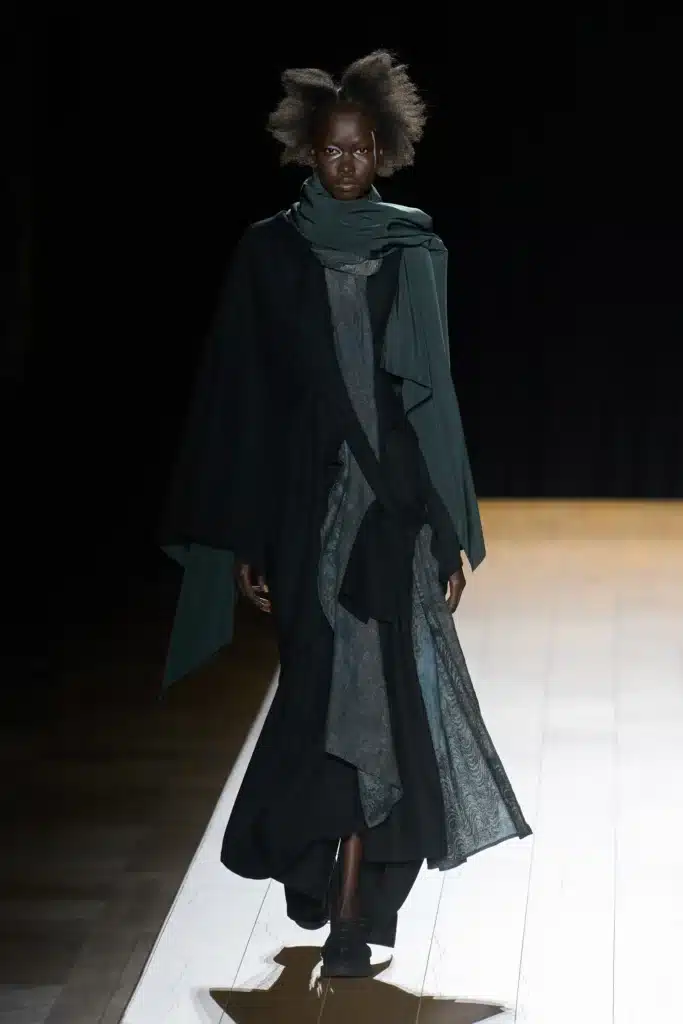
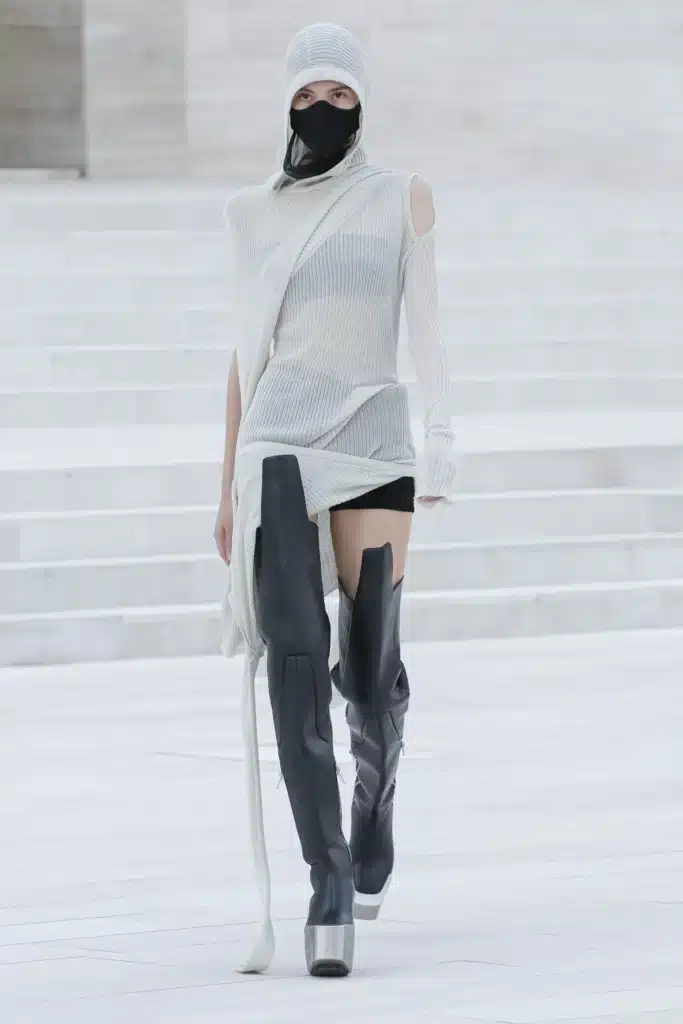
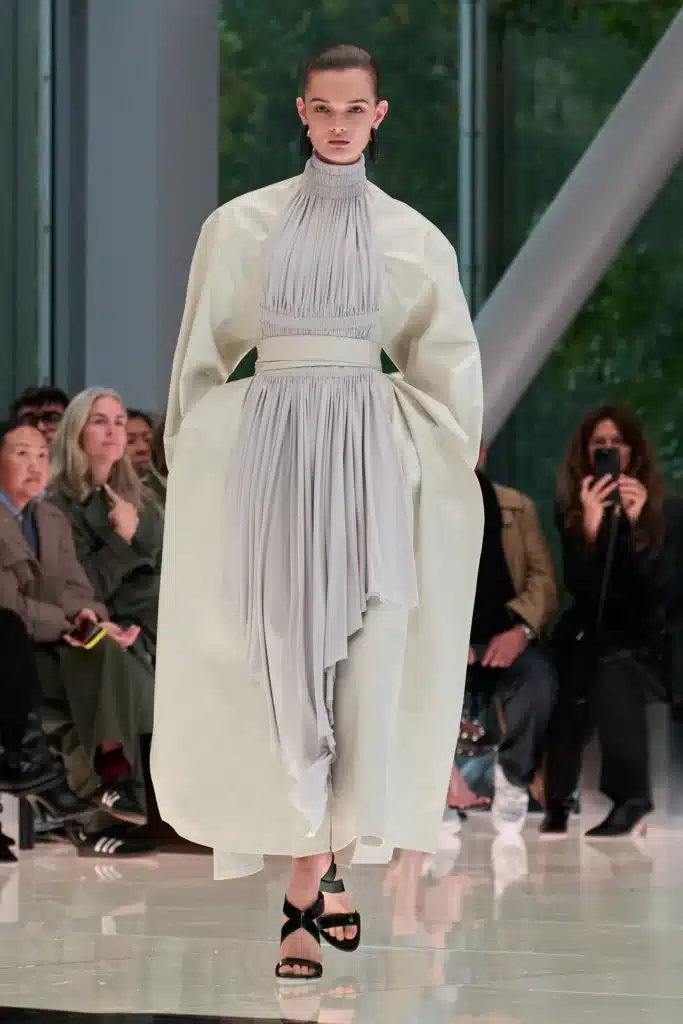
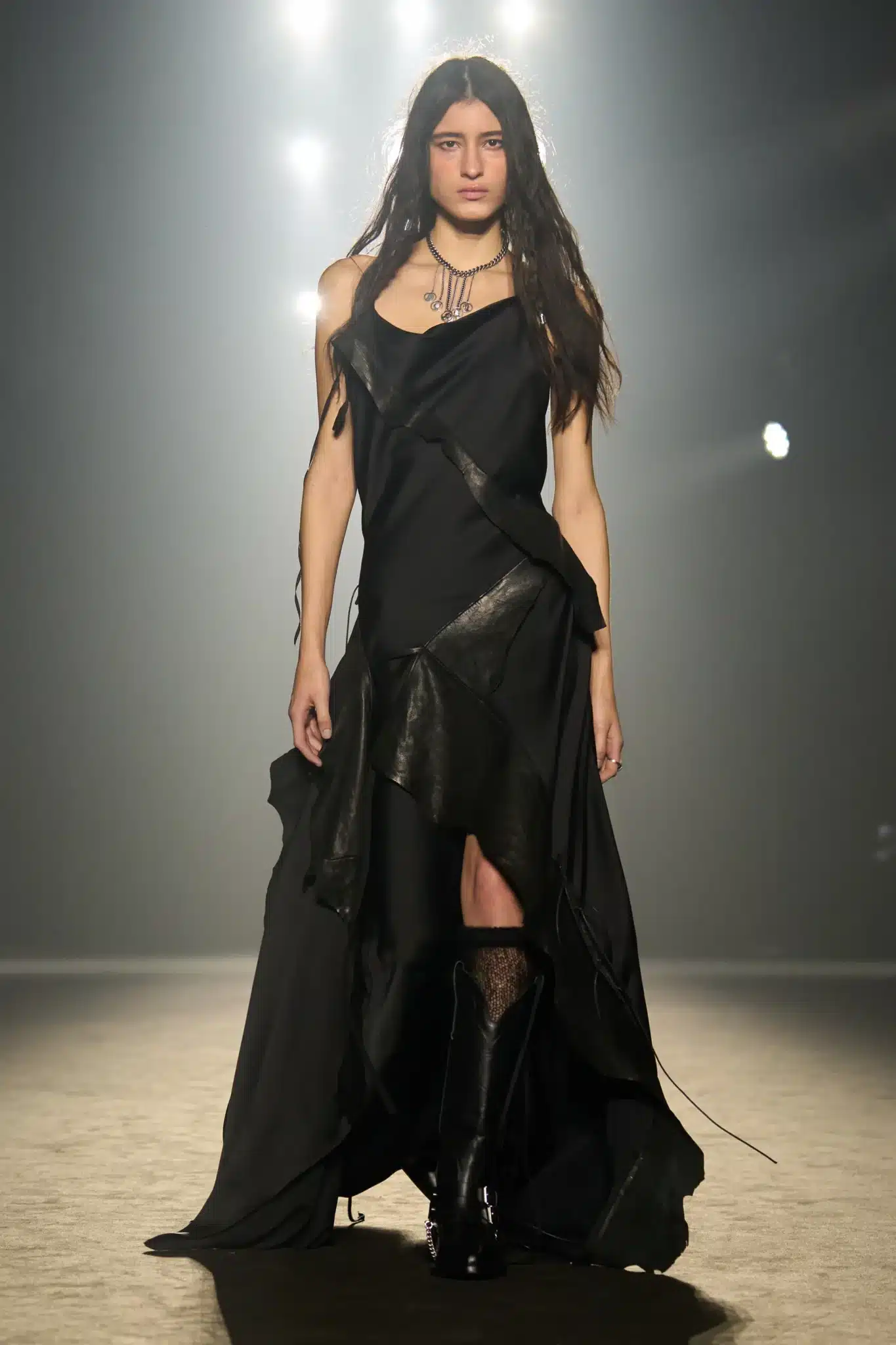
Silhouettes fade, colors become neutral, and sometimes almost absorbed into the environment. Volumes blur the body, erase its contours, soften its presence. This can be seen in the work of Rick Owens, where elongated silhouettes and muted palettes dissolve the body into something almost monolithic, or in Yohji Yamamoto, where layering and black-on-black compositions erase clear structure.
The body is still there, but it refuses to be fully grasped. Disappearance becomes control of oneself. To maintain the distance that allows us not to be immediately readable.
Others operate through tension.
The body is held, compressed, structured. Cuts are strict, layers are precise. Nothing is loose, nothing is accidental.
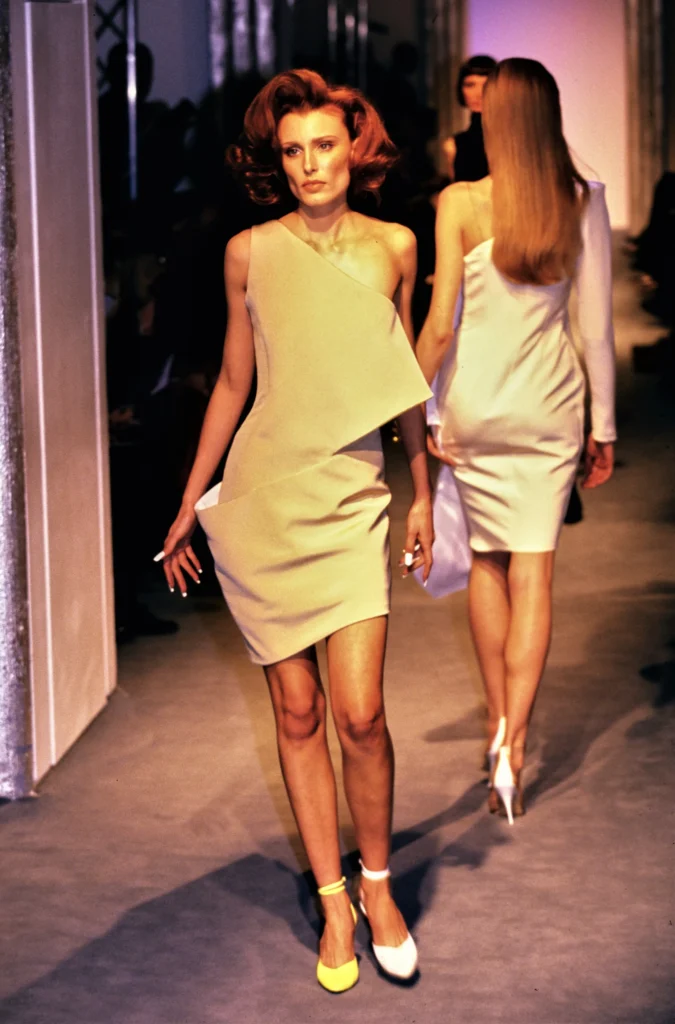
In Mugler’s archival corsetry or Alaïa’s sculptural constructions, the body is contained, shaped, almost disciplined. The silhouette is not free, it is held in place.
There is a constant sense of restraint, a sense of internal pressure made visible by the garment becoming a surface where nothing relaxes and everything is controlled.
Some crave elevation.
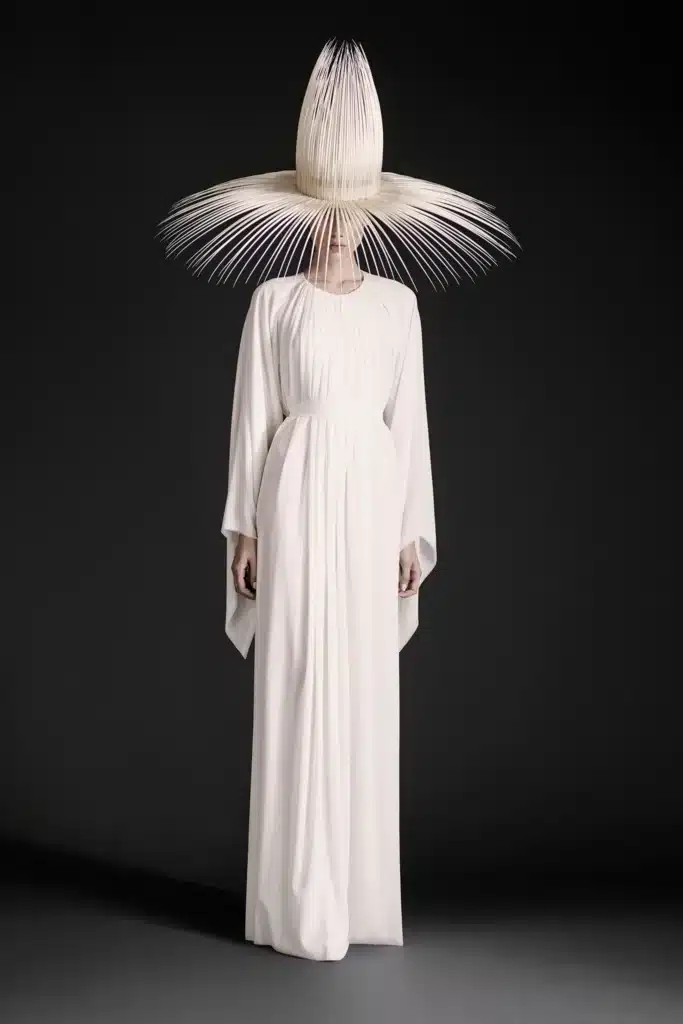
The body moves away from its everyday state. Silhouettes extend, lines become vertical, materials flow and lift the posture.
In Ann Demeulemeester’s work, long lines and fluid layering create a sense of verticality, almost spiritual. Similarly, Gareth Pugh constructs silhouettes that lengthen and raise the body into something almost ceremonial. The garment no longer follows the body but pulls it upward. Dressing becomes a tool for transformation. A way to reach beyond the immediate.
And then, exposure.
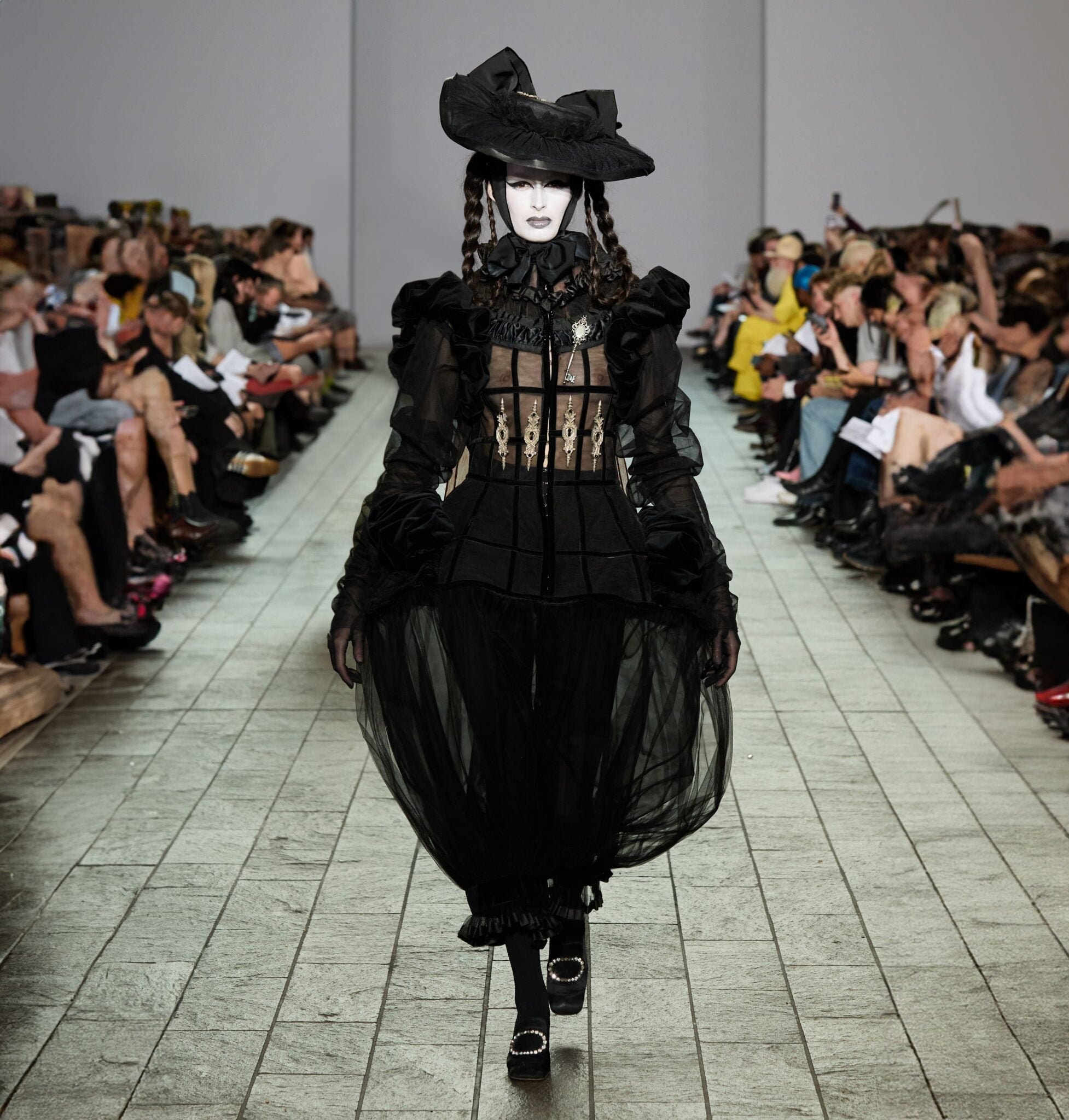
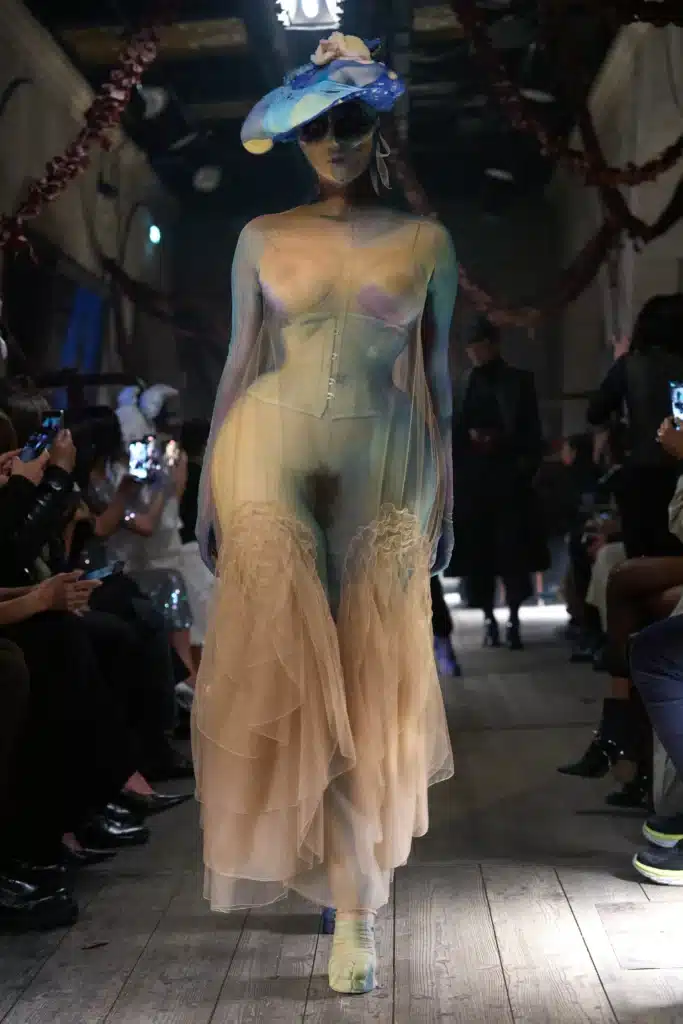
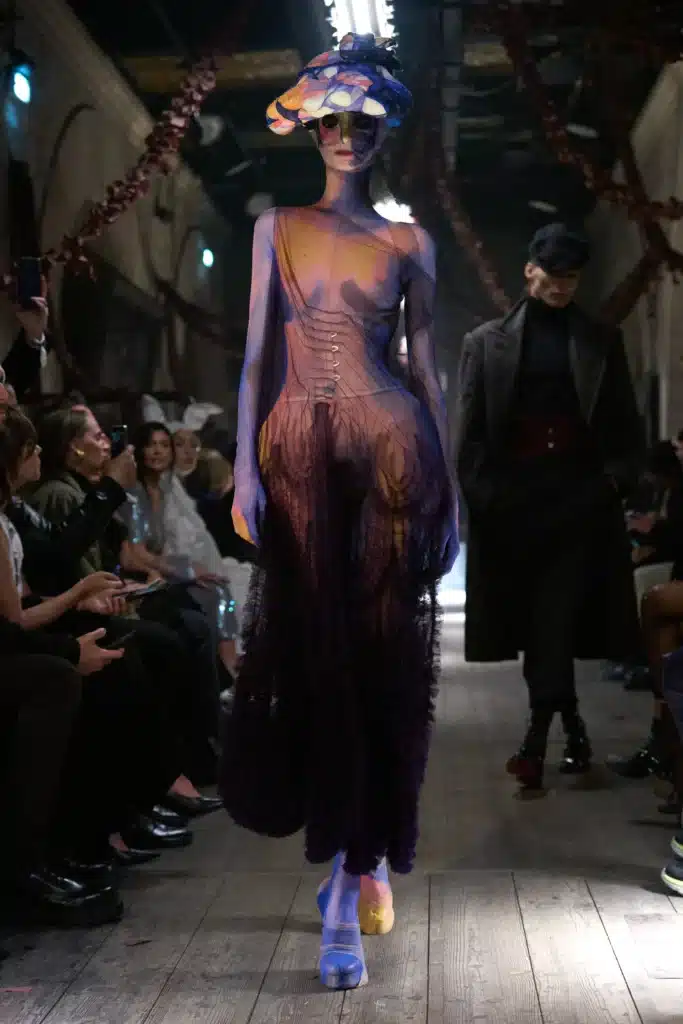
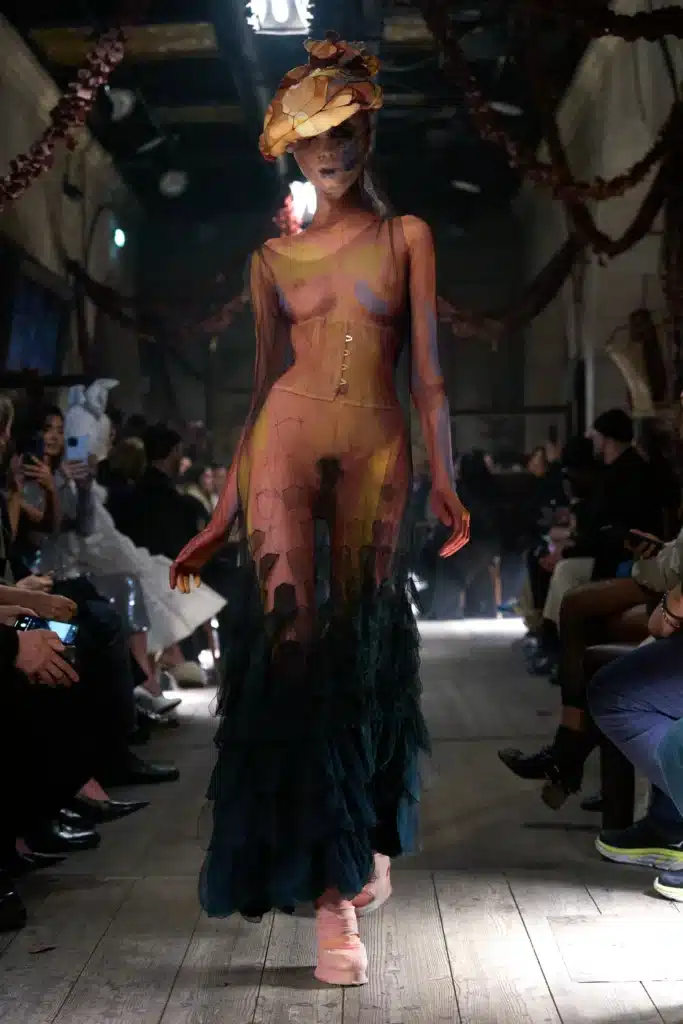
The body is revealed. Skin appears. Transparency replaces structure. The silhouette is no longer hidden, but framed. In collections like Maison Margiela under John Galliano, transparency and deconstruction expose the body while simultaneously distancing it, creating a tension between intimacy and performance.
But exposure is not confession.
To show is not to explain, and to reveal is not to give everything away.
This is when the Last Judgment arrives. Not as a religious moment. Not as social judgment.
But as a brief instant – a summer night, among others – where nothing can be disguised in the way one presents themselves.
Every choice becomes visible. Every intention is exposed. Dressing properly is not about fitting in, but about facing what you choose to reveal. From a voluminous loose-cut piece at the beach to a sheer second skin top on a night out.
Fashion, here, is no longer decorative. It becomes a position, a way to construct presence, to perform identity. A conscious act. To dress is no longer to hide the body.
It is to decide what must be seen, and what must remain out of reach.
And we are the only ones to judge.