Every community depends upon symbols in order to exist. Collective identities cannot be sustained through abstract ideas alone; they must become visible, assume recognisable forms, and occupy a place within the world. Throughout history, few cultural tools have fulfilled that function as consistently as dress. Long before clothing became an object of consumption or a vehicle for personal expression, it operated as a symbolic architecture capable of transforming isolated bodies into communities able to recognise themselves.
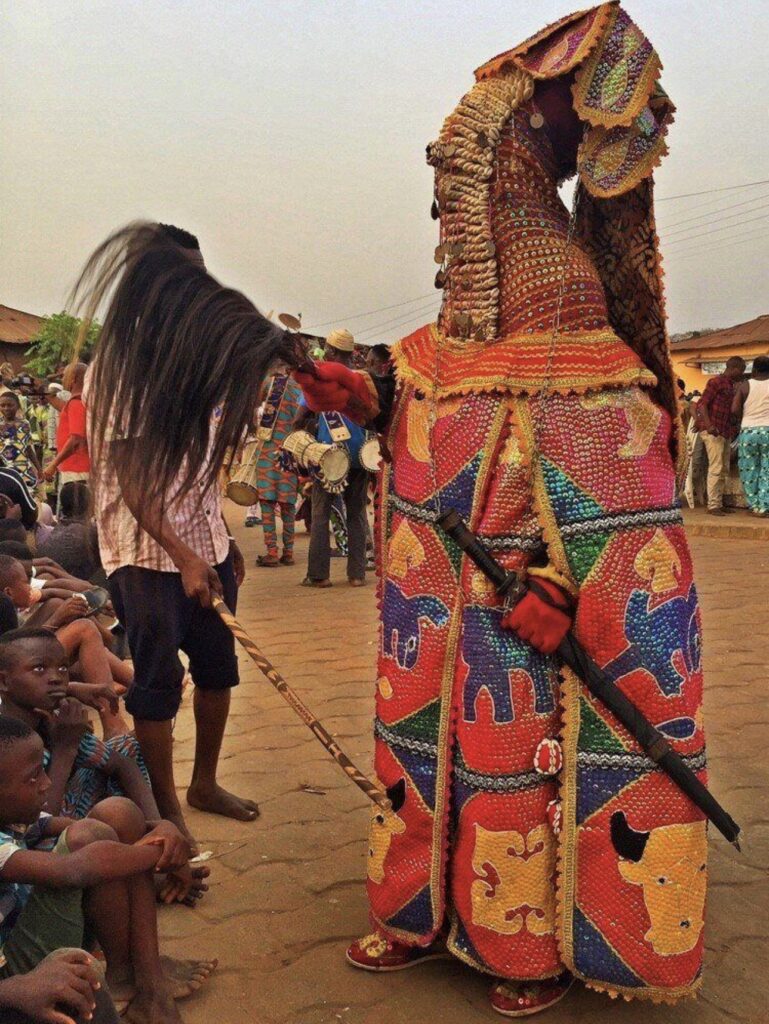
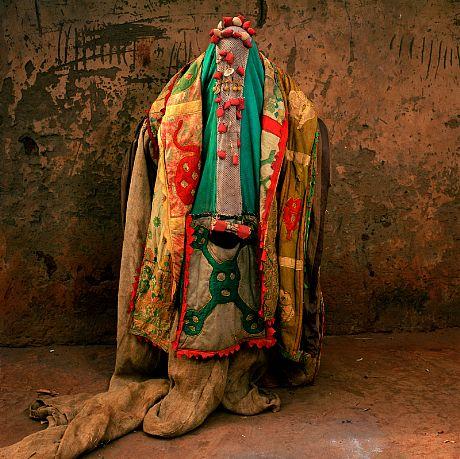
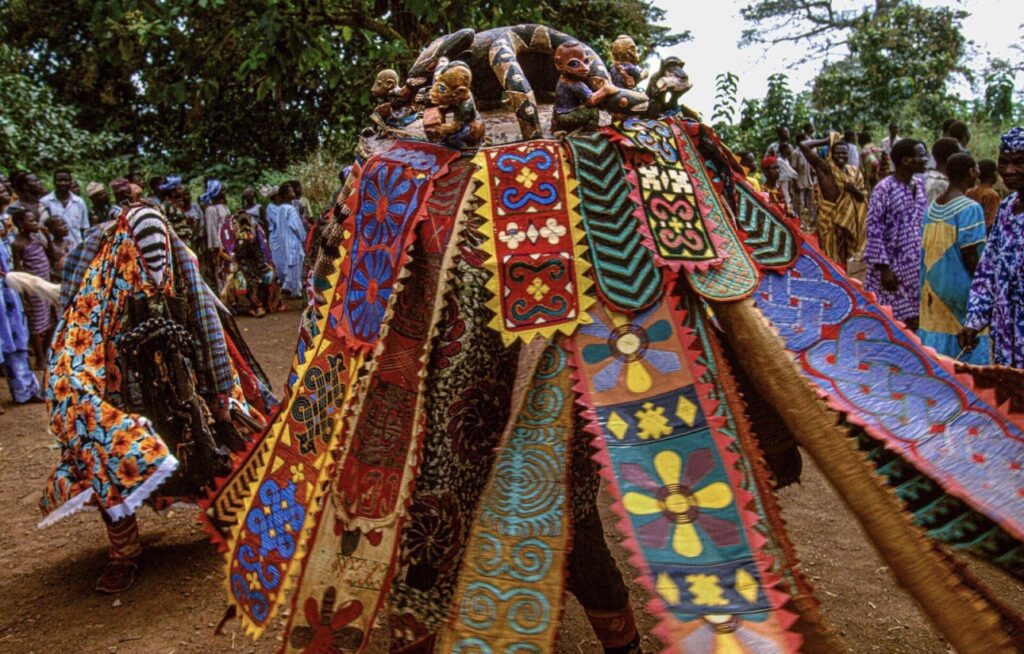
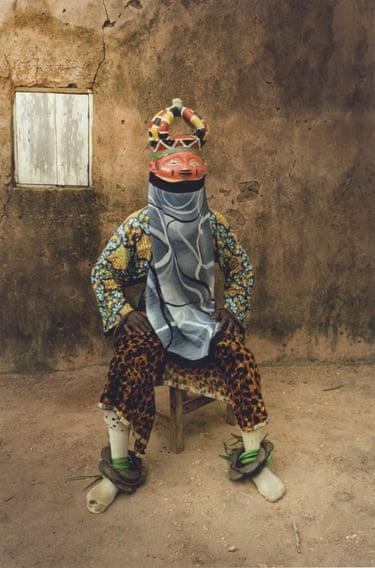
For centuries, dressing meant far more than covering the body. Among the Yoruba Egúngún masquerades of West Africa, elaborate multilayered garments completely conceal the wearer’s identity so that ancestral spirits may become symbolically present within the community. What matters is not the individual beneath the fabric but the collective presence embodied through it. A comparable logic appears among the Maasai of Kenya and Tanzania, where shúkà, beadwork, and hairstyles communicate age, responsibility, and social status, transforming the body into a visible expression of communal belonging. In both cases, the dressed body ceases to belong solely to the individual and becomes the bearer of a shared symbolic order.
In an age shaped by hyper-individualism, a significant strand of contemporary fashion has returned to these visual mechanisms. Far from merely appropriating religious imagery, many avant-garde designers have developed aesthetic languages that recover an older social function of dress: making belonging visible. Clothing once again operates as a shared symbolic system through which collective identity becomes perceptible.
This essay argues that these affinities should not be understood primarily as aesthetic influences, but as the persistence of a much deeper anthropological structure. Avant-garde
fashion has not merely reclaimed the imagery of the sacred. It has recovered the capacity of dress to transform a collection of individuals into a visible community.
Anthropologist Mary Douglas argued that every culture depends upon symbolic structures capable of transforming disorder into meaning. In Purity and Danger (1966), she suggested that rituals do not merely express religious belief; they establish the boundaries between those who belong to a symbolic order and those who remain outside it. Clothing has always participated in this process. It delineates communities, regulates behaviour, and renders visible social structures that would otherwise remain abstract.
Anonymity as a Visual Language
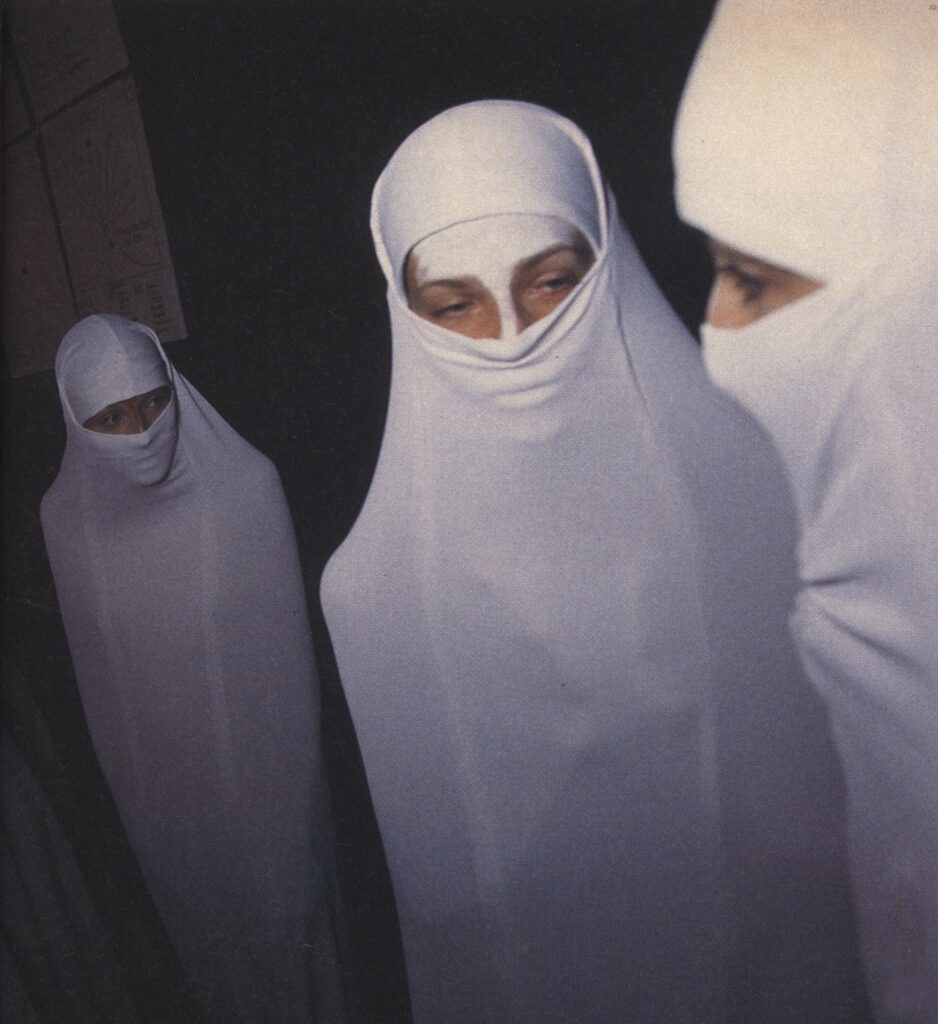
There is an image that recurs throughout the history of ritual communities: a procession of bodies dressed almost identically, moving in unison. Faces are partially concealed, individual differences dissolve beneath a shared surface of cloth, and personal identity momentarily gives way to something greater than the self. From the hooded penitents of Holy Week processions to the whirling dervishes of Sufi traditions and the initiates of the Bwiti religion in
Gabon, anonymity has never signified the absence of identity. Rather, it has transformed it. The individual recedes so that the collective may become visible.
In contemporary Western culture, concealing the face is often associated with danger, deviance, or resistance. The face remains the primary means through which society identifies, categorises, and individualises its subjects. To cover it is to interrupt that process. It is therefore remarkable that some of the most influential fashion designers of the past four decades have repeatedly embraced anonymity as a central visual strategy.
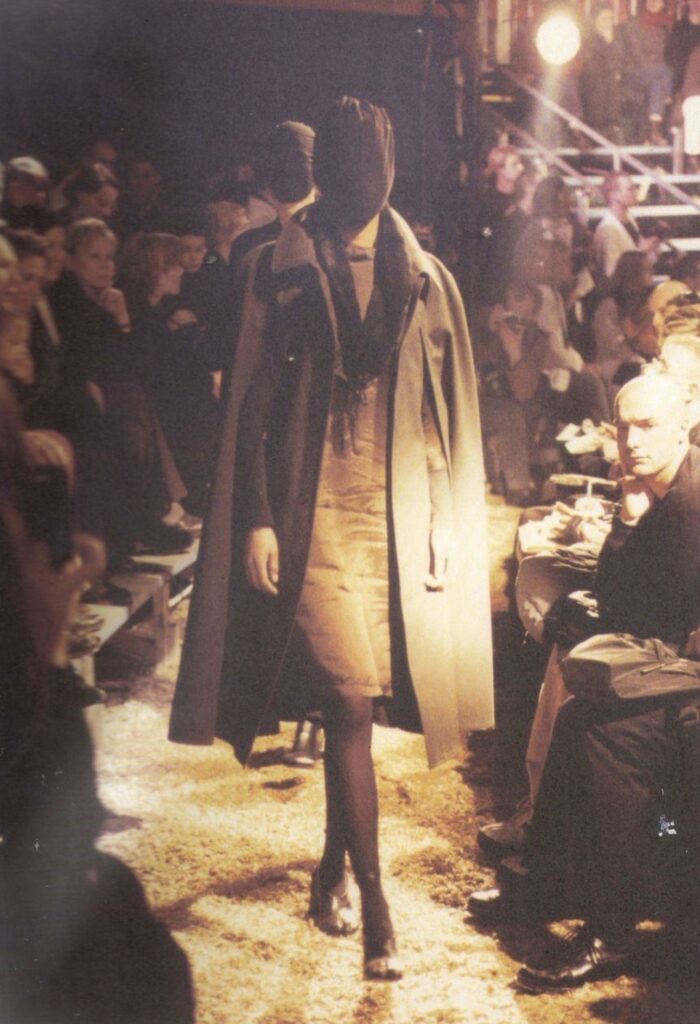
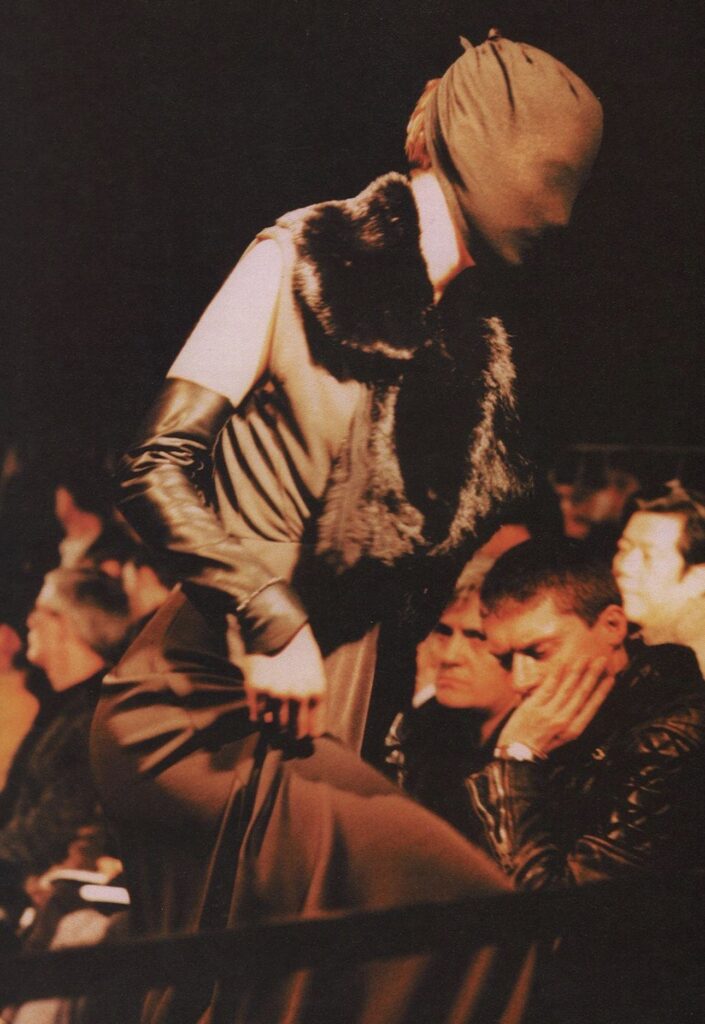
Martin Margiela was among the first to do so with remarkable consistency. Throughout the late 1980s and 1990s, his models frequently appeared with their faces veiled by translucent stockings, layers of tulle, oversized wigs, or simple strands of hair. This gesture was never intended to create mystery for its own sake. It represented a deliberate rejection of fashion’s growing obsession with personality, celebrity, and image. By removing the model’s identity, Margiela redirected attention towards the garment itself, challenging an industry increasingly driven by spectacle.
Those anonymous figures inevitably evoked religious processions, monastic communities, and initiation rites in which the individual body exists not as an autonomous subject but as the bearer of a shared symbolic order.
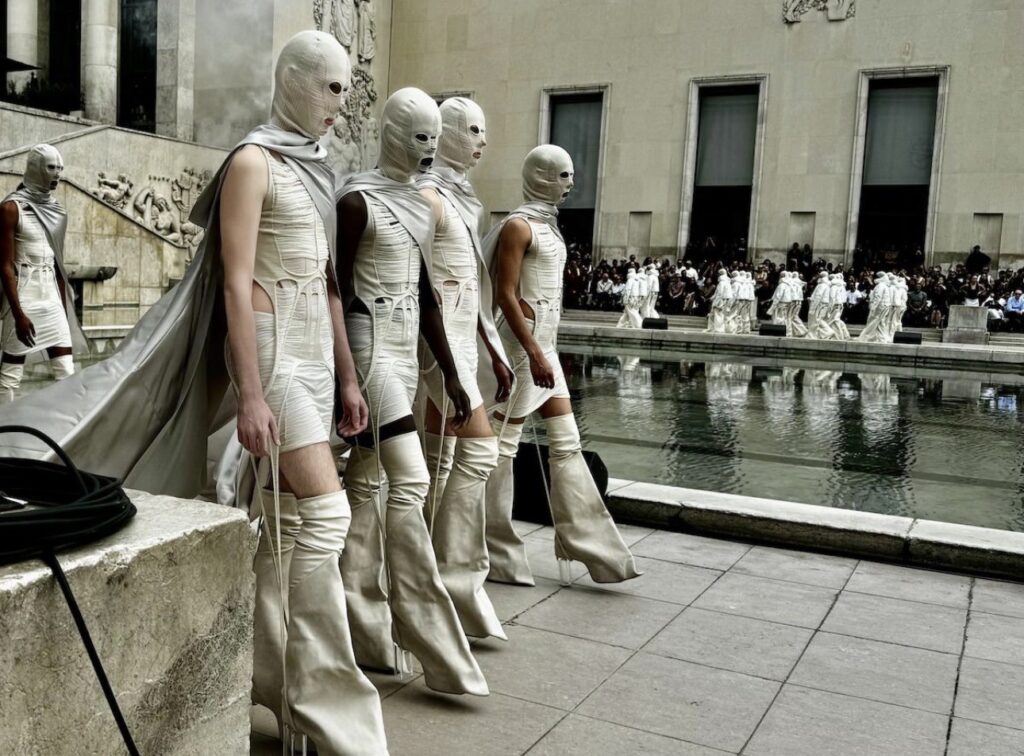
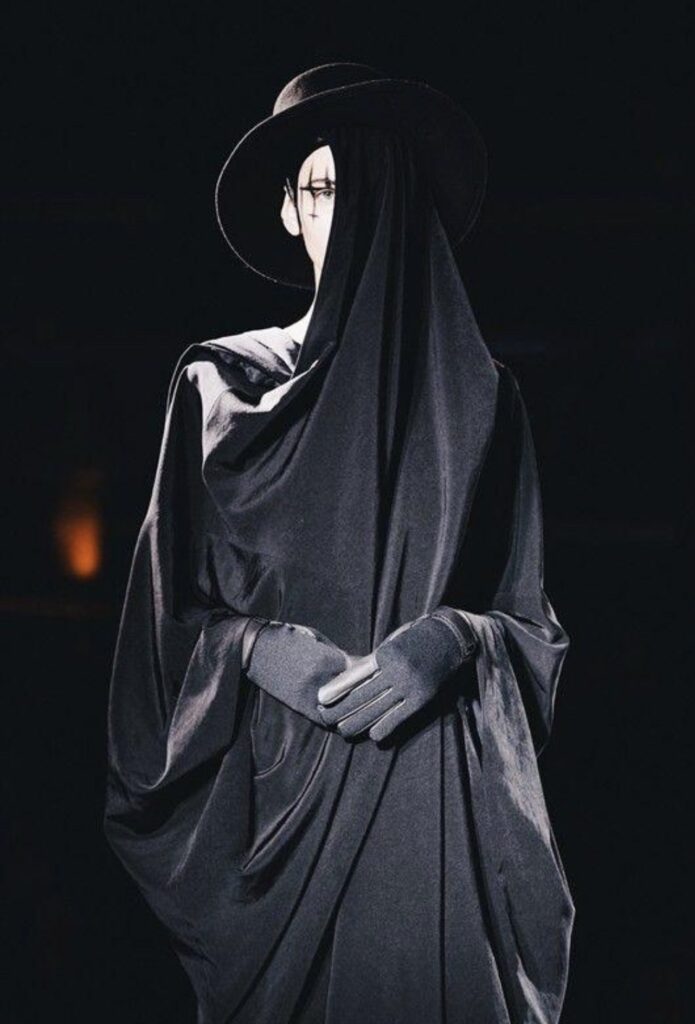
Rick Owens approaches anonymity from a different perspective, yet arrives at a remarkably similar visual language. His runways present groups of bodies moving as though they belonged to a single organism. Wrapped in monumental drapery, elongated silhouettes, and architectural layers, his models appear less like fashion figures than participants in an unnamed ceremony, inhabiting a space suspended between monument, ritual, and myth.
Rather than quoting history, Owens transforms Brutalist architecture, religious imagery, and funerary monuments into a new visual language in which clothing dissolves conventional identity and the body assumes an almost symbolic presence.
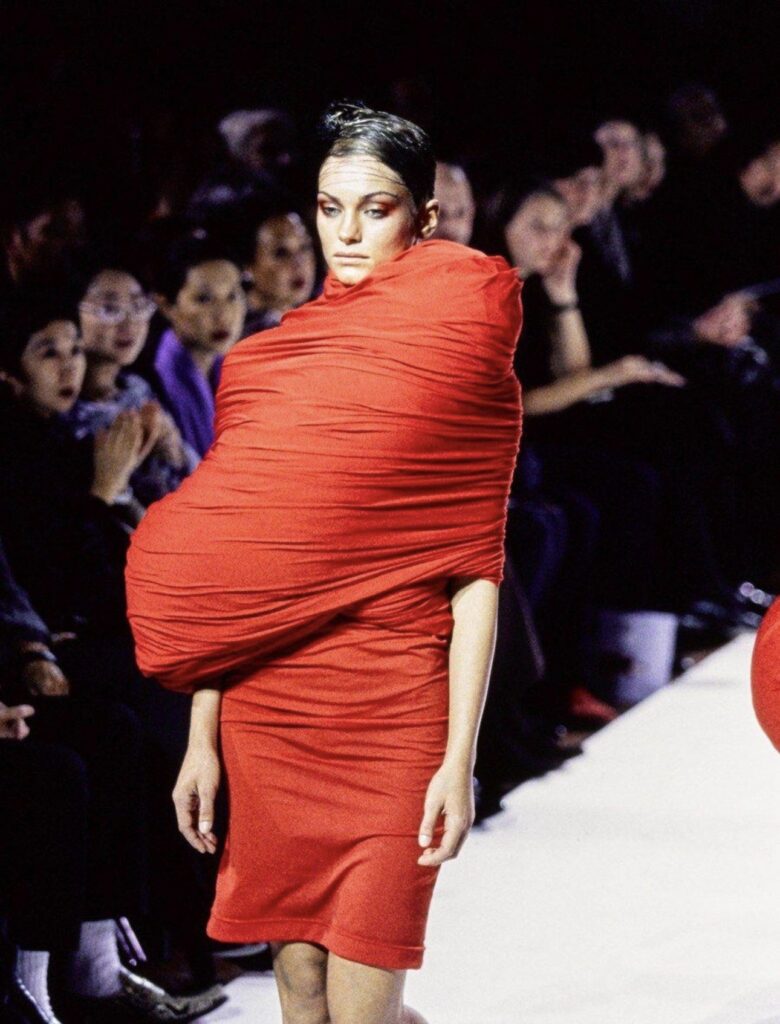
A similar process unfolds in the work of Rei Kawakubo. Comme des Garçons has persistently questioned conventional relationships between the body, beauty, and identity. Distorted silhouettes, exaggerated volumes, and deliberately anti-anatomical forms refuse to reveal the individual beneath them. The garment no longer frames the body; it becomes an autonomous structure governed by its own visual logic. Identity shifts away from physical appearance and towards form itself.
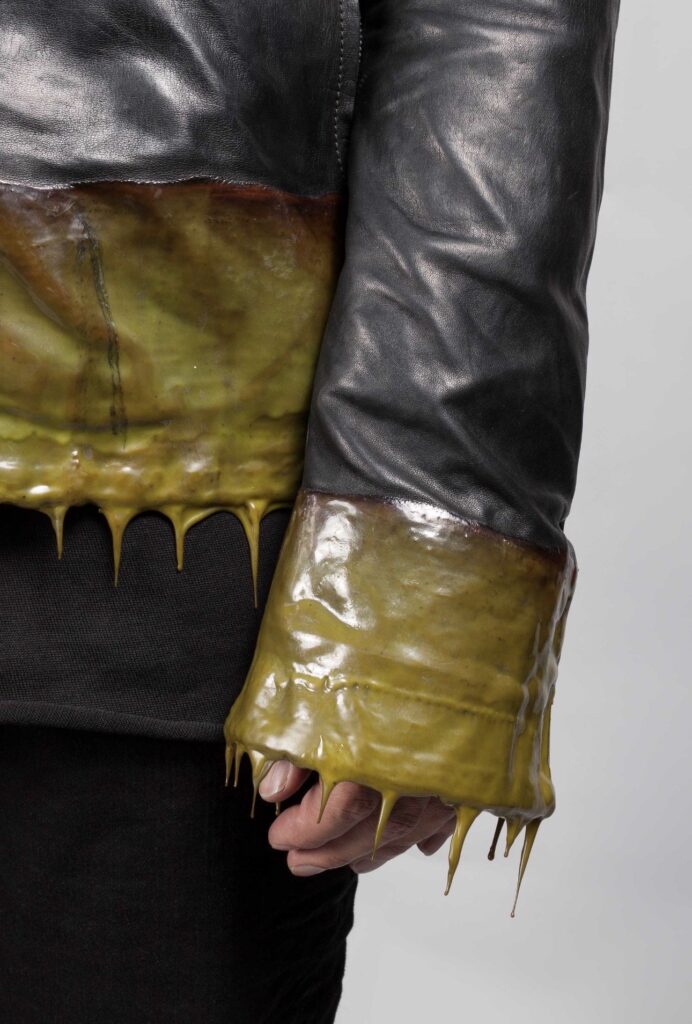
Even the radically restrained work of Carol Christian Poell participates in this logic. Here anonymity emerges through construction itself. Hidden seams, reversed tailoring, object-dyeing techniques, and an obsessive attention to material ageing shift attention away from the wearer’s personality and towards the silent language of craftsmanship. Identity is communicated not through visibility, but through an intimate understanding of form, process, and time.
In each of these practices, anonymity is not the disappearance of the self but its transformation into something collectively legible. Identity ceases to be an individual possession and becomes a cultural relationship sustained through garments that make shared values visible. Long before fashion became associated with self-expression, dress had already mastered another task: making belonging perceptible.
Belonging as Cultural Literacy
If ritual communities once relied upon religion to define belonging, contemporary creative communities increasingly rely upon culture. What binds them together is not belief in the theological sense, but the patient acquisition of a symbolic language through which the world, and one another, can be recognised.
Michel Maffesoli’s notion of neo-tribes offers a compelling way of understanding this transformation. Writing at the end of the twentieth century, he argued that postmodern societies had not abandoned the desire for community; they had simply relocated it. Rather than gathering around enduring institutions, people increasingly form temporary constellations held together by shared sensibilities, aesthetic affinities, and emotional investments. These communities possess neither sacred texts nor formal rites of initiation, yet they remain profoundly ritualistic, sustained by gestures, objects, and symbols that quietly distinguish those who belong from those who merely observe. Avant-garde fashion exemplifies this condition with remarkable clarity. To an unfamiliar eye, its visual language can appear almost uniform: monochromatic palettes, elongated silhouettes, distressed materials, and garments that resist obvious branding. Yet this apparent homogeneity conceals extraordinary complexity. Within these communities, garments are not simply worn; they are read. The object-dyed surface of leather or the unmistakable drape of an early Yohji Yamamoto coat communicates far more than aesthetic preference. Such details reveal an education in making, an awareness of fashion history, and an ethical relationship to craftsmanship, time, and permanence. They function less as signs of taste than as evidence of cultural fluency.
Pierre Bourdieu would have recognised this immediately as a form of cultural capital. Distinction is not secured solely through economic resources but through the possession of knowledge that cannot be purchased directly. Recognising the significance of Martin Margiela’s blank label or understanding why Guidi leaves its leather untreated are acts of interpretation before they are acts of consumption. The object itself matters, but the capacity to understand what it signifies matters even more.
This symbolic literacy extends beyond the ability to recognise designers or techniques. It also shapes the way garments themselves become vessels of collective memory. Hussein Chalayan explored this with extraordinary clarity in Afterwords (Autumn/Winter 2000), a collection inspired by the displacement of communities during the conflict in Cyprus. In one of fashion’s most memorable finales, chairs became suitcases, a coffee table unfolded into a skirt, and furniture transformed into garments that could be carried on the body. Clothing no longer functioned simply as dress, but as a portable archive through which memory, loss, and belonging survived the disappearance of place itself.
Cities such as Antwerp, Tokyo, Paris, and Berlin therefore function as more than geographical centres of fashion production. Museums, archives, specialist boutiques, and conversations between collectors become spaces where this symbolic knowledge is transmitted. The runway is only one moment within a much broader ecology of meaning. Like medieval pilgrimage sites, these cities operate less as destinations than as places of initiation, where symbolic knowledge is acquired through experience rather than instruction.
Membership is never granted by declaration alone. It emerges through the slow acquisition of a language until its symbols cease to require explanation. Belonging begins not when one wears the garment, but when one understands what it asks its wearer to remember, to recognise, and to carry forward.
The garment, then, is never merely an object placed upon the body. It is a repository of cultural memory, legible only to those who have learned to inhabit the world through its symbols.
Meaning Woven into Cloth
If every community depends upon symbols in order to exist, another question inevitably follows: why do human beings need symbols at all? Why have societies across history entrusted abstract ideas, memory, authority, grief, devotion, belonging, to material objects? Perhaps because meaning remains fragile until it acquires form. A belief may be invisible, but once woven into cloth it can be worn, recognised, repeated, and ultimately shared. Dress has therefore always been one of culture’s oldest technologies for making the invisible visible.
If symbols hold communities together, where do they acquire their power? Anthropologist Clifford Geertz famously described culture as “webs of significance” spun by human beings themselves. Societies are held together not simply by institutions or laws, but by the shared interpretations through which ordinary objects become meaningful. Clothing occupies a singular position within those webs because it accompanies the body itself. Unlike architecture or painting, it moves through the world with us, transforming the body into a living surface upon which culture inscribes memory, hierarchy, desire, and belonging.
Avant-garde fashion is therefore not defined by innovation alone. Its garments do not merely propose new silhouettes; they ask deeper questions. Can a garment become an archive? Can clothing preserve memory? Can the ageing of leather communicate permanence more eloquently than pristine perfection? Such garments invite interpretation because they refuse to exhaust their meaning at first glance.
Few designers have explored these questions more rigorously than Carol Christian Poell. Rather than treating garments as finished objects, Poell conceives clothing as something fundamentally unfinished, an object whose meaning continues to evolve long after it leaves the atelier. This philosophy became especially visible in Mainstream Downstream (SS03), where garments were presented not as perfected commodities but as materials destined to change through movement, wear, and time. His celebrated Object Dyeing process embodies this philosophy: garments are fully constructed before being dyed, allowing seams, leather, threads, and fabric to absorb colour unevenly so that every piece develops a unique material history. No two garments can age in exactly the same way, because no two lives leave identical traces upon them. In Poell’s work, time is not something that happens to clothing; it is one of the materials from which clothing is made.
Ritual cultures have long understood this principle. Sacred garments are rarely important because they are visually extraordinary. They become meaningful because they accumulate use, memory, and repetition. Their authority is not produced by novelty but by continuity. Avant-garde fashion seems to search for the same condition: garments that do not simply decorate the body but accompany a life, gathering significance through every gesture, every repair, and every passing year.
What, then, does clothing truly preserve? Not only the memory of the individual who wears it, but the values of the community that taught those garments how to be understood. It reminds us that belonging is never simply declared; it is learned, repeated, and quietly embodied until meaning no longer resides in the object itself, but in the shared culture that continues to recognise it.
From ritual vestments to contemporary avant-garde fashion, clothing has transformed invisible beliefs into visible forms, allowing communities to recognise themselves through shared symbols. What avant-garde fashion ultimately recovers is not the imagery of the sacred, but one of its oldest cultural functions: the capacity of dress to make belonging perceptible.
Perhaps we have misunderstood clothing all along.
We do not dress simply to be seen. We dress in the hope that someone, somewhere, will recognise us as one of their own.
Credits
Written by Eneko Mendez Garrido @enekomndez