

Names are existentially significant: we are given one at birth, and it shapes our identity ever after. Although identities are built from nuance, the fact that our names are not entirely of our own choosing matters. Despite avenues to revision through self-realization, the act of being perceived is never fully erased.
Goths didn’t entirely choose their name. What manifested as an ancient geographical nomination crumbled over fifteen centuries into a label, a stereotype, a slur, and a many-faceted gem of an aesthetic. Antique Goths existed proudly as they were, let their gem-laden iconography speak for itself, and allowed a legacy of medieval excellence to imprint itself in anthropology forever.
The Goths were known as barbarians in the eyes of their contemporaries, “barbaric” meaning out of place, complex, emotionally sophisticated, ornate, other. What was once a slur, gothic, was organically reclaimed by a modern subculture as a signifier of the necessity of darkness as light’s counterpart. In a way, goths are still viewed as barbaric. But the persistence of the name has demonstrated how the culture has evolved exponentially over antiquity, and given rise to some of the most profound art across architecture, literature, fashion, beauty, and aesthetics.
Gothic & The Fall of the Roman Empire
The word “goth” began as the Goths’ name for themselves, Gut-þiuda (or in its dative form, Gutþiudai; later reconstructed by the Proto-Germanic word gutans). Some scholars have interpreted the word as derivative from a Proto-Indo-European root meaning “to pour,” in reference to the Göta älv river in modern-day Sweden, and descriptive of a people who “poured” from a particular place.
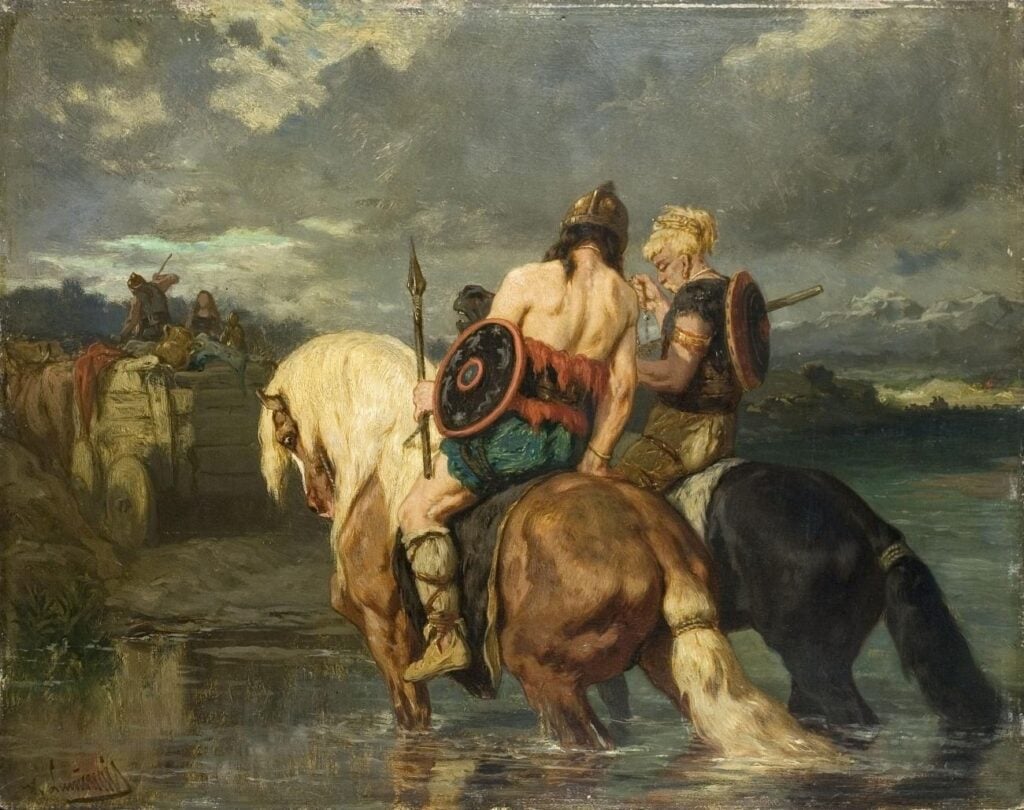
As the Goths came into contact with Rome, the word was adopted into classical Latin as Gothi. Although the word remained a neutral ethnonym for a period of time, it was eventually misappropriated by Renaissance humanists to refer to everything they thought they were not: medieval, crude, brutal, heretical. Thus, these “undesirable” ideals thus became a judgment: Gothic.
Renaissance logic was clear: under their King Alaric, Goths had sacked Rome in 410 AD. As such, “Gothic” became synonymous with the downfall of civilization. But this insinuation was flawed: in reality, Gothic kings actively preserved Roman institutions, and Gothic culture itself was adaptive, measured, and deeply intellectual. Those who used “Gothic” disparagingly were engaging with dishonest political rhetoric, much as disadvantaged groups are used as political scapegoats today.
***
The Goths originated as a single tribe that migrated from Scandinavia through the Baltic and into the territory north of the Black Sea by approximately 3rd century AD. The division into Visigoths (“western Goths”) and Ostrogoths (“eastern Goths”) emerged over time from geography and political circumstance.
The Visigoths’ migration into the Roman Empire was not an invasion, but rather a petition for asylum. The arrival of the Huns from the east in the 370s pushed the Visigoths into Roman territory, and Emperor Valens responded by granting refuge. What followed was a bleak history of an empire mistreating the desperate.
Roman officials, by many accounts, exploited and abused Gothic refugees. Naturally, the Goths revolted. This led directly to the Battle of Adrianople in 378 AD, where the Goths killed Roman Emperor Valens and dealt Rome one of its most catastrophic defeats. This event unfolded after years of broken promises and failed negotiations. Still, by ancient standards, the event was relatively restrained; churches were declared sanctuary, and the population was not massacred. Still, Romans were traumatized by the symbolism—Rome had not been taken by an enemy in 800 years.
The Visigoths spent decades after Adrianople in a complicated relationship with Rome. They would go on to found their own kingdom in Iberia that stood until the 8th Century. The Visigothic Kingdom was sophisticated by many measures, and is the origin of important medieval scholars, fair legal codes, and ironically, an Etymologiae that was one of the most widely read books in medieval Europe.
Their eastern counterparts, the Ostrogoths, fell under Hunnic rule for several generations. After Attila’s death and the empire’s collapse, Ostrogoths reasserted their independence and eventually moved into Italy. Their king, Theodoric the Great, proved the inaccuracy of the “barbaric Goth” caricature, having been sent to Constantinople as a child hostage and becoming educated in the Eastern Roman imperial court.
When Theodoric took Italy, he governed it with a deliberate policy of Roman-Gothic coexistence. He explicitly framed himself as the legitimate heir to Roman governance, not a usurper. Notably, Theodoric the Great employed Boethius, who wrote The Consolation of Philosophy, which would become one of the most influential texts of the medieval period, and Cassiodorus, whose monastery of Vivarium became a crucial center for manuscript preservation.
King Theodoric the Great maintained the Roman Senate, restored monuments, and kept the infrastructure of Roman civic life functioning. His Italy was arguably more stable and prosperous than the late Western Roman Empire had been. The idea that the Goths snuffed out Roman civilization is, in this case, precisely backwards—a Gothic king was among its most dedicated custodians.
Gothic Christianity
Another point of contention was the fact that the Goths were Arian Christians, making them theologically distinct from Roman Christians. This fact was later used by Catholics to further portray them as heretical, but Arianism was not a fringe position in this time and place.

The Goths’ faith was sophisticated, and textually grounded. One of the most remarkable achievements associated with the tribe predates both kingdoms: the creation of the Gothic Bible by Wulfila in the 4th century. Wulfila was a bishop (likely raised by Goths) who undertook the project of translating the Bible into Gothic. To do so, he invented the Gothic alphabet, drawing on Greek and Latin letters with runic influence. This Gothic Bible is the oldest substantial text in any Germanic language.
***
Visigoths produced major legal codes and foundational medieval scholarship. Ostrogoths presided over a culturally flourishing Italy and patronized philosophers whose work shaped the next thousand years of thought. Both were deeply engaged with Roman culture; not as imitators, but as dutiful custodians. The “barbaric” stereotype was applied retrospectively by those who needed a “before” to their after, an “us” to a “them.”
Crucially, Goths were not the brutes of Renaissance caricature. They wore spectacularly ornate gold and garnet jewelry, dressed to signal status, and borrowed from Roman conventions when appropriate. The aesthetic instinct for rich darkness, dramatic ornamentation, and symbolic weight has transcended Goth culture all the way to the goth subculture that exists today.
“Goths” today are likewise frequently dismissed as antisocial and nihilistic by those unwilling to examine the subculture for what it really represents. Fifteen centuries later, we are still guilty of failing to control the impulse to willfully misunderstand those we find difficult to categorize.
Gothic Arts: Beauty from the Barbaric
The term “Gothic” in regard to architecture was originally intended as an insult. Renaissance critics used the word to dismiss the remarkable cathedrals of Northern Europe as crude and irrational compared to classical conventions. What they actually meant was that these feats of architecture were constructed by those they saw as heathens rather than by “proper” civilization. The irony is palpable: clearly, Gothic architecture is among the most technically ambitious and aesthetically sophisticated traditions in human history, with engineering breakthroughs that gave rise to structures of unprecedented height and lightness. The darkness critics recoiled from was rather an invitation to fill that darkness with light.
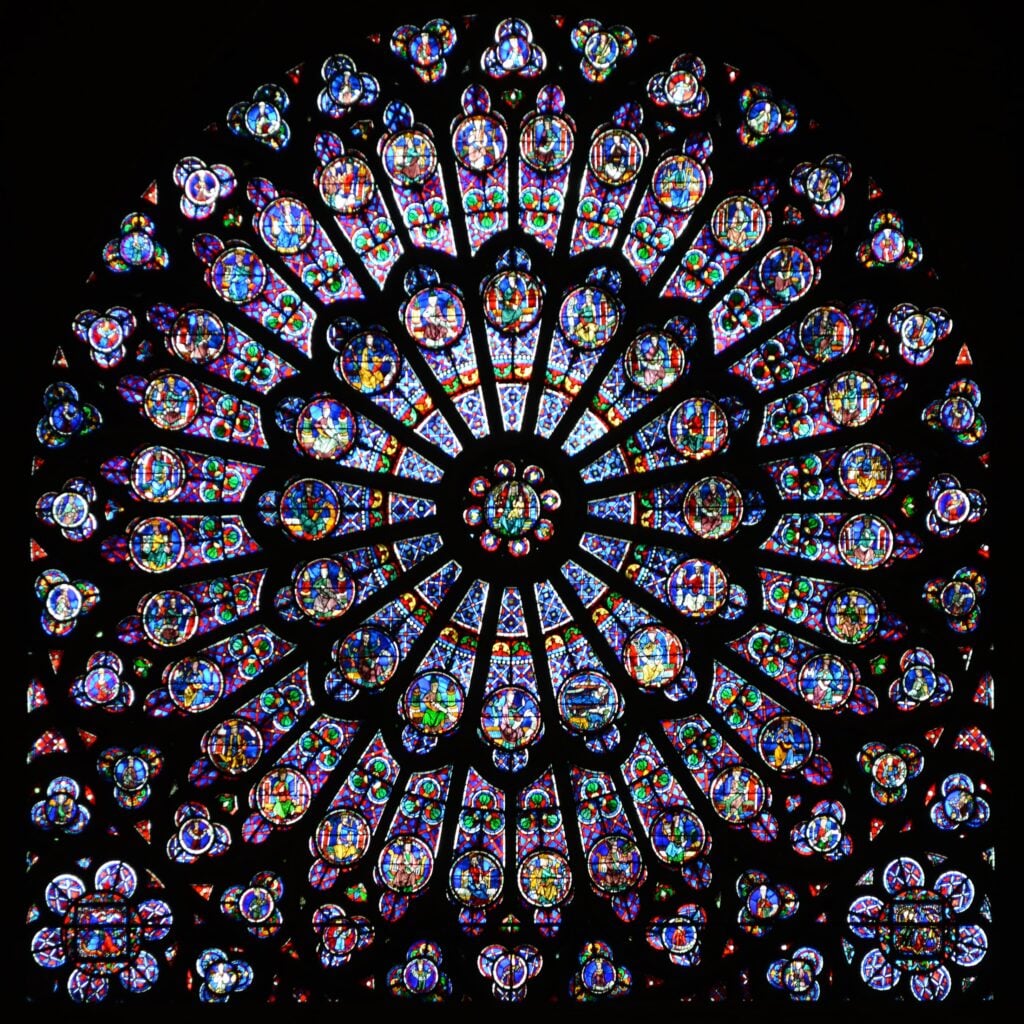
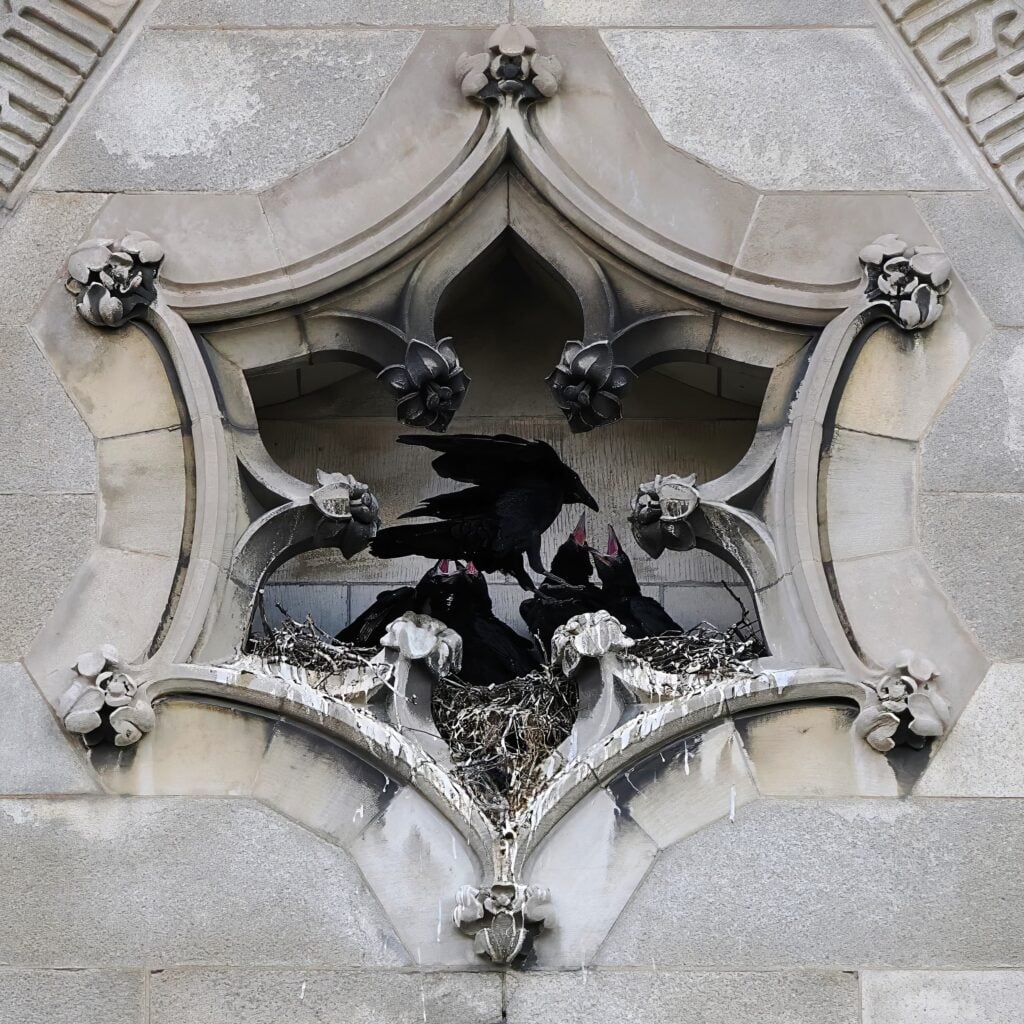
Despite critics, Gothic architecture successfully reclaimed darkness and verticality as spiritual aspiration. Light filters into these cathedrals through a kaleidoscope of stained glass, gargoyles serve as formidable guardians, and the beautiful and the grotesque coexist in a haunting harmony. This pivotal architectural moment in time planted the seeds of a broader visual language: grandeur, shadow, and the myriad other details found with the sacred and the macabre in poetic tension.
***
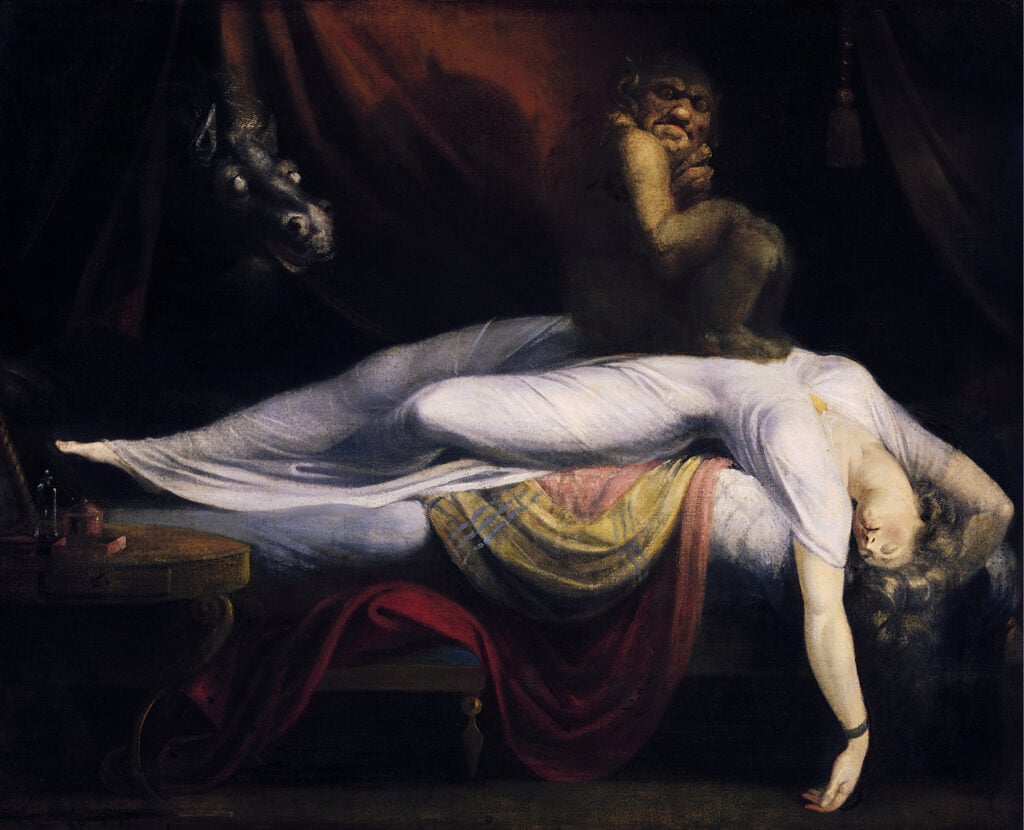
By the mid-18th century, writers had began using “Gothic” to deliberately evoke a darkly romantic atmosphere of wild landscapes, castles in ruin, and psychological dread. Notably, Horace Walpole subtitled his 1765 novel The Castle of Otranto “A Gothic Story,” effectively employing the term as a distinct aesthetic identity. This usage is linguistically significant: it is one of the earliest English examples of a pejorative being deliberately aestheticized. The word now carried a dual charge: one of classical civilization’s contempt for the medieval, and the medieval’s own brooding power. Gothic literature exploited that tension, and paved a picturesque path for all Romantics to come.
18th-19th century Gothic fiction transcended an aesthetic identity to function as social critique by writers such as Poe, Shelley, and Stoker of what society had pushed to the margins. Gothic writers of the time explored romantic motifs of the ironic beauty in decay, the nobility in suffering, and the outsider as the tragic hero, with darker themes of female desire, class anxiety, and the uncanny. The Gothic novel’s ultimate success (whether that success was realized within the author’s lifetime or otherwise) was due to its allowance of space for what society had suppressed. The ideals these writings portrayed would become the emotional templates that the gothic subculture as we know it today inherited.
Gothic and the visual arts
The gothic aesthetic transcended literature to influence the visual arts, such as the dreamlike paintings of the Pre-Raphaelite Brotherhood (founded in 1848). These artists’ manifesto was to return to the liberation of the natural and the romantic, in spite of their contemporaries’ expectations of artists adhering to classical themes and techniques (referencing the influence of Raphael’s masterpieces). Pre-Raphaelite followers such as Rosetti, Waterhouse, and Millais portrayed melancholy and morbidity as a captivating form of feminine beauty. These artists often depicted women in honest states of grief and despair, and yet, the subjects of these paintings were beautiful precisely because of their complex relationship to darkness. That paradox is foundational to goth aesthetics, long before anyone called it goth.
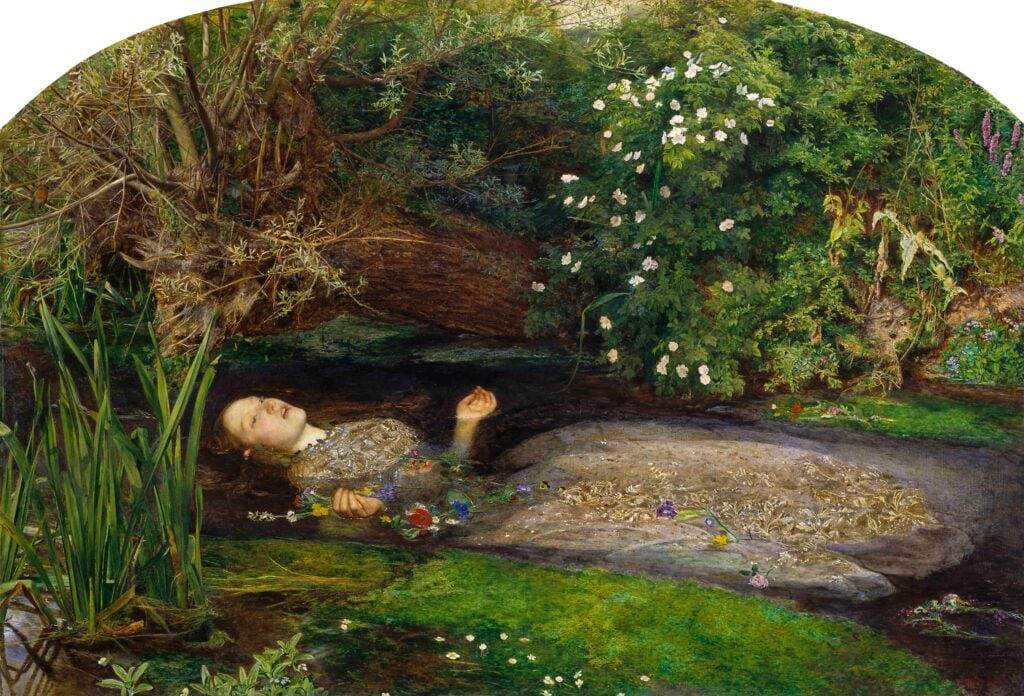
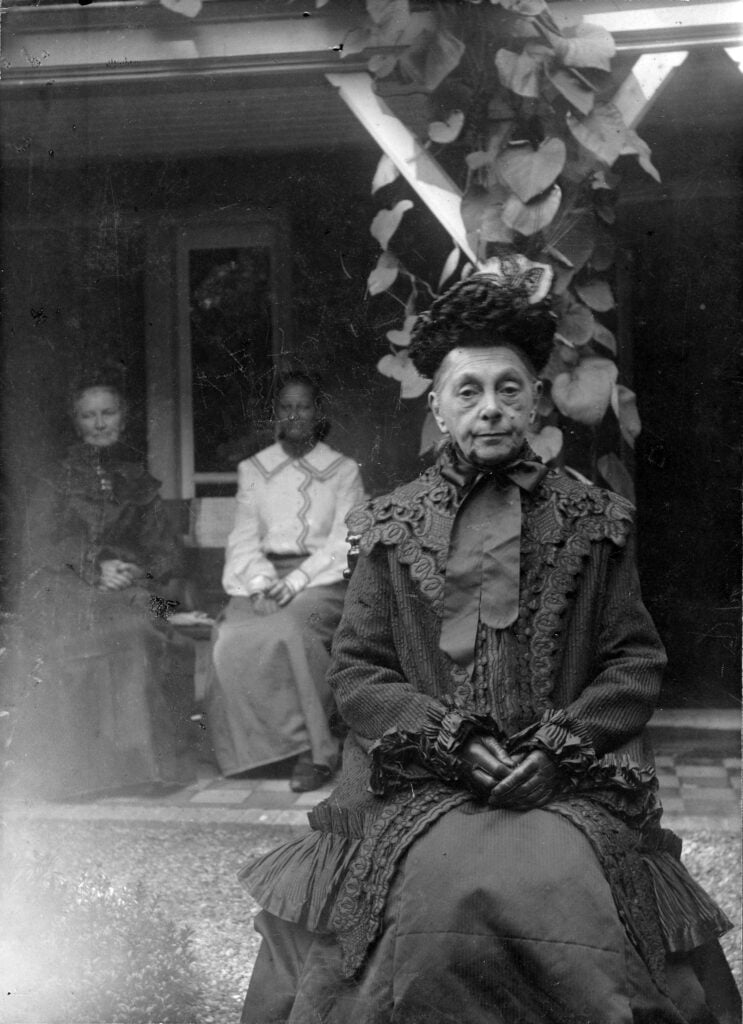
All the while, Victorian women were outwardly expressing their revere for the beauty to be found in darkness. The Victorian era in itself was morbidly fascinated by death, with elaborate funerary traditions including memento mori photography, and intimate keepsakes such as locks of hair. Widows would dress themselves in elaborate black for extended periods of time (such mourning fashion perfected by Queen Victoria herself) and shamelessly expose their inner turmoil for society to witness. Despair was made visually present in everyday Victorian society, and in retrospect, these heavy sentiments feel uniquely goth.
The Birth of a Scene
In a way similar to how gothic novels employ a backdrop of dread, in the late 1970s, UK post-punk musicians and their audiences began coalescing around a darker, more emotional sound and aesthetic in response to the social and political climate of the time. The unabashedly bleak aesthetic of iconic artists such as Bauhaus, The Cure, and Siouxsie and the Banshees would pave the way for countless artists to come. “Goth” emerged as music journalist shorthand in response, and the scene ratified this usage; arguably, the name felt fitting.
The Batcave club in London would serve as one of the most influential birthplaces of the contemporary scene. There, goths gathered in black clothing, striking makeup, and a distinct attitude. Critics would mistake it as nihilism, but this goth was more akin to hyperarticulate grief, a rejection of performing happiness out of obligation.
The natural truncation (progression) from Gothic to goth demonstrates how the word has been chiseled into the form society engages with it today: sub-culturally owned. Whether it knew it or not, goth inherited the full etymological baggage of the Goths that came long before them: misunderstood outsiders, ostracized as barbaric by the conventional; darkness recognized as ironically beautiful; the repressed awakening; shadows given aesthetic form; societal contempt for whatever doesn’t conform.
The development of the subculture’s modern internal distinctions, soft goth, Victorian goth, pastel goth, corporate goth, resulted from the internet’s aid as a global goth accelerant. Online forums allowed the subculture to diversify and serve as a community for goths to express their personal relationship with darkness, whether that included corsetry and mourning dress or coquette subversions. Each sub-aesthetic is a response to a different cultural moment, but they all share the uniquely goth impulse of emotional processing.
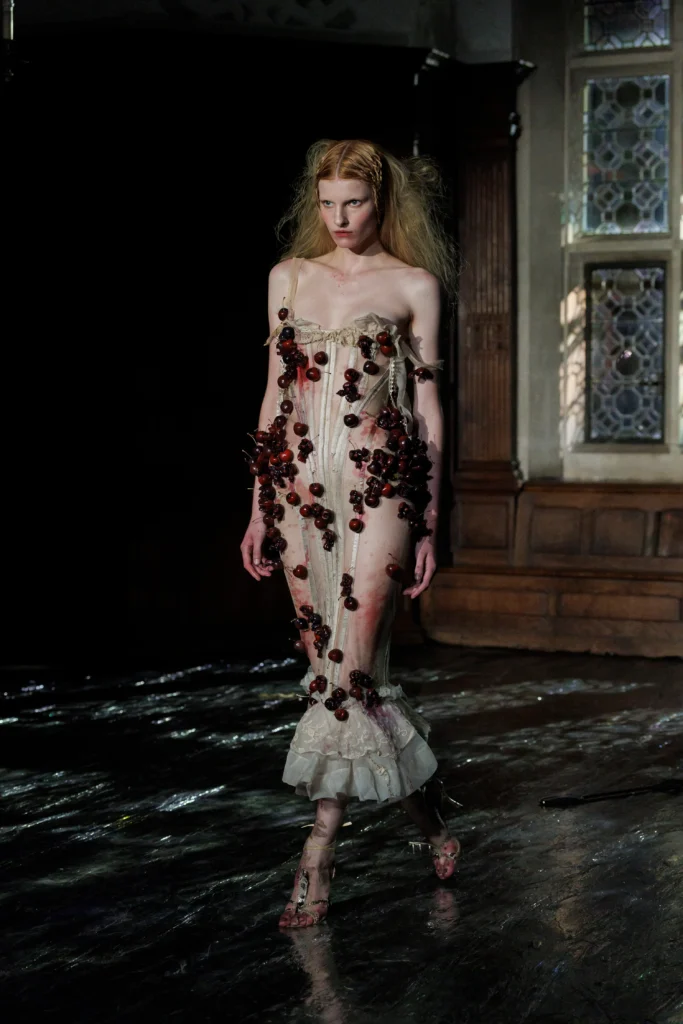
From post-punk Britain to pandemic-era expressions, goth tends to surge when collective anxiety peaks. The psychological function of the subculture’s controlled space for exploring grief, anger, fear, and alienation is very undoubtedly a fine way of metabolizing darkness.
The name has long emphatically carried the weight of other-ism. While mainstream society may condemn goth as an object of its moral panic, the community recognizes that aesthetic darkness does not equate to moral darkness. It is a diverse, yet unified subculture consisting of what conformity cannot accommodate for. Clearly, this human impulse is permanent.
The question for the subculture: why aren’t you afraid of the dark?
Credits
Written by Sahar Nicole @tiramizuzu