

Before Knight: Fashion Beyond the Beautiful
When Knight began working professionally in the early 1980s, fashion photography was already beginning to loosen itself from the traditional conventions that had defined it. The perfect image still dominated, but photographers were increasingly looking towards youth culture, subcultures and the imperfect reality of everyday life. Knight pushed those boundaries further.

In 1982, while still studying at Bournemouth and Poole College of Art and Design, he published his first book of photographs, Skinhead. Instead of making the culture look neat and palatable for fashion audiences, he showed it exactly as it was. He photographed what they wore, the music they listened to and how they existed in the world. The pictures were direct, unflinching and sometimes unsettling. Even in this early work, his distinctive vision was already clear. He understood that fashion was not confined to high-end stores, catwalks and idealised models. It existed everywhere, on the streets, and it belonged to everyone, even those who did not fit the accepted ideal. Fashion could draw inspiration from music, rebellion and a powerful sense of identity and community.

This instinct would eventually lead Knight to the very heart of the fashion world. In the late 1980s, Knight began working with Yohji Yamamoto on the designer’s catalogues alongside art director Marc Ascoli and graphic designer Peter Saville. Their first menswear and womenswear catalogues were published in 1986, creating a radically different approach to fashion imagery.
Knight transformed the way we look at fashion photography. Before, the clothes were often treated as the central subject. He showed us that an image could be so much more. It could evoke a feeling, not just describe a garment. This shift remains important today. Fashion photographs can now be narratives and emotional experiences. They can make us think and feel, and that is what gives them their true power.
McQueen: Fashion as Theatre
Knight’s creative vision found its perfect match in Alexander McQueen. It was as if the two were destined to create together. They understood fashion in remarkably similar ways.
McQueen’s clothes were never merely garments. His shows were theatre, performance, history, violence, beauty and fantasy all colliding in front of an audience. Knight did not simply photograph that world. He stepped inside it.

Their 1998 project for Dazed & Confused, Fashion-Able, stands as one of the most powerful examples of their shared vision. The editorial featured disabled models including Aimee Mullins and dancer David Toole, directly challenging fashion’s long dependence on a narrow definition of beauty. Knight photographed Mullins with her prosthetic legs fully visible, rather than attempting to conceal them.
That choice remains deeply resonant. The prosthetics are not treated as something that detracts from beauty. They become part of it. Mullins’ body is not presented as something that needs to be corrected. Her prosthetic legs become part of the visual language of the photograph, another material, another shape, another possibility. The question is no longer simply what does fashion consider beautiful? It becomes something far more compelling: what else could beauty look like?
That question runs through everything Knight has ever created. Difference is not something to hide. It is something to photograph.

His collaborations with McQueen grew increasingly experimental. For Blade of Light in 2004, inspired by McQueen’s Deliverance collection, Knight created an image that feels less like a fashion photograph and more like a moment captured from an extraordinary science fiction film. Figures appear suspended in motion, as though something enormous has just passed through the frame. Choreographer Michael Clark and dancers from his company helped create the sense of movement, giving the photograph an almost impossible weightlessness.
The clothes are present, but they are no longer the entire focus. They have become part of something much larger.

Inspired by the ending of McQueen’s Voss, Knight’s Black project carries the same intensity. Figures appear pressed against glass beneath a single spotlight, creating a claustrophobic, voyeuristic atmosphere that feels closer to cinema than conventional fashion photography. This was the strength of their partnership: McQueen created worlds through clothing, and Knight translated them into images. Together, they brought fashion photography closer to theatre, sculpture and performance.
From the Magazine Page to Pop Culture
Knight could have remained within the relatively contained world of fashion magazines and built an extraordinary career there. But his images refused to stay in one place. One of the most powerful examples of this broader reach is his work with Björk.

For the cover of her album Homogenic in 1997, Knight photographed Björk wearing a kimono designed by Alexander McQueen and styled by Katy England. Looking simultaneously ancient and futuristic on the Homogenic cover, she created a visual identity that Knight later extended into her Pagan Poetry video.
That photograph became inseparable from the visual identity of Homogenic, helping establish Björk as an artist who seemed to exist somewhere between human, machine and myth. Knight later directed her music video for Pagan Poetry, extending that same strange, intimate visual language into moving image.

By the time he partnered with Lady Gaga for Born This Way in 2011, his bold imagery had reached mass culture. Suddenly, the same unforgettable imagery he had been creating for decades, bodies reimagined, environments constructed from imagination and clothing that functioned more like costume and sculpture, was everywhere in popular culture.
And crucially, he did not soften it for mass appeal. He did not take the strange and make it safe. He trusted the audience to meet it where it was.
Knight’s contribution to popular culture was not that he made the avant-garde easier to digest. It was that he made people willing to look at it. He showed us that the unexpected can be beautiful. The artificial can carry real emotion, and that the impossible can become familiar.
SHOWstudio: Opening the Process
In the year 2000, Knight launched SHOWstudio, an initiative that would become inseparable from his identity as an ‘image-maker’. You cannot meaningfully discuss one without the
other. The concept was remarkably simple, yet it changed the landscape of image-making, by revealing the process.
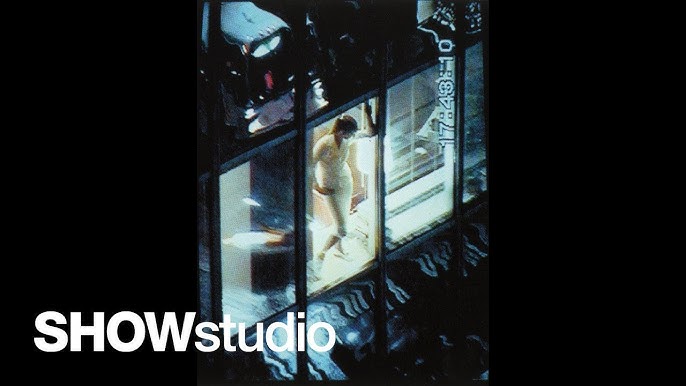
Fashion had traditionally presented only the finished article, the photograph, the collection, the runway show, refined and complete. Everything messy, experimental and unfinished was kept hidden. Knight wanted to open the door.
One of SHOWstudio’s earliest projects, Sleep, followed in 2001, placing models in hotel rooms and streaming the footage live online. Viewers could watch as the images unfolded, while Knight worked with stills captured from the stream, embracing the raw, textured quality of early digital video.
The process itself could be the artwork. The internet was no longer merely a place to publish finished work. It became part of the creative experience.
SHOWstudio grew into a platform for fashion film, livestreaming, interviews, performance and experimental digital work. Knight stopped asking only what a fashion photograph should look like, and began asking where fashion could happen and who should get to see the work unfold.
The Camera Was Never the Point
Knight has always embraced new technology, but never simply because it was new. The technology is the tool. The image remains the obsession. He has worked across every medium imaginable: film, digital manipulation, CGI, 3D scanning, motion capture and interactive media.
Looking back at early SHOWstudio projects such as Sweet, we can see him experimenting with 3D scanning at a time when the technology was barely used in fashion. While the industry was still finding its feet with digital tools, he was already using them to create entirely new visual languages.
He took these possibilities even further when he used digital technologies including 3D scanning and motion capture in work created for Kanye West’s music video ‘BLKKK SKKKN HEAD’, constructing digital environments where the human body breaks apart and transcends its physical limits. It is as though the body becomes free to do things that would be impossible in the physical world.
But Knight’s significance is not that he adopted new technology early. It is that he understood what those tools could unlock creatively. Film allowed images to move. Digital tools allowed photographs to break free from reality. The internet collapsed the distance between creator and audience. CGI allowed bodies and spaces to exist without ever having been physically built.
And now artificial intelligence has opened another door.
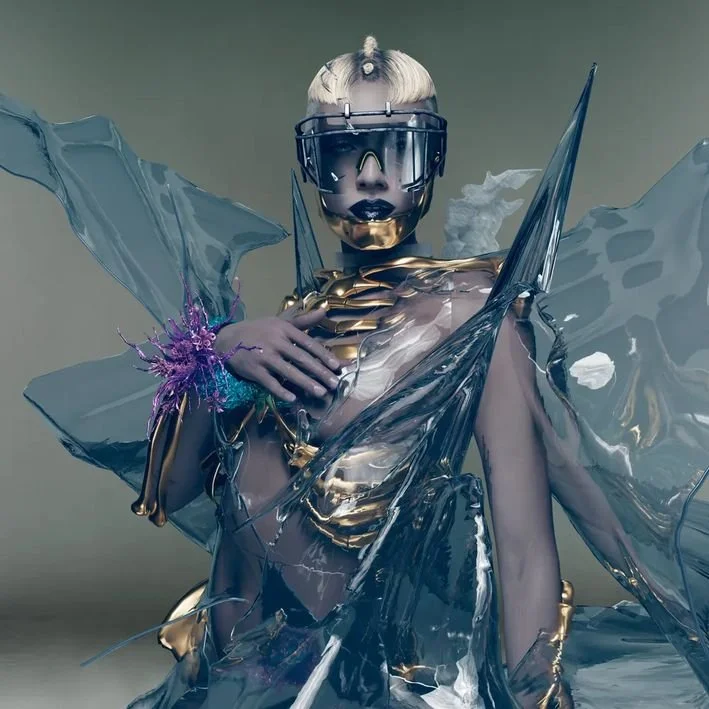
In 2022, Knight launched ikon-1, a digital fashion project consisting of eight thousand unique Jazzelle-centred 3D avatars.
Once again, the boundaries dissolve. Is it fashion? Is it photography? Is it digital art? Is it portraiture? Knight has never seemed particularly interested in the labels. He is always more interested in the possibilities.
The Image Is Only the Beginning
Over time, Knight began describing himself as an ‘image-maker’ rather than simply a photographer. It is a small shift in language that says everything.
Photography traditionally carries an implicit assumption of reality: something exists before the lens, and the photographer records it. Knight has spent his career dismantling that assumption. An image can begin with a real person and evolve into something entirely invented. It can be captured on camera, scanned, digitally composed from multiple sources, animated or generated from scratch. The final result may bear little resemblance to the realworld subject it began with.
In an interview in 2009, Knight observed that fashion is fundamentally meant to be experienced in motion, and that the still photograph can therefore feel like a compromise of the designer’s original vision. It is as though he has spent his whole career trying to break free from the limitations of the medium.
Film gave fashion movement. SHOWstudio gave us the process. Digital technology gave the body new forms. Livestreaming gave audiences access to the moment of creation.
Each new technology blurs the boundaries further. The photograph stops being merely a frozen second in time. It expands into a world.
Making the Avant-Garde Visible

It would be inaccurate to claim that Nick Knight invented avant-garde fashion photography.
The form has a rich history, shaped by generations of photographers and artists who dared to experiment, challenge conventions and redefine how fashion, beauty and image-making intersect. Knight stands on the foundations they built. However, his achievement is something different. Knight made the avant-garde visible.
He brought daring, untraditional ideas into the mainstream before they became trends. He photographed subcultures and street style as valid fashion. He placed unconventional models at the centre of his work, expanding the definition of beauty. His partnership with McQueen transformed clothing into performance. He defined the visual identities of artists from Björk to Lady Gaga. And through SHOWstudio, he pulled back the curtain on the creative process, showing the world that there is so much more to fashion than the finished photograph.
His influence extends far beyond individual images. He fundamentally shifted our understanding of what a fashion photograph could be. A photograph can be beautiful or unsettling, intimate or confrontational, physical or entirely constructed. It can document reality or create something that has never existed. It can function as a portrait, a stage, a sculpture, a film or a dream. Knight has spent his career inhabiting that space between what is real and what could be imagined. And that is why his work still feels relevant and alive.
Everything changes: styles, cameras, software, technology, fashion itself. Knight keeps moving with it. He has never wanted to protect photography from the future. He has always wanted to pull photography forward into it. That is what makes his career so extraordinary. He has not merely photographed clothes. He has photographed ideas. He has photographed possibility. He has captured bodies transforming, images evolving, fashion expanding into something larger than itself.
The camera was never the destination. It was only ever the beginning. And perhaps that is the greatest gift of his work: after decades of looking at his images, we are still left asking the same question he has been asking all along. What if it could be something more?
Credits
Written by Aden Marrie @chic_feminin
Cover: EE72 – Nick Knight on 25 years of SHOWstudio