

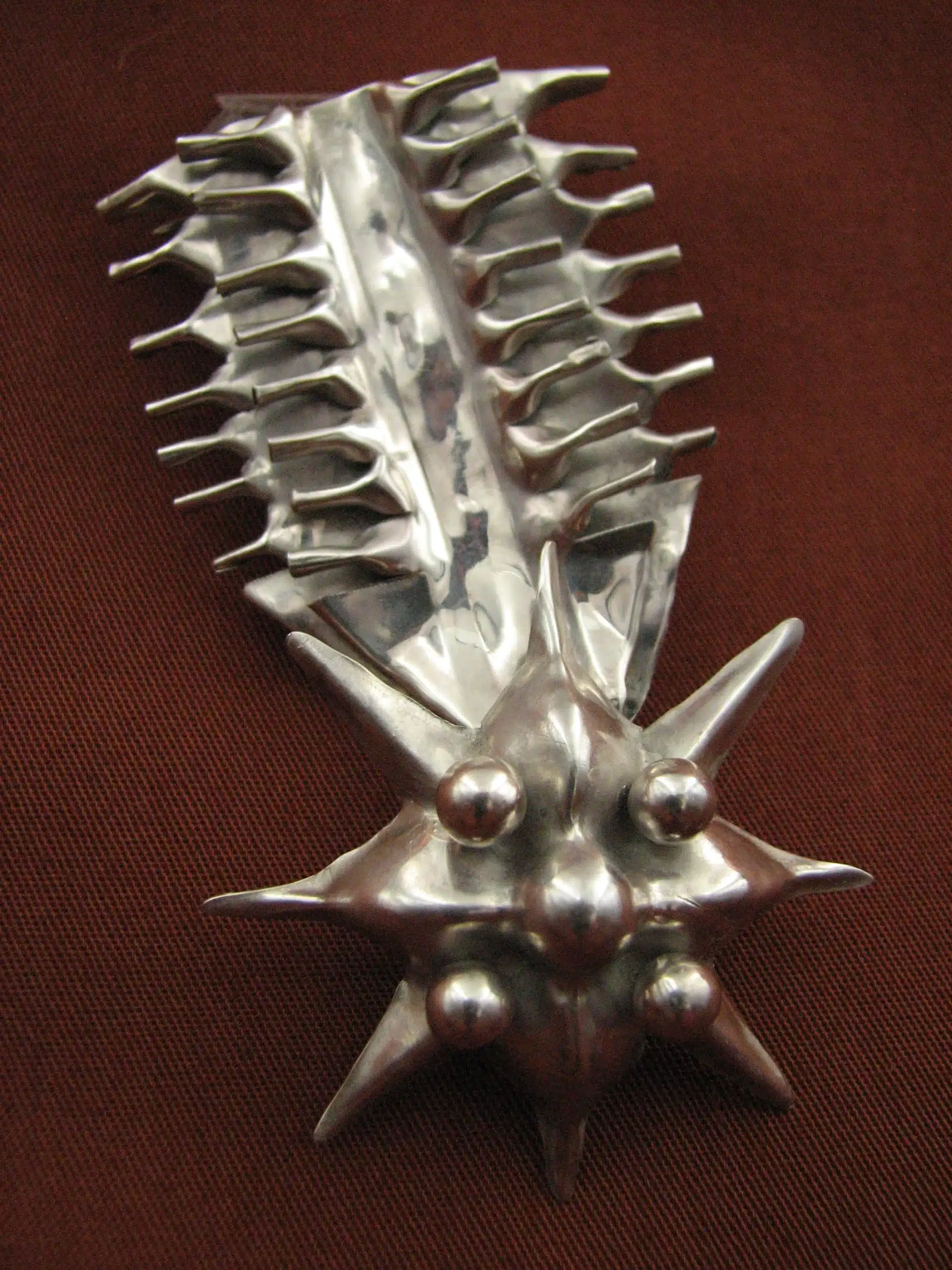
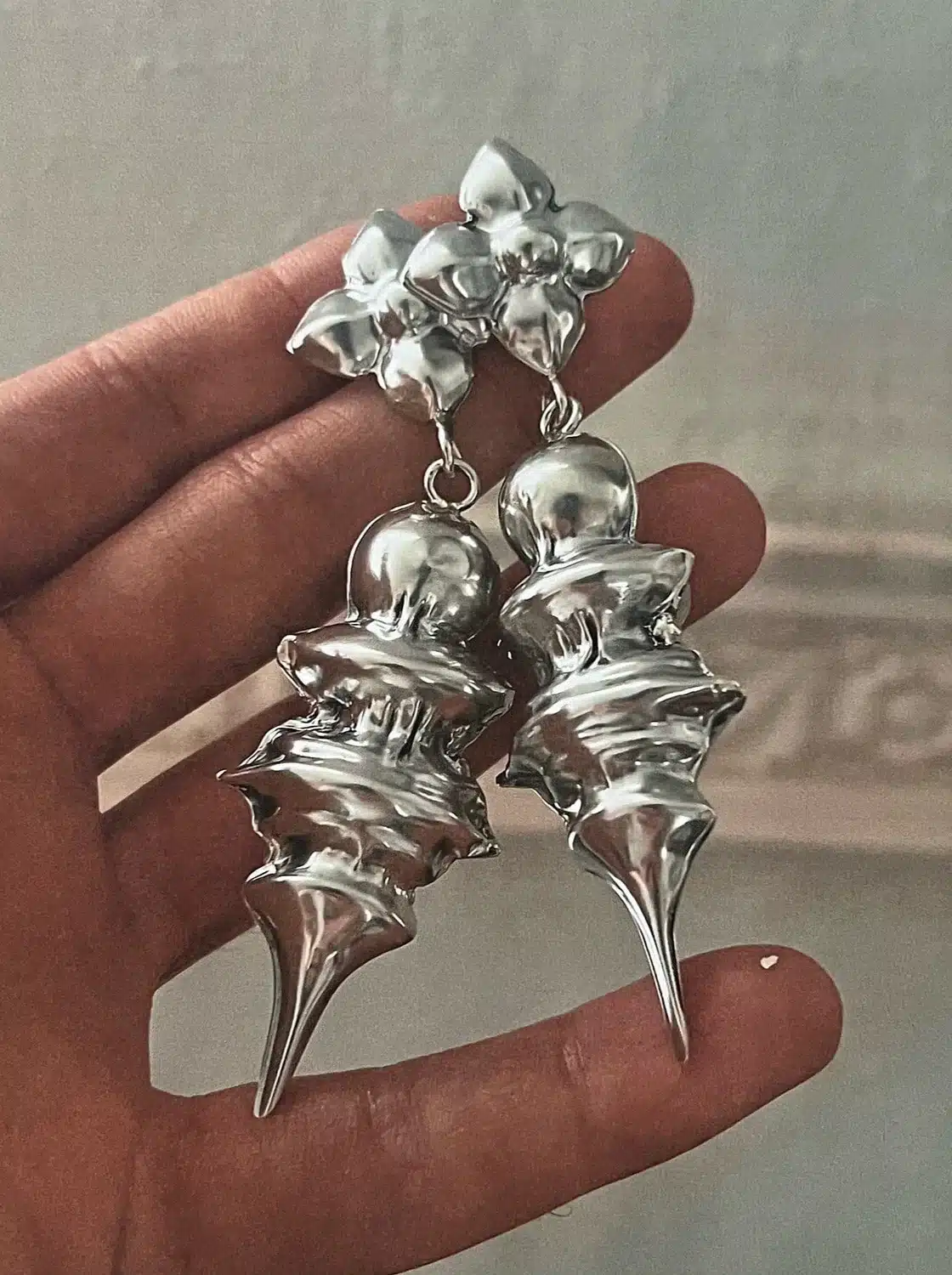
It is gritty, a seeming collision of sculpture and hardware. Raw but intentional, often imperfect yet never accidental. Each piece feels less like a polished product and more like a relic from an imagined world. There is a brutal softness to it all, where industry meets intimacy.
In our conversation with Dominik, the founder behind the brand, we spoke about his early experiments, unexpected moments like collaborations with FKA Twigs and Gentle Monster, and his ongoing journey shaping what is available into something mythic, wearable, and entirely his own.

How have you been?
I have been quite busy, especially during fashion week. Brands have been reaching out for collaborations, and I am still figuring out that part of the job. But otherwise, my personal life has been good.
What first drew you to jewellery making?
It just kind of happened naturally. When I was 17, I realised I wanted to pursue something more art-related. That was when I had to decide which school to go to and what to study. I was interested in sculpture, and I looked into a university in Krakow. I wanted to prepare a portfolio for them, but at the time I did not have much to show, just some sketches and a few personal projects.
I spent that summer focusing on building my portfolio. Along the way, I started meeting different people working in music and the arts, and they offered me new perspectives on the creative industry. Somehow, I gravitated toward sculpture, though I was still heavily involved in fashion. I was basically trying to figure out what I could create with no budget, coming from a fashion background and being really drawn to three-dimensional forms.
I found joy in working with sculptural pieces, especially because I could do it from home. I did not need a big workshop or elaborate setup, just a bench. So it made sense to start small.
I also believed in the materials I was working with. Their natural qualities helped bring out the essence of each piece. Metal felt like a natural choice. Solder and melted tin were easy to work with at home, affordable, and accessible. Plus, I genuinely enjoy taking long walks around hardware stores. Once I started connecting the pieces and exploring what I could do with them, things just naturally evolved from there.
How long have you been working with metals?
I think it was around 2021.
Did you have any former training in jewellery making?
No, I did not have any formal training in jewellery making. It just felt like a natural next step, something to explore when what I had been doing started to feel a bit stale. You begin to see things differently, gain new perspectives, realise you are getting better at your craft, and taking on new challenges just becomes instinctive.
When I moved to Warsaw, where I am based now, I met a few people, or mentors, in the jewellery scene. They were not working in the same style as me, but they had more experience and a more traditional approach. It did not exactly align with how I wanted to work, and I did not learn much directly from them, but they pointed me to places where I could buy materials or get things cast. They shared what they knew, and that helped me start working with different people and finding my own rhythm.
That said, I have always wanted fast results. I am impatient and I do not really like waiting. So I turned to YouTube tutorials, tried things out for myself, and started figuring out my own methods. I kept asking: what if this works, what if I can make it happen this way?

What shaped your style in jewellery making, and where did the inspiration come from?
I feel like my style is quite subconscious. It came from years of taking notes, trying to understand what exactly made something interesting to me. I would observe, reflect, and slowly build on those qualities, especially the ones that connect back to the natural world. Everyone interprets industrial elements differently, and that contrast in approaches really fascinates me. I am always trying to find a balance. When a certain shape or form resonates with me, I will explore it, examine it, and eventually incorporate it into my work.
I have always felt that the way you visually present yourself says a lot about who you are. It is not about following trends, it is about how you want to be perceived. You dress for the future version of yourself, not the present one. It is about who you aspire to become. Style is hard to define. Someone might not be conventionally trendy, but something about them resonates. There is a connection. It is always in the small, intentional choices, like a hairstyle or a piece of jewellery. To me, being aware of what inspires you is one of the most important parts of figuring out who you are.


Would you say that your works are a form of self expression
We all just remix what we are given, right? We are made up of the things we are interested in, and how we reflect those influences is what really matters. I come from a very Christian background and a folk heritage. Not that it always defines me, but I think folk culture is more deeply embedded in countries like Poland, especially when you grow up in a smaller town. When you visit your grandparents often, you are naturally more exposed to these traditions compared to someone raised in a modern city. There is just a stronger presence of tales, Slavic customs, and more traditional ways of seeing the world. Like how people judge fashion choices, what is deemed acceptable or not. All of that has definitely influenced me.
I try to break it down and make sense of it, but it still feels mostly subconscious. These influences do not show up so much in the jewellery itself, but more in the imagery and the world that surrounds it. In the end, I believe jewellery gains meaning when it is gifted, or when it carries some sort of history. I am trying to embed as much of that as I can, giving each piece some personality and a sense of story.
As you can see, I barely wear any jewellery myself. At first, I tried to force myself to wear my own pieces as it made sense for promotion. But eventually I realised that what I am really doing is bringing a vision to life. I used to make things I could not buy, but now I am creating things I would not necessarily wear myself. It is less about me now, and I am more comfortable playing the role of the worker in my own factory.
When I finish a piece, I am proud to share it, but in my mind, it no longer represents me. It becomes a closed chapter. That is why wearing it does not feel genuine anymore. What I am trying to say is, I have not fully defined what my jewellery is. I am not sure if it is a brand, a personal practice, or just a form of world-building. It is something that happens naturally, something continuous, where you can see the evolution and I hope it tells a story. Still, I do not know if what I am doing is a reflection of my life, or just something that is growing alongside it.
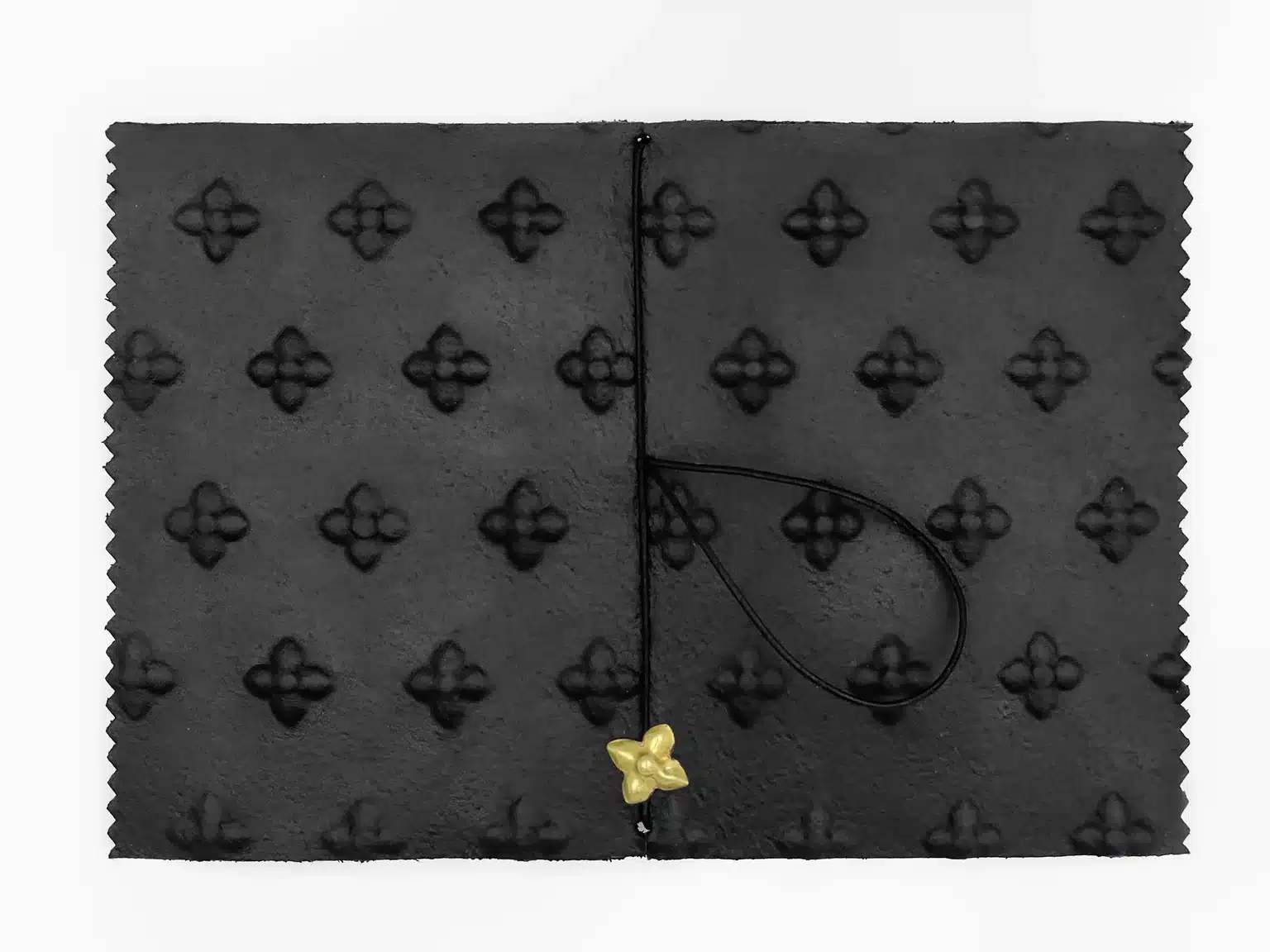
I saw the leather notebook cover on your website, it stood out since it’s quite different from your usual metal work. After the Mantis Belt, you seemed to move away from leather for a while. What made you return to it for this piece?
Personally, leather sits somewhere between jewellery and clothing. It’s a tough material that demands more attention than regular fabric, but I can emboss it, like I did for the notebooks, which brings it closer to jewellery. Right now, I’m experimenting with the whole silhouette. Not just adding a piece to an outfit, but creating a complete look or at least thinking about it that way. So working with leather feels like the right step in that direction.
I’m not a fashion designer in the traditional sense. I don’t design clothes or sew. I can’t work with a sewing machine; it just gives me a headache, and I’ve come to accept that. But leather feels closer to that space. In my jewellery, I’ve been using embossing for a while. It’s a technique used in many industries, including jewellery, but I like to keep it rough and industrial, yet soft in the shapes I use. This made leather a natural medium to experiment with. Something in between and easy to work with. It’s a good way to explore how I feel about it. Plus, I love having a little notebook and the idea of putting notebooks in leather sleeves felt natural.
One thing that’s bothered me is how expensive and time-consuming jewellery making is. I’ve learned to respect the time I put in, but I also want my work to be accessible. I know many people who like what I do but can’t always spend 200 euros on a necklace. Some of my pieces come across as flashy or big. People admire them, but it’s not necessarily their style. So, I felt notebooks were a good everyday item, something I use and assumed others would too, and I was pleasantly surprised by how well they were received.
Also, this year, or maybe two years ago, when my tie guards started getting strong reactions, I was so happy to make people happy. But going back to the belts, I didn’t produce more because of the resin. I realized that if I continued, I’d have to source insects from collectors and encase them myself. Working with resin wasn’t something I wanted to do, and I didn’t want to support killing bugs for these pieces. It just felt like the end of an era for me.

How did you even come up with the idea of making insect belts?
Oh, actually, that was the very first thing I ever did for my brand. It was the first project I took on under this name. I was in Berlin, wandering through a flea market, when I came across a collection of bugs. Although these were more like collector’s items for kids, they came with little educational cards about the insects. It reminded me of those resin-encased bugs we saw in biology classes when I was younger, and those jars preserving animals and insects. I have always found those things strangely beautiful, so scientific yet artistic. Being able to look at the bugs up close felt fascinating, and I thought it would be amazing to incorporate that into everyday wear.
If you have ever been to Egypt, you might have seen scorpion belts or keychains with scorpions. So the idea itself is not new or something I invented. But what is interesting is looking at it from different angles, examining it, and still being able to wear it every day. There is something cool and uncanny about it. Like having a big spider near your crotch, it is weird, but intriguing.
In the beginning, people liked it and gave positive feedback, but sales were slow. I started selling the pieces in a local store that carried other high-fashion products, but the response was quiet. However, when I began selling and promoting the pieces myself, things really took off. That was when I thought, maybe I can actually make a living doing this. Of course, it was not anything close to what I am doing now, I was only 18 back then, but it gave me some income and sparked my desire to explore jewellery making.


With high-profile moments like FKA Twigs and New Jeans wearing your pieces, and your tie guard featured in the Gentle Monster optical campaign, have these collaborations or spotlights influenced your creative direction?
Definitely. There were many times when FKA Twigs showed genuine support for my pieces. She treated my craft with a level of respect and value that really surprised me. It gave me a lot of validation and motivation to keep going.
I do not think these experiences changed my style, but they definitely injected me with fresh energy and made me think seriously about my career. Those moments proved to me that the intention behind what I create matters far more than the final product. If you are determined to bring your ideas to life, you will find a way. Of course, I push myself to improve quality and deepen my understanding of the process with each project, but the idea is what truly drives me.

Have you ever felt the pressure to commercialise your work or make it simpler?
Last year, I really felt the pressure. There are so many people I admire in the fashion industry who mostly keep a low profile, yet they focus more on fashion than jewellery. From what I’ve observed, they seem very organised—presenting collections by set dates, approaching buyers, creating client sheets, managing everything in spreadsheets, and so on. This kind of structure makes the business reliable and predictable.
But this year, I realised that approach just isn’t for me. It doesn’t work.I need to think about things differently, even if I’m not exactly sure what that looks like yet. For now, I don’t want to sell in big stores. Maybe I think too highly of myself, but I don’t want to be placed alongside big brands with million-dollar budgets and super expensive products—that’s not what I’m about. At the same time, I don’t want my work to be so inaccessible that people can’t afford it. I’m trying to find a middle ground in this area, but I haven’t quite found it yet.


It’s definitely tough. Especially as an artist and even more so when you don’t create conventional jewellery. Finding the balance between making a living from your work and maintaining your artistic integrity by creating simply because you find joy in the process is a real challenge.
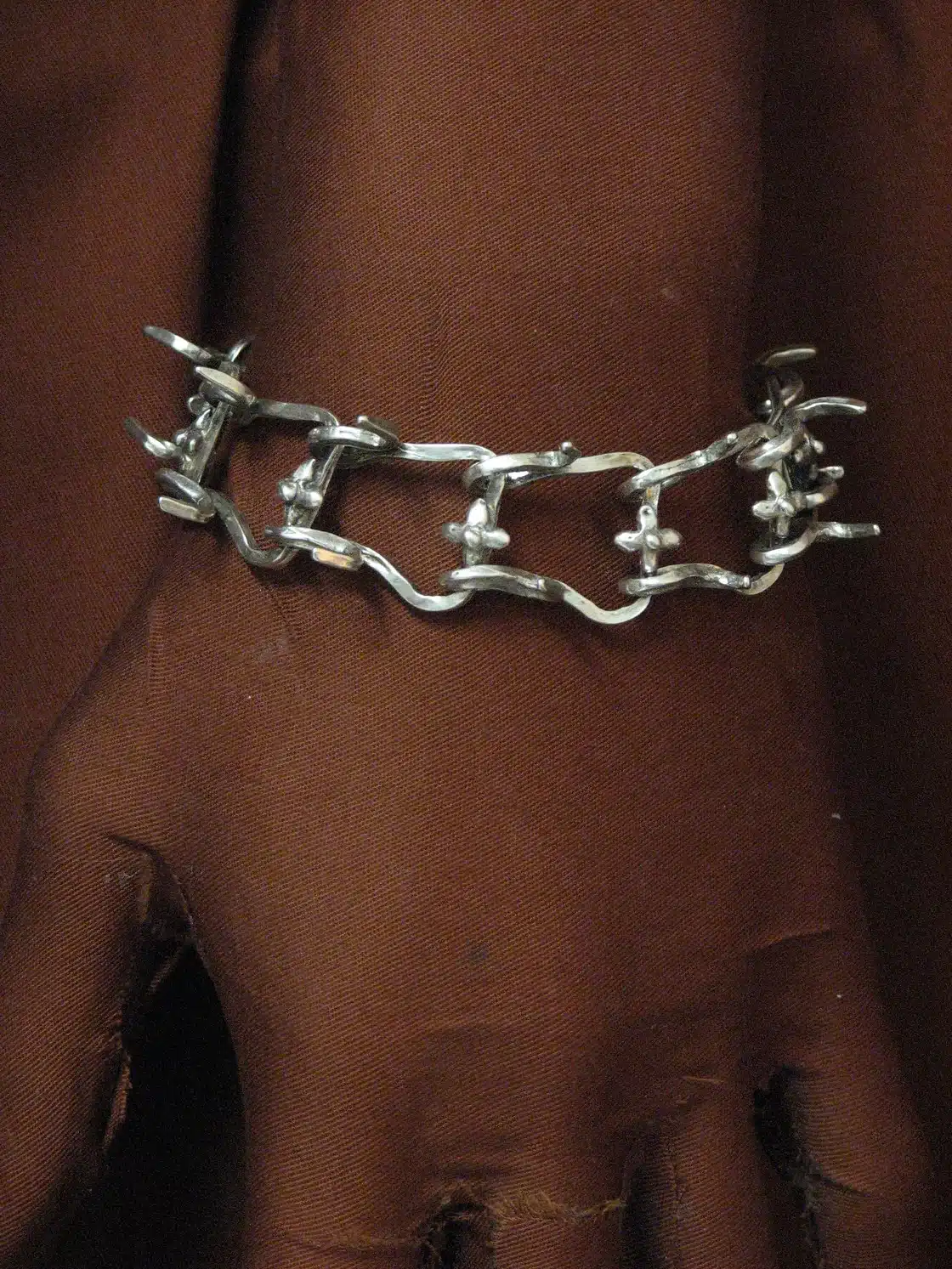
I’ve seen many creators share their process and highlight the little scratches and imperfections, which to me makes their work feel more soulful. But because these pieces aren’t set with diamonds or necessarily made from precious metals, they’re often labeled as fashion jewellery, and that really bothers me because I consider them artistic jewellery.
I see jewellery falling into three categories: high-end jewellery, fashion jewellery— you know, the kind you find at Zara or SSENSE— and then costume jewellery, which is often part of larger projects, not always accessible, and more about world building. Right now, I feel drawn to this costume jewellery space. Costume jewellery feels more exciting to me than fashion jewellery.
I’m tired of the traditional collection format because it doesn’t make sense anymore. In the past, collections were made for buyers, which was logical. But now, they’ve become shows that don’t say anything meaningful. They’re not quite theatrical performances either, just stuck in a kind of grey area. So for now, I want to focus on making costume jewellery.


Is jewellery something you want to keep doing?
I feel like I’m not really sure, that’s the thing. I’ve built up this set of knowledge, and it’s what allows me to work and express myself in this area. I try to escape it as much as I can, but honestly, it’s the only thing I really know right now. No matter how much I try to step away, I always find myself bringing jewellery along with me. There’s still so much to say and do. I haven’t found the perfect balance between what I want to create, what’s wearable for me, and what truly represents where I want to stand. Maybe I’ll never find that balance and that’s okay. As long as it teaches me something along the way, I’m content.
I’m always more focused on the process and the tools I’m using. There’s a childlike curiosity in me. I love learning and observing how heat affects metals, exploring different treatments, materials, and so on. There’s so much to explore, and that keeps it interesting. Then you sell a product and move on to the next thing. That’s my motivation. The process and the things I plan to express, even if I’m not sure how much more there is to say in this area. As long as I can still find joy in it, there’s plenty more I can do.
Do you plan to experiment with other materials besides metals?
I’ve done some work with stones and jewels for private clients, but whenever I work with stones, I try to stay as far away as possible from the whole “crystal girl” jewellery vibe. I don’t want to pretend certain stones have magical properties or anything like that, it just feels really off to me. It seems like a big part of the jewellery market is dominated by that genre. That said, I do find those designs aesthetically pleasing and I’m always fascinated at how different cuts affect the way light reflects on them. There are a few approaches that I’m considering.
It’s definitely an interesting topic, but setting stones can be tricky. They can loosen over time or require special maintenance, so I have to be careful and take my time. I also need to work with someone trustworthy who can handle that properly. Since I like to work fast, this isn’t something that I gravitate towards. Still, I see myself exploring this path soon, or at least approaching it in the near future.
As for stones, amber especially intrigues me. It’s like a time capsule from the past, and I love its smell, it’s incredible. But amber is very soft and its color changes over time, especially when exposed to UV light, which makes it difficult to work with. I feel like I’m trying to avoid very bold, inaccessible designs, but amber pulls me in somehow. It’s a tricky balance. These ideas are always on my mind, but I prefer to wait for the right moment, when I feel comfortable and confident in how to approach it.
When something you make doesn’t turn out the way you hoped, do you work with it as it is or start over? How do you usually navigate challenges or setbacks in your process?
Sometimes a piece just ends up sitting on the shelf for months. Then one day, I might return to it with fresh eyes and find a way to work with it, or it just stays buried. I’ve built up a lot of tolerance for challenges along the way because I allow imperfections, like small holes or surface marks, as long as they don’t compromise the structural integrity of the piece. To me, those imperfections add depth. They make the object more interesting and unique— no two pieces ever look exactly the same.
Until I find a way to improve the design, I’m willing to accept it as it is for now. There’s a lot of prototyping and experimentation behind the scenes, and I’m constantly learning through that process. I try not to get too fixated on the design itself, and I think that’s important. If I sketch something and try to bring it to life but the material behaves differently, I adjust to that. I let the material lead instead of forcing it to follow me. That mindset has shaped my process from the very beginning.
I know it’s something a lot of people say, but it’s true! The result is always more interesting when you work with the material rather than against it. You never know when something will throw you off your planned path, and how you respond in that moment really matters. It challenges your design thinking, and in many ways, that can apply to life too. These unpredictable moments often lead to better outcomes, and sometimes, they make you a better person as well.
Where do you see Zwyrtech in the near future? Are there any goals or dreams you’re working towards currently?
Well, I see Zwyrtech moving away from the fashion-oriented idea of jewellery and evolving more toward costume design— toward creating something that feels complete. Not complete in a fashion sense, but in a world-building sense. Almost like designing a character, one that embodies what I want to express. That’s my current ambition. And with that direction, you can expect to see more large-scale pieces alongside the everyday ones.
Credit:
written by Erica Zheng Jia Xin @br4in_f4rtby Erica Zheng Jia Xin @br4in_f4rt