For centuries, philosophy said fashion was nothing, just appearance, just surface, just vibes. Then Roland Barthes showed up in 1967 and dropped his book The Fashion System: clothes weren’t decoration, they were a language, a whole semiotic system, signifier stacked on signifier, read like a sentence. Sixty years later, the runway barely bothers with sentences anymore. It goes straight for the nervous system. Barthes’s real insight was synchrony: a collection isn’t read word by word, like a book. It’s read whole, in one glance, the way you read a photograph. A show doesn’t build an argument across sixty looks, it detonates one, representing a state of mind, a political attitude, acting like a catalyst for social fantasies. Fashion to him is a Literature. But what kind of literature?
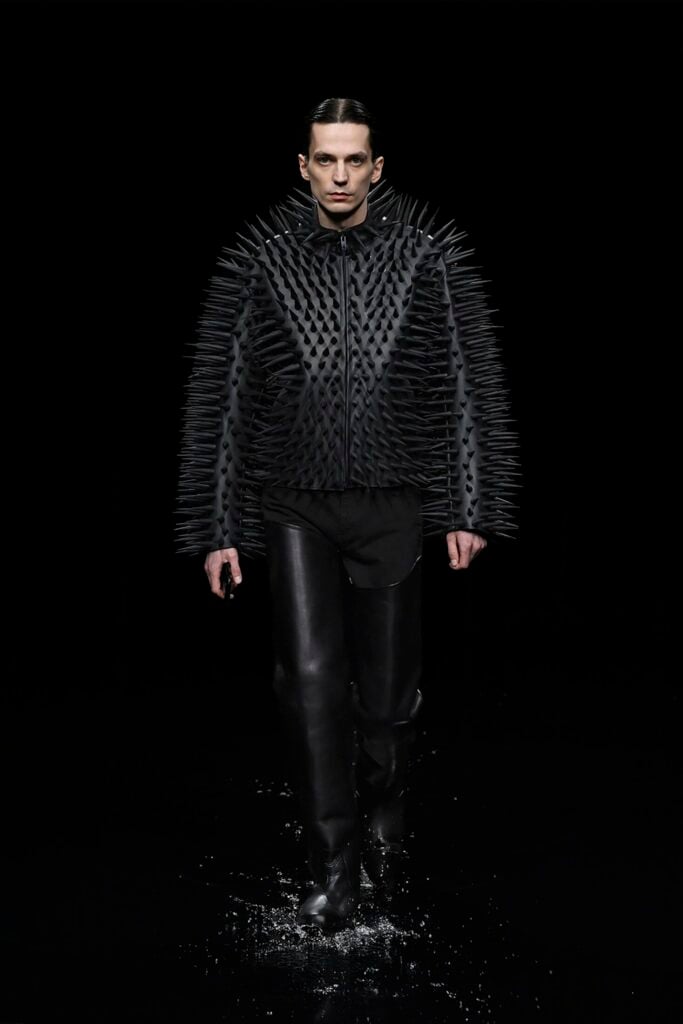
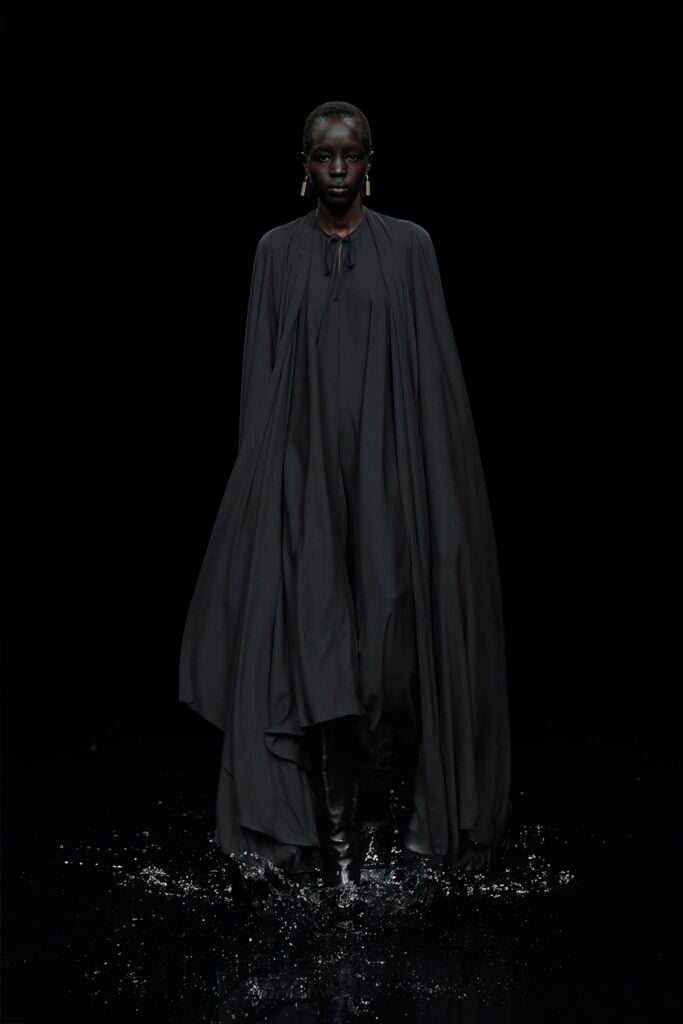
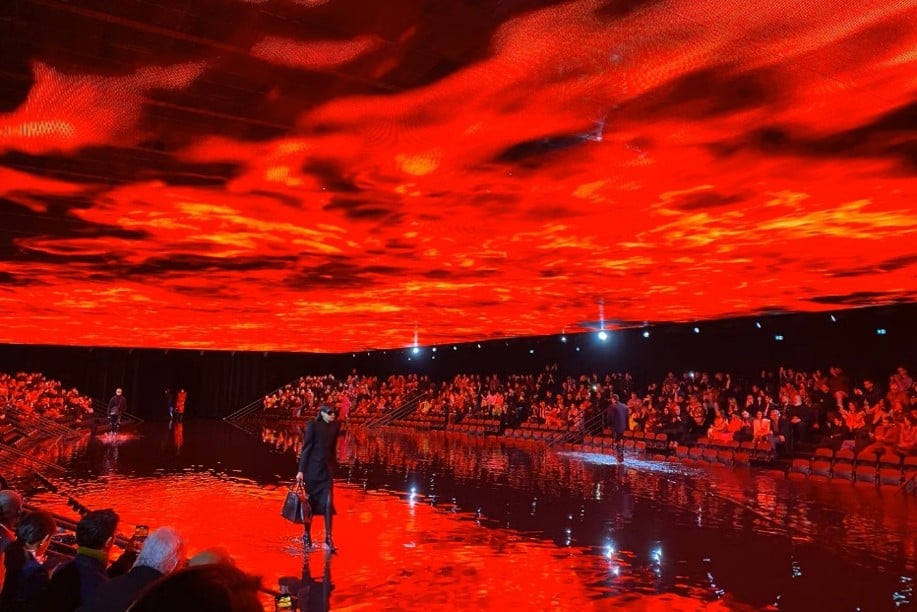
Balenciaga FW20 didn’t send a collection down the runway, it sent a warning. Demna flooded the set, torched the sky red, sent a flock of digital crows screaming overhead, and let the whole thing read like a trailer for the end of the world. The garment doesn’t describe the apocalypse. It arrives as the apocalypse, all at once.
Visibly, Barthes never actually watched a runway show. His Fashion lived entirely in magazine captions, described, never witnessed. There were no designers in his system, no models, no bodies, only a journalist’s sentence standing in for an event nobody in the room got to see live. Barthes do not really bother about Fashion but about magazines. What he was missing is exactly what a show like this one supplies: the body back in the picture, unwritten, undeniable, and just a perception of texture.
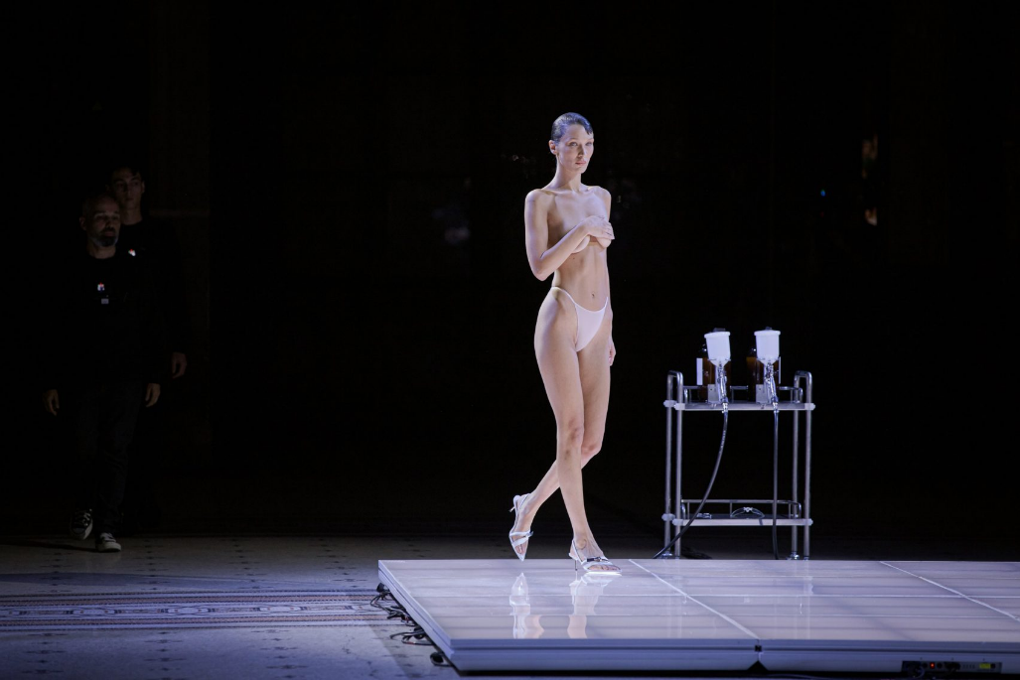
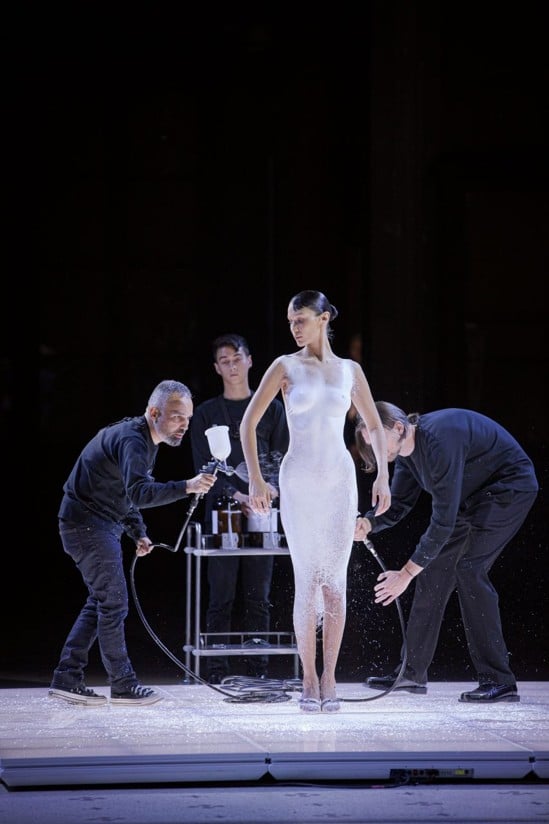
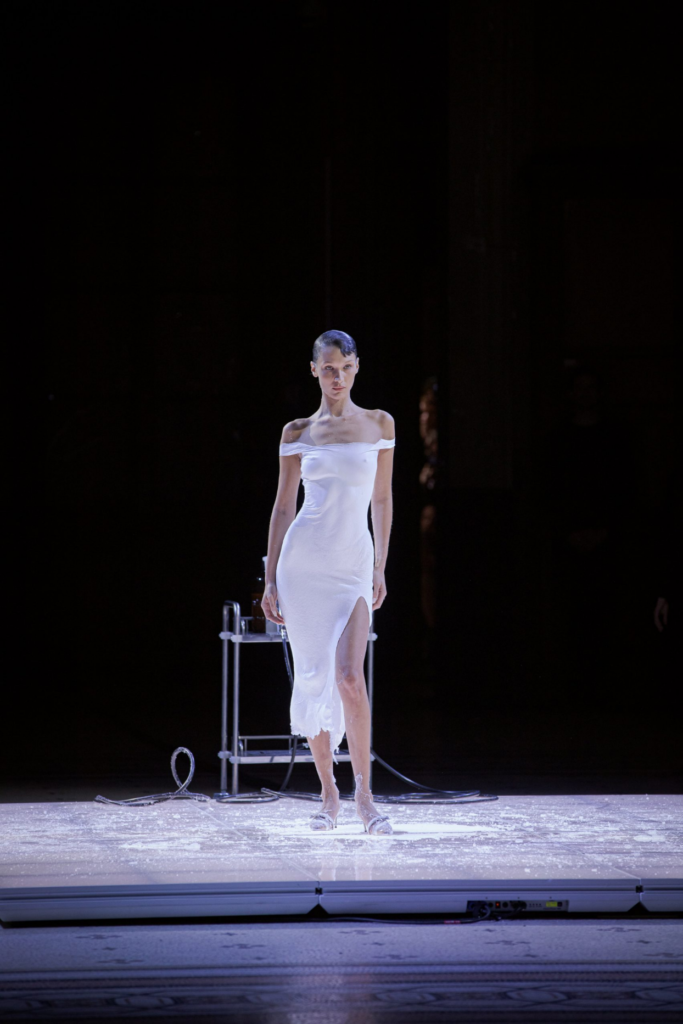
In 2022, Coperni doesn’t even bother with clothes anymore. Bella Hadid walks out basically naked, gets spray-painted into a dress live on the runway, in front of a room already filming on their phones. Fifteen minutes, one nozzle, zero seams, a dress that didn’t exist five minutes earlier. $26 million in media value from a garment nobody wrote a single sentence about. Call it punctum, Barthes’s own word, from Camera Lucida, for the detail in an image that wounds you before you’ve had time to read it. This dress needed no caption, because the spray gun was the caption.
Which is really the whole shift in one word: Fashion moving from logos to aisthēsis. Not rational discourse, decoded after the fact, sensation, delivered directly, no translation required. You don’t read this kind of show. You feel it first and figure out what it meant later, if you bother at all.
Barthes had a term for the old model: the “garment-written,” Fashion existing only once someone bothered to describe it. What’s replaced it is the “garment-real”, perceived, not narrated, circulating as image and duration before any critic gets a sentence out. The point of a show now isn’t to be prescribed. It’s to be made visible, then re-made, endlessly, by everyone who saw it.
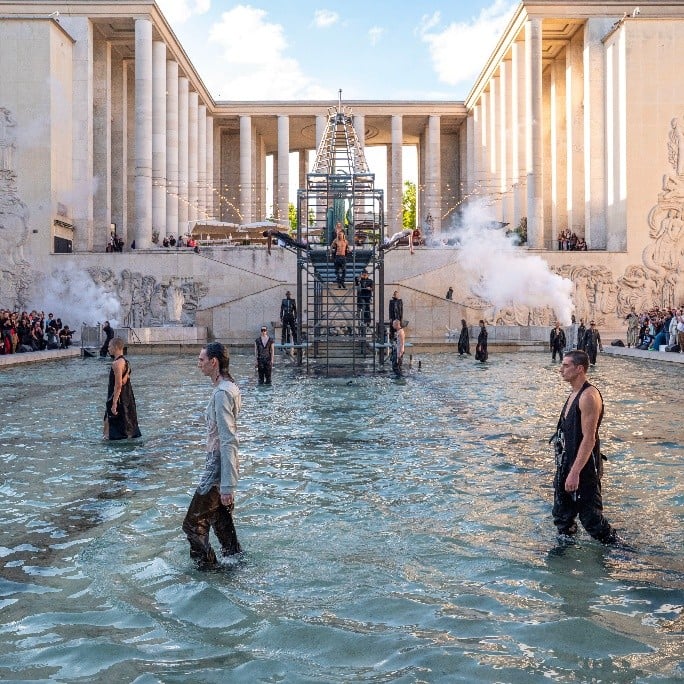
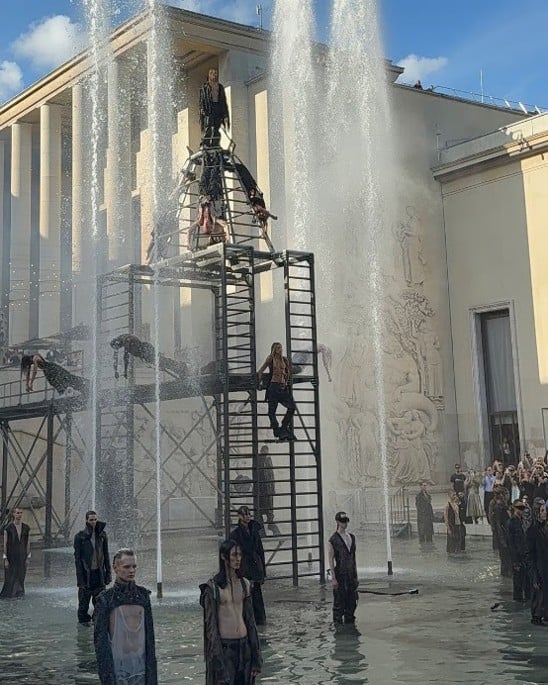
Rick Owens sends models scaling a scaffolding tower and wading through the fountain at the Palais de Tokyo, a temple built only to be climbed down from, on camera, the body pushed past the architecture meant to hold it. This is Artaud’s theatre of cruelty, no dialogue, no script, meaning delivered straight to the nervous system, the body assaulted before it can be interpreted. The garment stops being a sign for revolt. It becomes the revolt, signifier and referent collapsed into the same soaked dress.
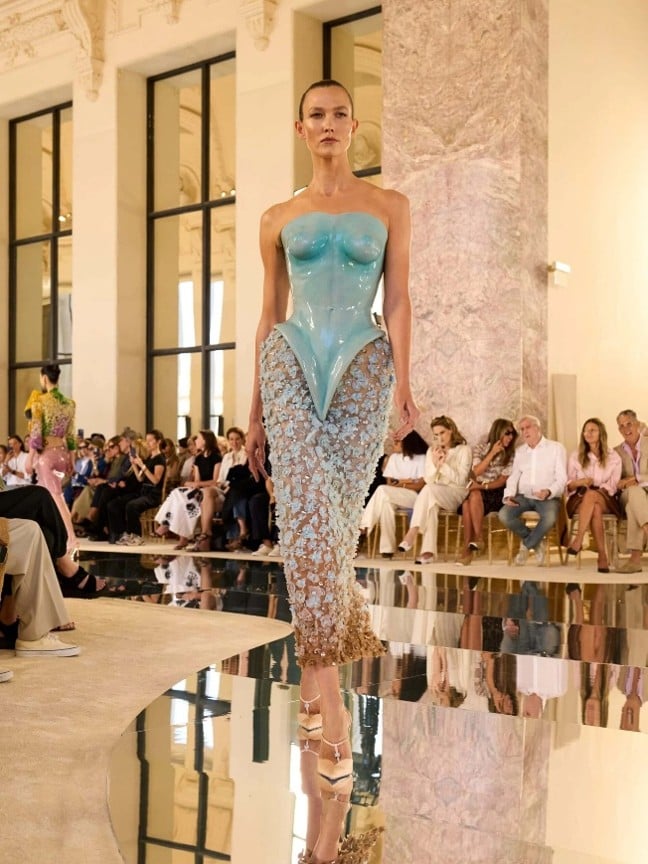
Daniel Roseberry glues a sculpted lung onto a Schiaparelli bustier, representing a new and perfect second skin. The perfectness result of the uniformity of the bustier, like a shell or an armure. It literary redraw the silhouette. Deleuze and Guattari had a name for this decades early: the “body without organs”, not a body missing its insides, but a body refusing the organization imposed on it, refusing to let its organs sit quietly where anatomy says they should. Roseberry takes the idea and makes it literal: lungs, hearts, ribs, worn as ornament instead of hidden as function, the inside turned out and put on display like jewelry. It’s couture as dissection in reverse, not opening the body to understand it, but rebuilding it from the outside, refusing the order anatomy textbooks take for granted.
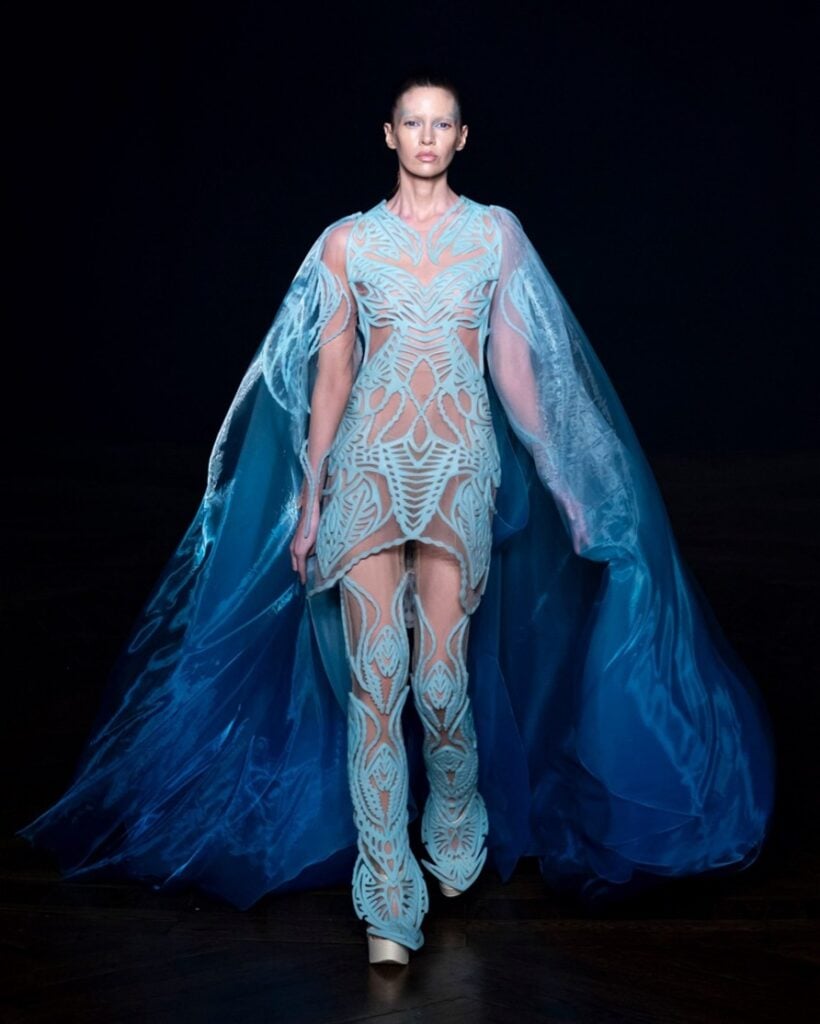
Iris van Herpen grows a dress out of 125 million living, glowing algae and calls it couture. Barthes’s “degree zero of writing” finally has a pulse: a garment that doesn’t just resist being read, it metabolizes, breathing, feeding, possibly outliving the show it was built for. So the real question is, is signification disqualified by non-human semiotic? Garments dancing in the dark like a new silent metaphysic.
The name “sympoiesis” refers both to “symposium,” (from latin : “to drink with people”), and to “sum poiesis,” meaning to create poetry together. This poetic act refer to the participation of the non-human in the making. However, we can pursue that idea in the runway itself. The runway functions in two ways as a theatrical work: a space where people come together as a symposium and a place to create poetry together. Runway is both a reflection and an act.
None of this holds still long enough to be filed as one closed system, and that’s the point. Think of it less as a structure than as a rhizome, Deleuze and Guattari’s word for a network with no single root, no center, spreading sideways instead of standing still. Fashion doesn’t converge on a single reading. It throws off lines of flight, one show reacting against the last, against its own house, against whoever’s watching.
As all social structure, Fashion refuse to close itself into one system long. Every one of these shows rewrites the last: not a footnote, but a Palimpsest in motion, Genette’s word for exactly this, tradition and rupture layered onto the same fabric, season after season.
Barthes gave fashion a grammar. What it actually wanted was a body, layered, rewritten, palimpsest-style, one moment stacked on the last. He read fashion as a sentence. Turns out it was always closer to a wound: something felt before it’s understood, aisthēsis before logos, punctum before caption.
Credits
Written by QBL