When you think of haute couture, you might imagine glitzy evening gowns, Dior’s New Look, and celebrities brushing shoulders in sweeping tulle skirts at award shows. Not live worms wriggling in dirt, trapped inside a clear bustier corset. Not body parts squeezed to bursting with ribbons and lingerie. Not padding that creates unsettling “lumps and bumps” in unexpected places.
While fashion is often synonymous with glamour and luxury, some of the most influential designers of the twentieth and twenty-first centuries have chosen to challenge this assumption. They create pieces that may not be conventionally pretty but instead explore the beauty of ugliness. “Ugly is attractive, ugly is exciting. Maybe because it is newer,” Miuccia Prada famously declared in 2012.
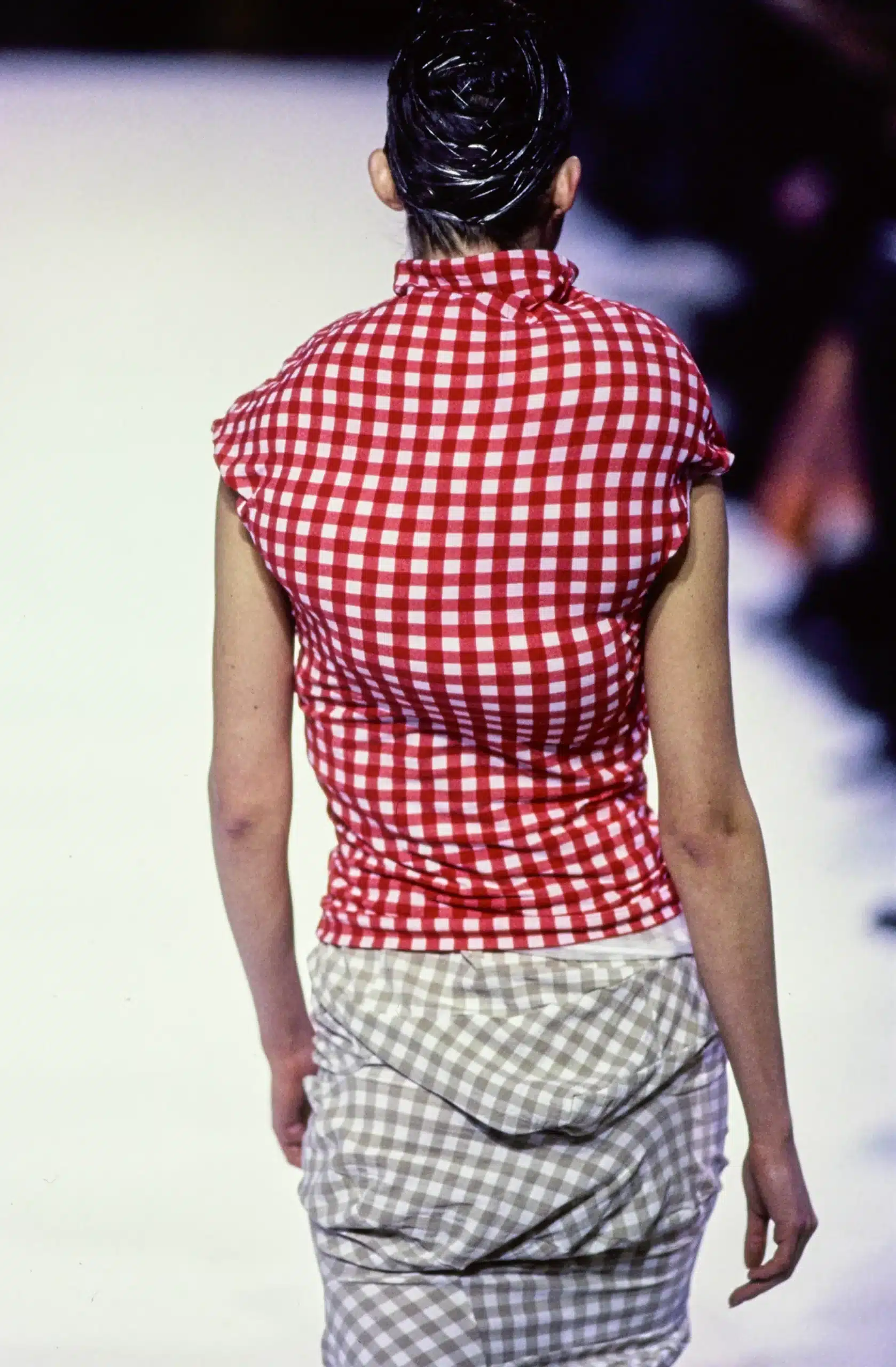
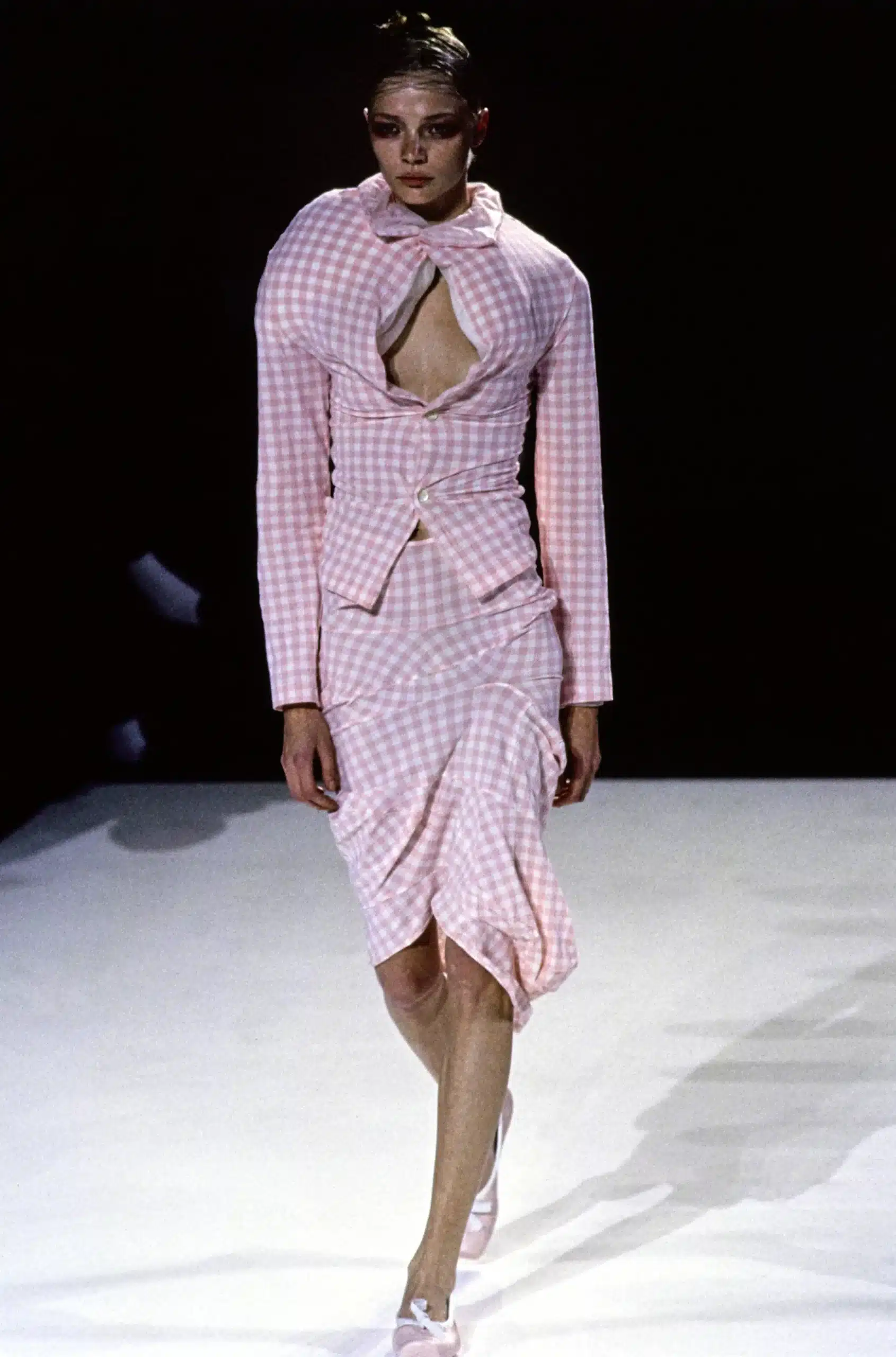
One of the most celebrated examples remains Rei Kawakubo’s 1997 Comme des Garçons collection Body Meets Dress, Dress Meets Body, now widely referred to as the “lumps and bumps” collection. Padding created distorted silhouettes: hunchback-like humps, ironic cleavage-enhancing bras, and bulbous curves that reimagined the maternal body. Francesca Granata, in Experimental Fashion: Performance Art, Carnival and the Grotesque Body, wrote that Kawakubo’s collection “manifests the relation between the pregnant body, the female body, and the disabled body—three types of bodies that deviate from the norm.” The pastel gingham prints suggested domesticity while parodying the hypersexual, polished aesthetics of the time, exemplified by Tom Ford’s Gucci. Though today the collection is hailed as visionary, at its debut both Vogue and Elle photographed the clothes with the pads removed, proof that the unfamiliar was too uncomfortable for some to digest.
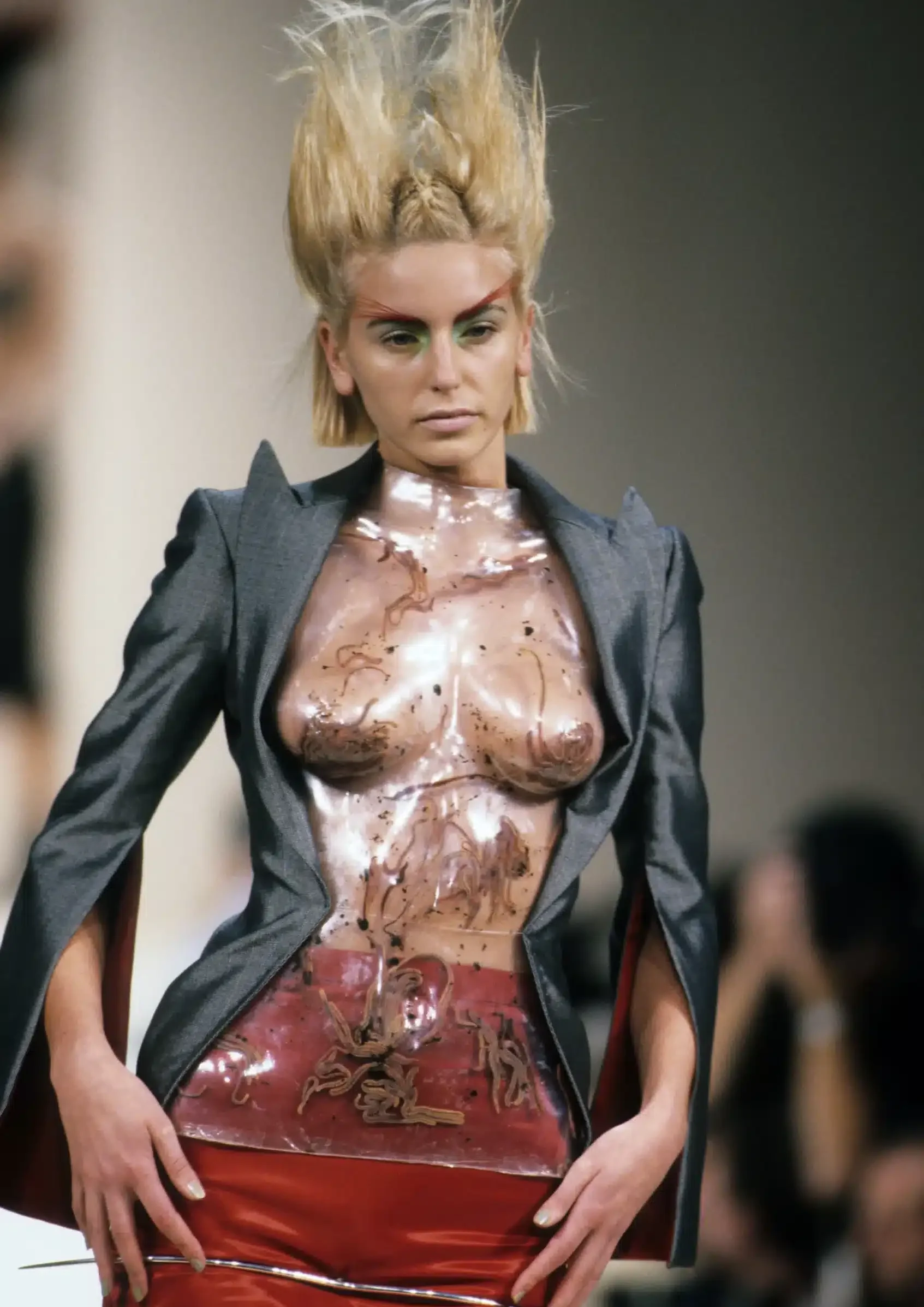
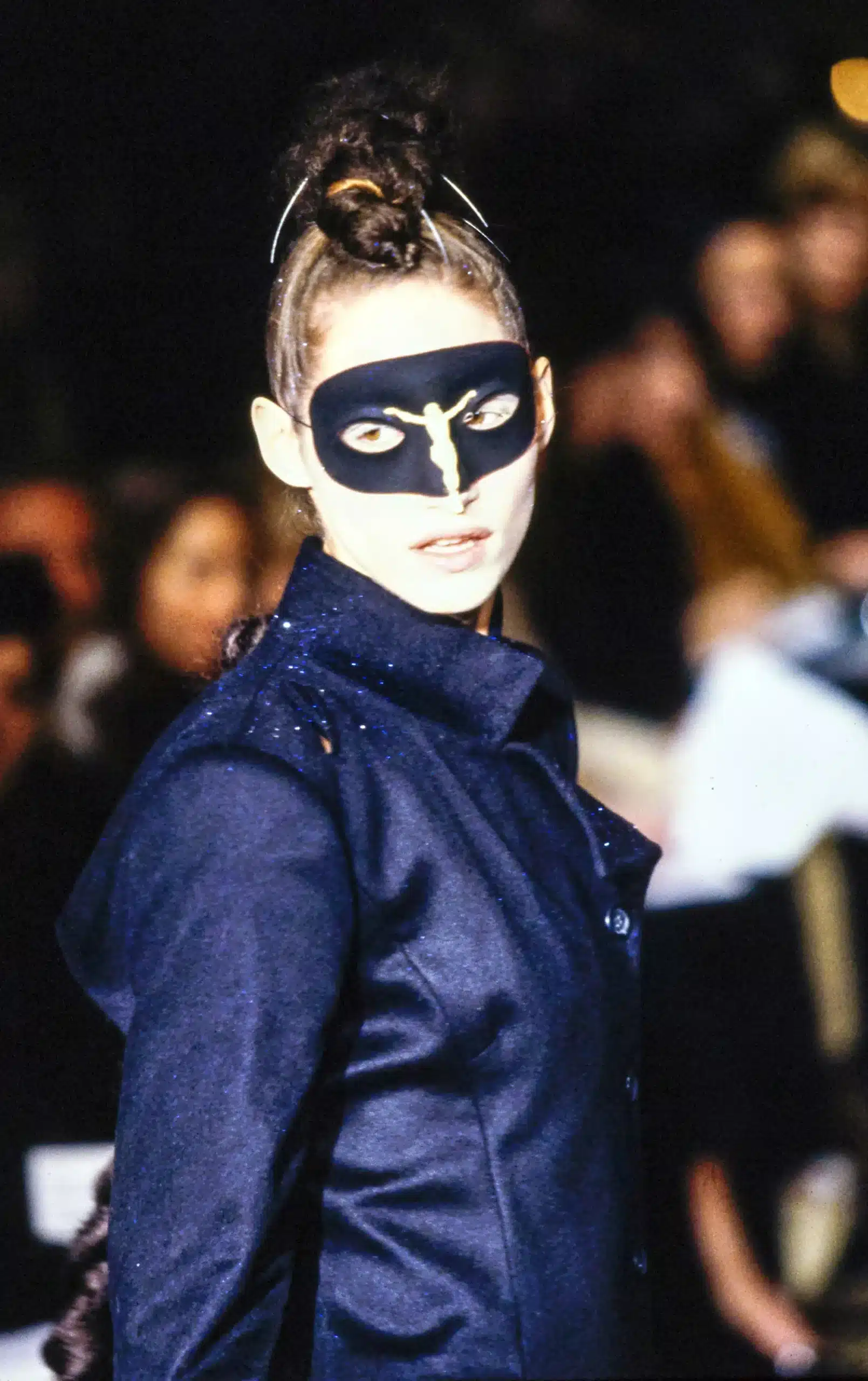
Alexander McQueen built his reputation on boundary-pushing fashion steeped in darkness, drawing inspiration from Gothic tales, Jack the Ripper, and even an ancestor executed for witchcraft. “It’s the ugly things I notice more, because other people tend to ignore the ugly things,” he told The Face in 1996. Perhaps his most infamous piece was a plastic bodice containing live worms, part of his Spring/Summer 1996 collection The Hunger. Worn over a grey blazer and red silk skirt, it shocked audiences with its visceral imagery: dirt shifting inside the transparent corset as worms writhed, a literal embodiment of crawling skin. Today it resides at The Met, where time has left it even darker—many of the worms have decayed, leaving behind their corpses.
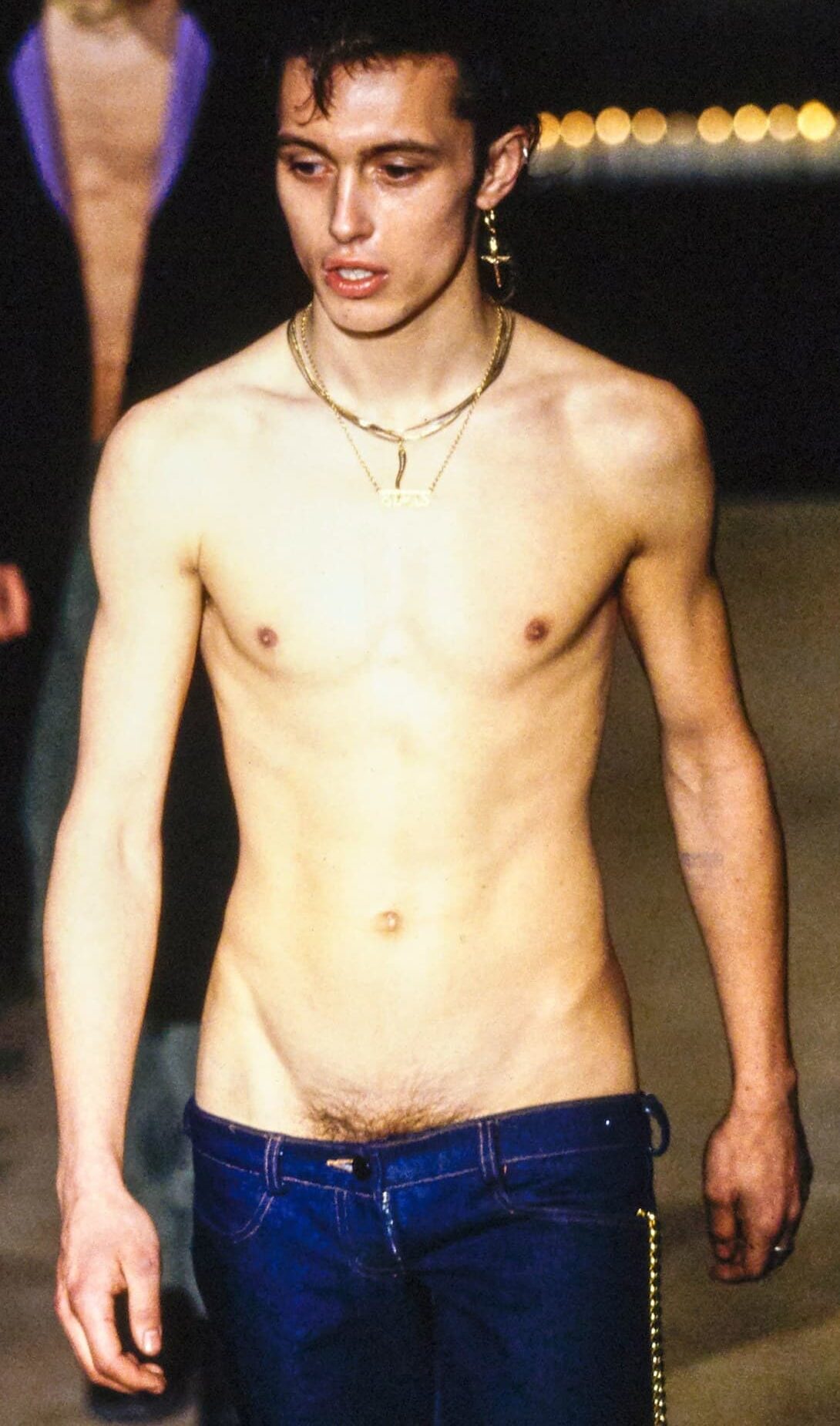
McQueen sought extreme reactions: “I don’t want to do a cocktail party. I’d rather people leave my shows and vomited. I prefer extreme reactions. I want heart attacks. I want ambulances.” His Autumn/Winter 1996 show Dante, staged at Christ Church Spitalfields, featured a skeleton in the front row. Models walked with horns and antlers sprouting from their heads, crowns of thorns, and silk-shrouded faces clutching skeletal hands. One male model exposed his pelvic bone and pubic hair in low-slung jeans, a deliberate confrontation with beauty and propriety.
Australian artist Leigh Bowery, who died in 1994 at the height of the HIV epidemic, turned his body into living art that blurred fashion, performance, and provocation. Bowery distorted himself with self-designed costumes that squeezed him into extreme hourglass figures or ballooning shapes, often paired with towering platform shoes and layers of surreal makeup. His most shocking gestures, pierced cheeks hooked with safety pins, dripping glue over his scalp, wearing spheres that expanded his head and stomach, made him unforgettable. Designers from Galliano to Rick Owens credit Bowery as a muse. The Tate Modern’s recent exhibition confirms that his grotesque beauty endures.
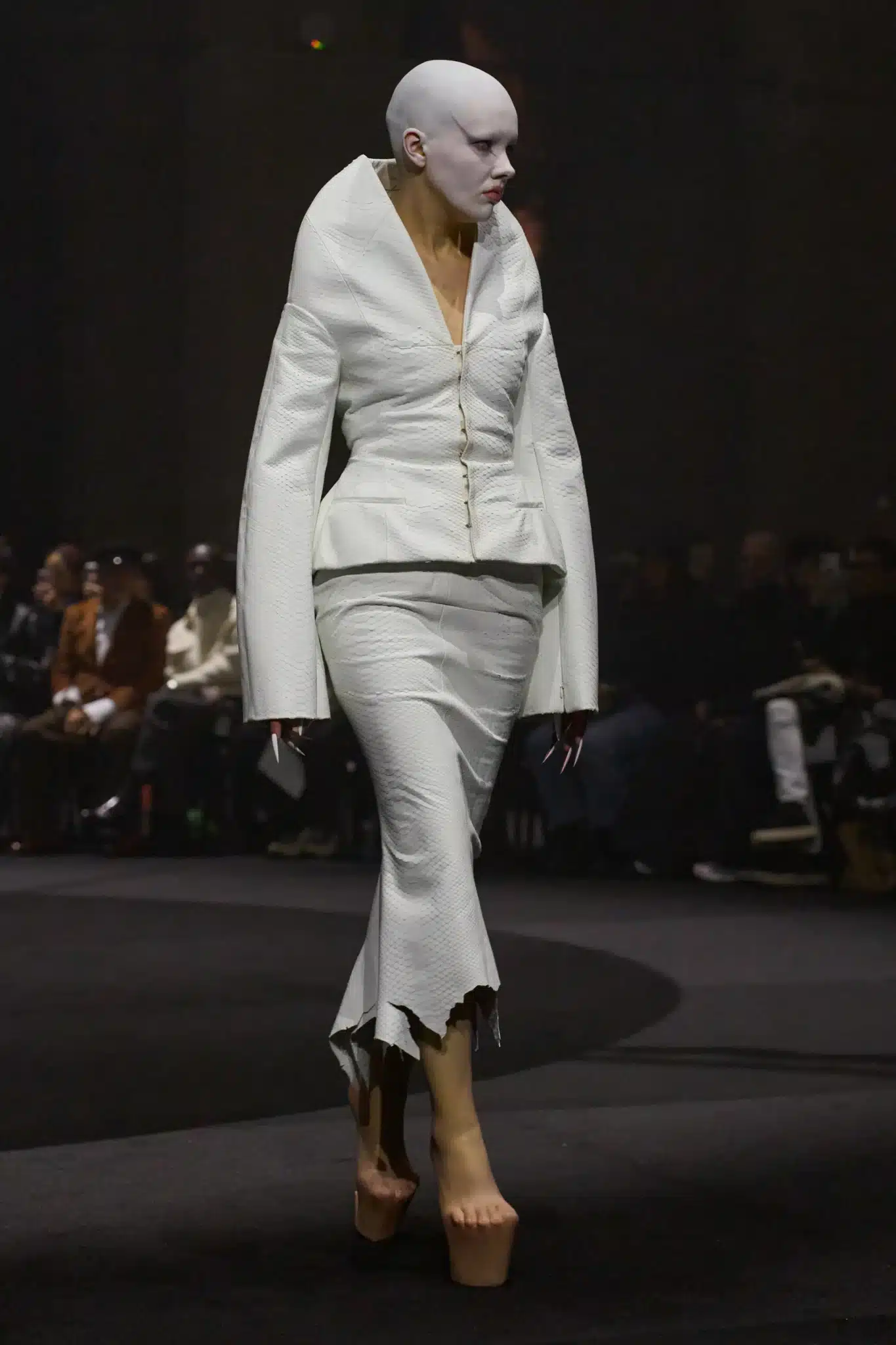
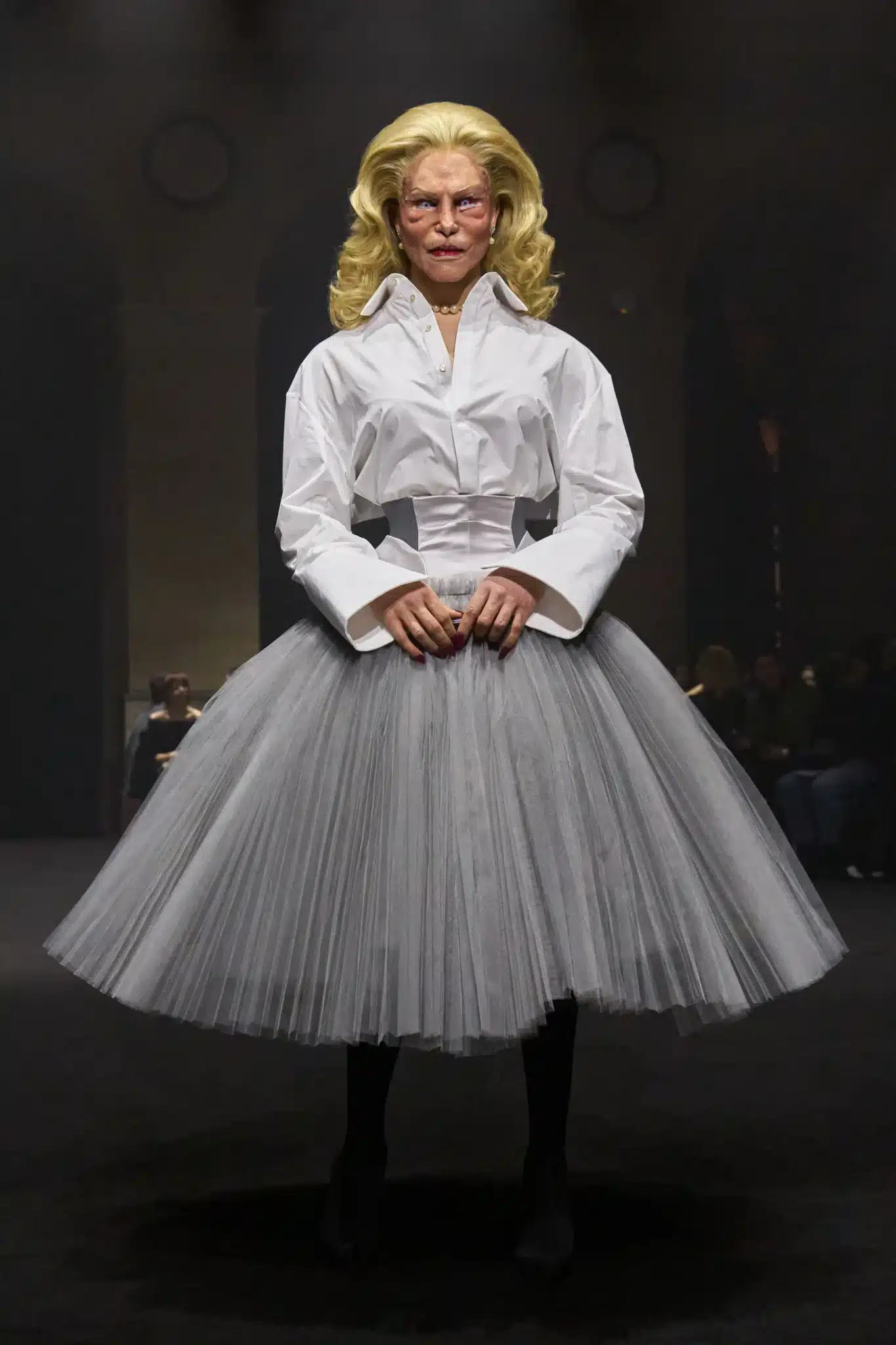
In today’s digital world, where we are bombarded with disturbing images on social media, designers must work harder to shock. Yet Matières Fécales, founded by Hannah Rose Dalton and Steven Raj Bhaskaran, have succeeded in cultivating a “post-human” aesthetic. Known for their flesh-like horns, thorny skin boots, and dystopian prosthetics, they presented their “1 percent” show at Paris Fashion Week with models in black contact lenses, leather gloves, and sharply tailored garments slashed open to expose and disturb.
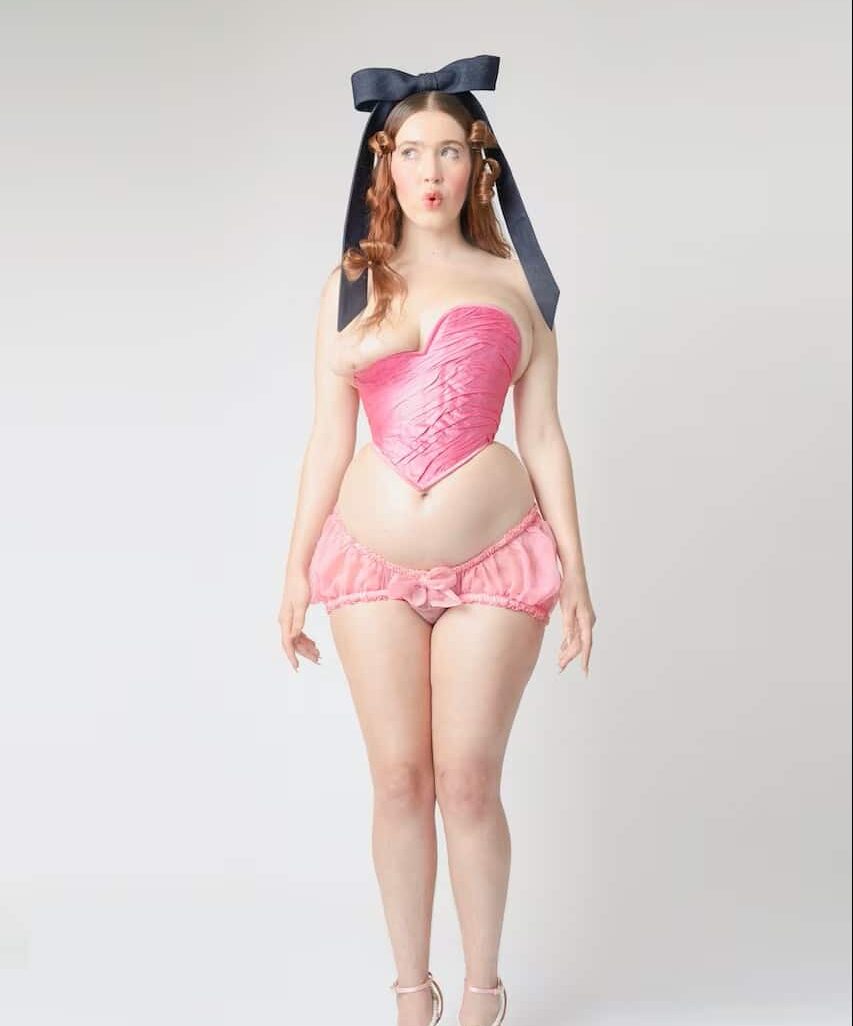
Michaela Stark, artist and co-founder of inclusive lingerie brand Panty, has also gained recognition for her body-morphing garments. Her corsets and lingerie reject the industry’s obsession with sculpting perfection, instead creating bulges, wrinkles, and asymmetry. Breasts are pushed inward, stomachs ripple, flesh spills over. Often rendered in pastel silks and lace, her work weaponises femininity against conventional beauty norms. Stark has spoken of exploring body dysmorphia, sexuality, and fetishism. Instagram repeatedly censors her work, while similar “pretty” lingerie passes freely? evidence of society’s discomfort with her grotesque approach.
The grotesque has always been fashion’s shadow: emphasising hair, fat, bones, decay, and deformity in order to force audiences to reconsider beauty itself. These designs are rarely wearable or commercial, but they spark dialogue about what society deems acceptable. McQueen summarised this best when reflecting on his 1997 The Hunger collection: “Beauty can come from the strangest of places, even the most disgusting of places.” His words still resonate today.
Credits:
Written by Phoebe Cotterell