

Some say a girl’s first bully is her mother; if that sentiment rings true, its implications might then be neutralized by many girls’ first friends: her dolls. For some it begins with a porcelain figurine bestowed as an object of affection, statuesque in her carefully curated aesthetic, her perfection not to be disturbed by a child’s eager fingertips. A doll collection might evolve to include playthings, fashion dolls for imagining a reality that can only be experienced through such a vessel. These dolls—Barbies, Bratz, Monster High cryptids—allow children to play dress up without disrupting Mother’s closet, craft complex plastic relationships, and imagine who and what they want to be.
Children may outgrow their dolls, forcing fantasy to take a backseat to an evolved reality. This is when a girl learns the nuance of real-life dress up, and the cryptic masquerade of beauty and happiness. Still, the doll’s impressions remain, the lingering influence sparking an ember of resentment towards that first friend: What is there to smile about, as Aphrodite’s ethereal form is fetishized and defiled by its own admirers?
For many girls, adoration has withered into a jaded perspective on the body as a plaything. Whether a symptom of societal expectations, a bitter reminder of the gap between expectations and reality, or a perversion of innocence, dolls have taken on meaning that transcends their intended purposes. The doll as a cultural object is still a girl’s best friend. And its impact on art allows its original custodians an intimate voice in conversations ensnared by body horror and the uncanny: I love her, I hate her, I miss her, I am her.

The Origins of a Fashionable Self-Concept
Before she was irrevocably captivated by her own image reflected in glass, a girl’s mirror was the dolls she used to try on identities; she projected her ideas onto the figure and used it to rehearse selfhood before she had the language or the wardrobe to bring it to life. For many, the first experience of the art of fashion was not via wearing fashionable clothes, but rather dressing fashionable dolls. More than a mirror, the doll serves as the original mood board. As they grow, children may imitate and identify with a doll’s image as a personal standard. In the same vein, that image may become internalized and/or distorted as part of their self-concept. Thus, doll aesthetics carry weight in adulthood not due to nostalgia alone, but because they are foundational to selfhood.
Barbie the Blonde Monolith was launched by Mattel in 1959, her form inspired by the German Lilli doll—originally a suggestive novelty toy for men. From the start, the Barbie doll was an object freighted with contradiction. Barbie’s hyperbolic femininity came to represent everything that was wrong with patriarchal beauty standards, and yet remained the dominant template for decades.
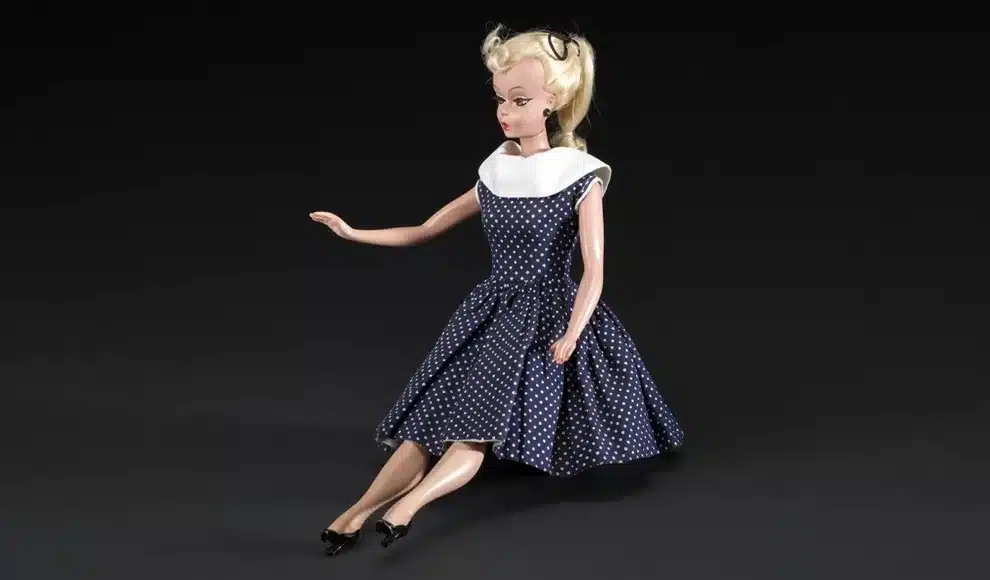
Never without controversy, Barbie would be challenged by valid concerns of her very narrow vision of beauty being the one that little girls internalize. Fashion dolls would evolve to include numerous hair colors, skin tones, shapes and sizes, but alternative doll culture would not end there.
When Bratz appeared on shelves in 2001 they were dubbed the “anti-Barbies”—cat-like almond eyes exaggerated by sultry makeup, full pouty lips, sexy oversized shoes—an exotic look that resonated with pre-teens yearning for something edgier. Most critically, Bratz reformed the racial monoculture of the fashion doll. In retrospect, the controversy Bratz generated was part of their appeal. They were a breath of fresh air, a little angsty, and fans could tell they were cool. This “alternative” fashion doll was a vehicle for something that made adults uncomfortable. Like Bratz, Monster High dolls hailed another turning point, where fashion dolls would mainstream goth and horror aesthetics through play. The Monster High franchise acts as a much-needed permission structure in which dark aesthetics are made legible, and monstrosity is reframed as identity. By the time Monster High dolls came on the scene, the generation that grew up with Barbies have matured into women. We carry the weight of our own internalization of the beauty of our first plastic friends, who may have had the privilege of brown hair, but regrettably lacked a siren’s tail or vampire’s fangs.
Reanimating the Shadow-Self: Coquette & The Haute Horror Doll
Often dismissed as problematic, coquette and Lolita aesthetics are some of the key influences of alternative doll culture and its relation to the shadow-self. Harajuku subcultures play a foundational role in fashion history with kawaii and gothic Lolita aesthetics, the human doll personifying a symbol of rebellion against Japanese social conformity. Similarly, the Western coquette aesthetic distinctive for its frivolous ribbons and romantic bows, demonstrates fragility performed as power. The softness of these undeniably feminine aesthetics is easily infected by darkness—cracked porcelain, blank eyes, Frankenstein-stitched seams—transcending fashion from “living doll” (the aspiration) to “broken doll” (a confrontation). But the horror doll impulse was always latent: children destroyed their Barbies, staged disasters, and acted out conflicts real life would never permit. The subversion is inherent to the object, only requiring the player to activate it. Perhaps the horror doll is simply what it looks like when you refuse to let her be rescued.

Doll artists and avant-garde designers are reckoning with their relationship to dolls and employing them as storytelling devices to bring their creative visions to life. While Bratz normalized the idea that a doll’s face could be “too much,” and that this excess was in fact desirable, artists like @sheidlina and @petite.doll are working in the same register: the body as a surreal object, volume turned up, innocence stripped out. Artists such as @de4dlamb subvert the medium in a more literal fashion, as literal doll aesthetics collide with horror and gothic decay, and the “dead doll” serves as commentary on femininity and consumption. Collectively, these artists’ work transcends self-concept to confront the shadow self, employing the doll not only as aspiration, but estrangement.

John Galliano’s history of theatrical, narrative-driven fashion is exemplified by his beautifully eerie 2024 Artisanal collection for Maison Margiela. When discussing the collection’s lore, Galliano described a strange family—a twisted auntie, nannies, parents, an English teacher—and gorgeous porcelain dolls who had fallen in the Seine. One of his muses, “Auntie”, is a life-size wooden Victorian lay doll who permanently resides in his studio. Galliano brought Auntie to renowned makeup artist Pat McGrath for beauty inspiration, prompting her to envision pencil-thin brows, jewel and pastel shadows, and hyper-luminous skin mimicking that of porcelain dolls. Models worked with movement director Pat Boguslawski to perfect their marionette walks, animating the looks The Maison described as “a study of the muse-like relationship between artists and their anatomical lay dolls.” This framed the model not as person, but an artistic object being composed with every moonlit step.

The 2026 Met Gala (dress code: “Fashion is Art”) produced a red carpet that leaned heavily into the uncanny, and doll aesthetics were one of its most recurring visual languages. Most notably, María Zardoya of The Marías arrived looking as though she had stepped out of a gothic film set inside a Victorian dollhouse, wearing a baby pink Matières Fécales gown paired with skinny brows, eyes dusted by metallic gray shadow, and sharply overlined lips. It was neither camp nor costume, but considered: Zardoya described the look as a homage to her childhood in the Puerto Rican countryside, where her aunt and cousins would dress her up and affectionately refer to her as la muñeca de porcelana.

***
We learned who we were through our relationship to dolls. When María Zardoya stepped onto those steps looking like something beautiful that had gone wrong, she was completing a circuit that began in every childhood bedroom where a girl dressed a small figure and felt, for the first time, the particular power of deciding what a woman could look like. Moreover, the doll as a cultural object has always been a container for anxieties about women, bodies, agency, and the performance of femininity. Artists that employ those anxieties as tools are not truly subverting the doll, but rather revealing the horror that was always inherent in the image.
The progression from Barbie to Bratz, from indie doll art to runway muse, is not a straight line, but it is a coherent one: each step further from the prescribed image, and closer to something that refuses to be controlled. Doll horror has completed a journey—the question now is what it means when everyone speaks the same uncanny language.
Credits
Written by Sahar Nicole @tiramizuzu
Cover: María Zardoya @maria.temarias. Photography by Jason Renaud @jasonrenaud