Who dictates how we wear our clothes? At some point, we were taught an unwritten set of rules: a shirt belongs on the torso, a skirt anchors at the waist, and a shoe rests beneath the foot. These are societal norms we absorb, accept, and perform every single day without a second thought. There is rarely room to question why a sleeve is a sleeve or why a hemline sits where it does. We internalize these boundaries until the act of dressing becomes pure muscle memory.
With its Spring/Summer 2027 collection, MM6 Maison Margiela steps directly into this unquestioned territory to ask the simple, subversively open question: what happens when we refuse those instructions?
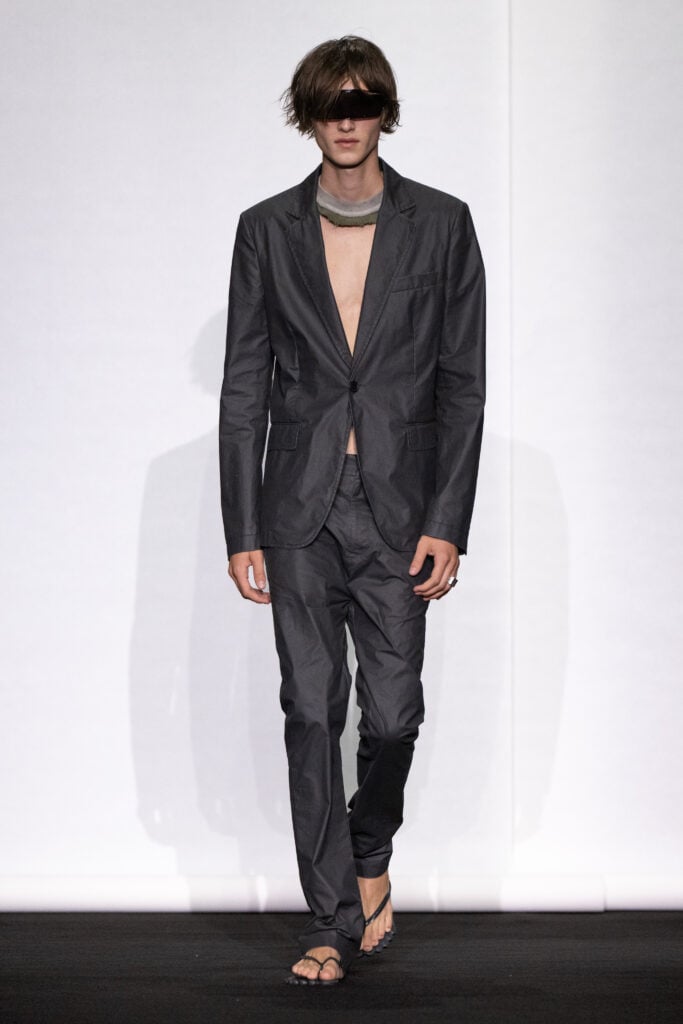
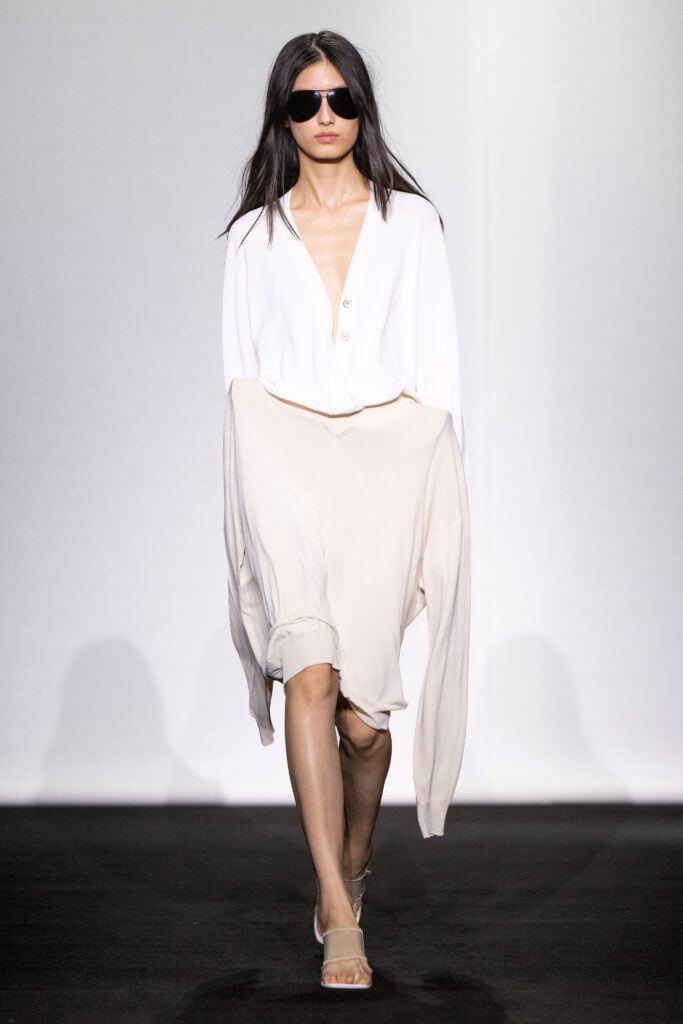
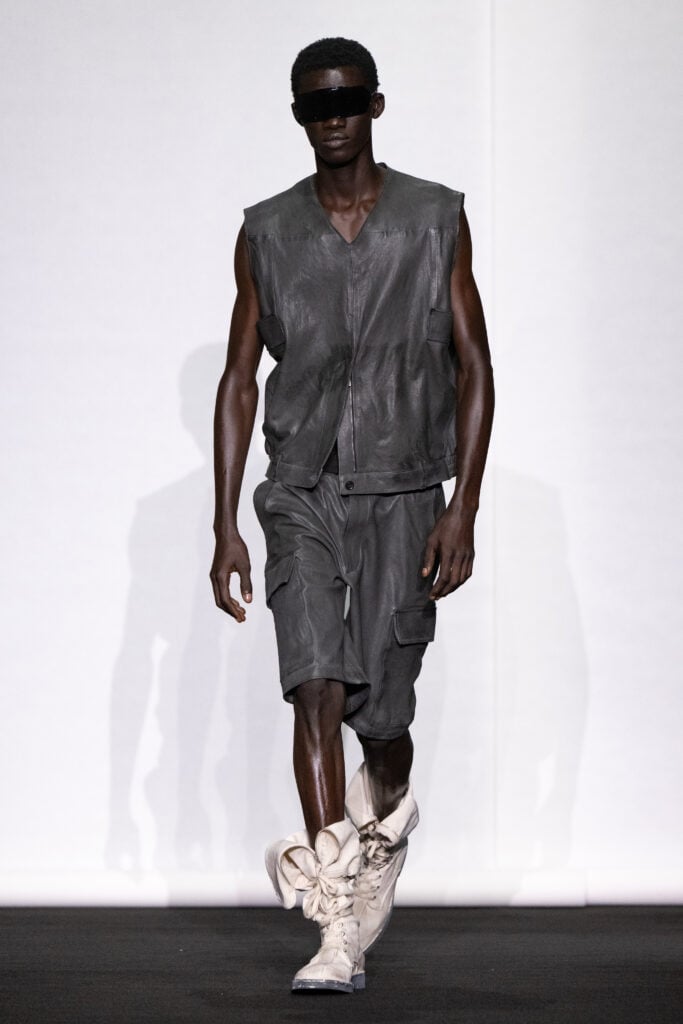
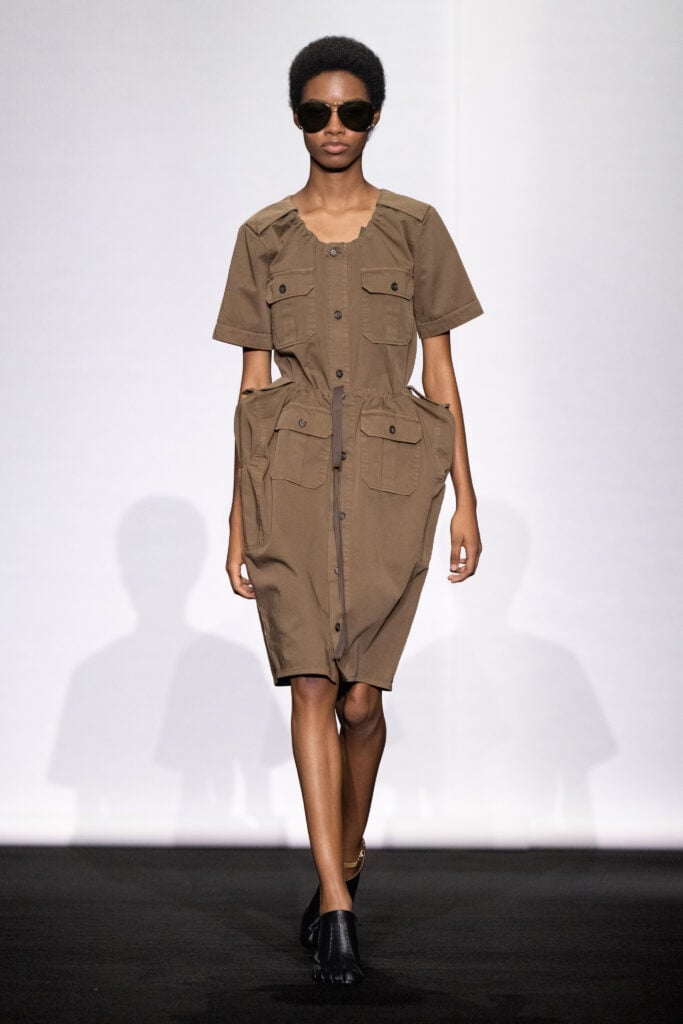
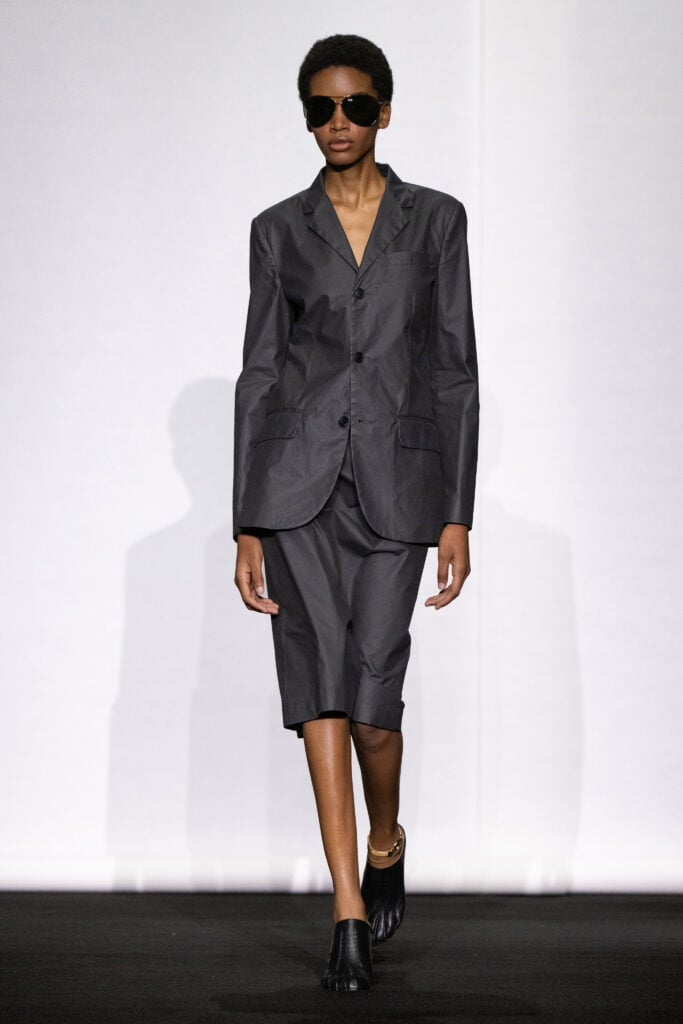
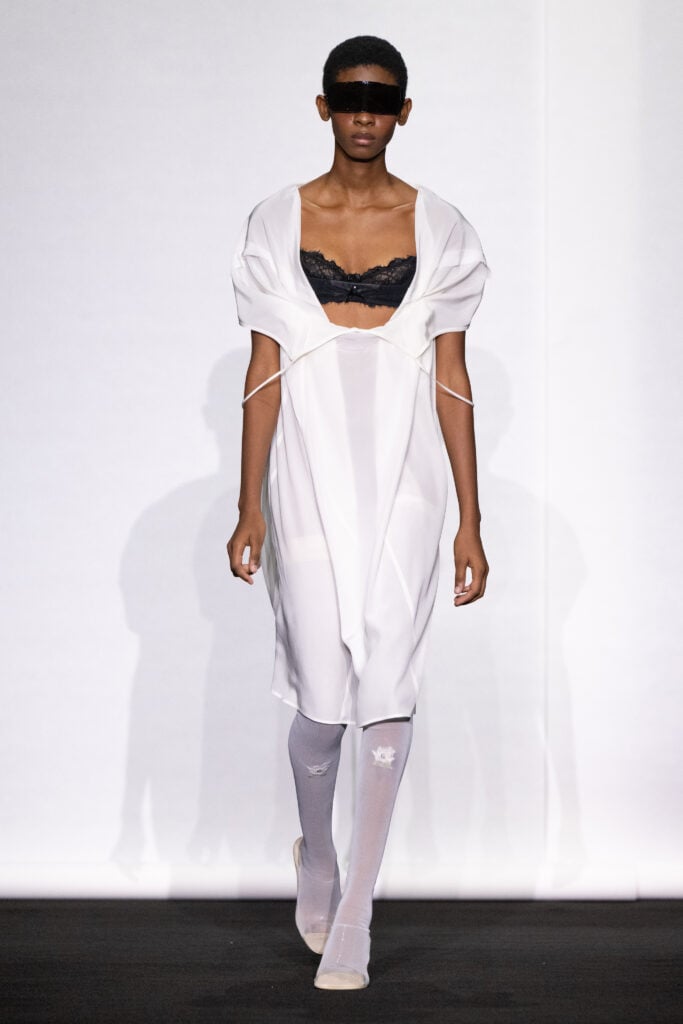
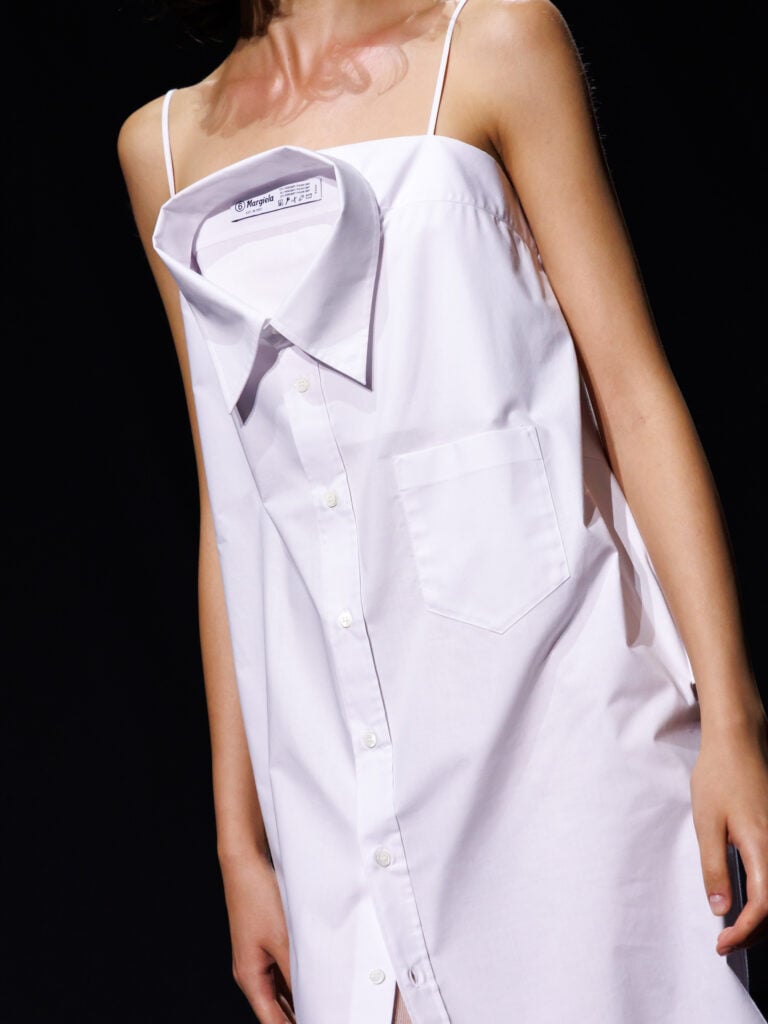
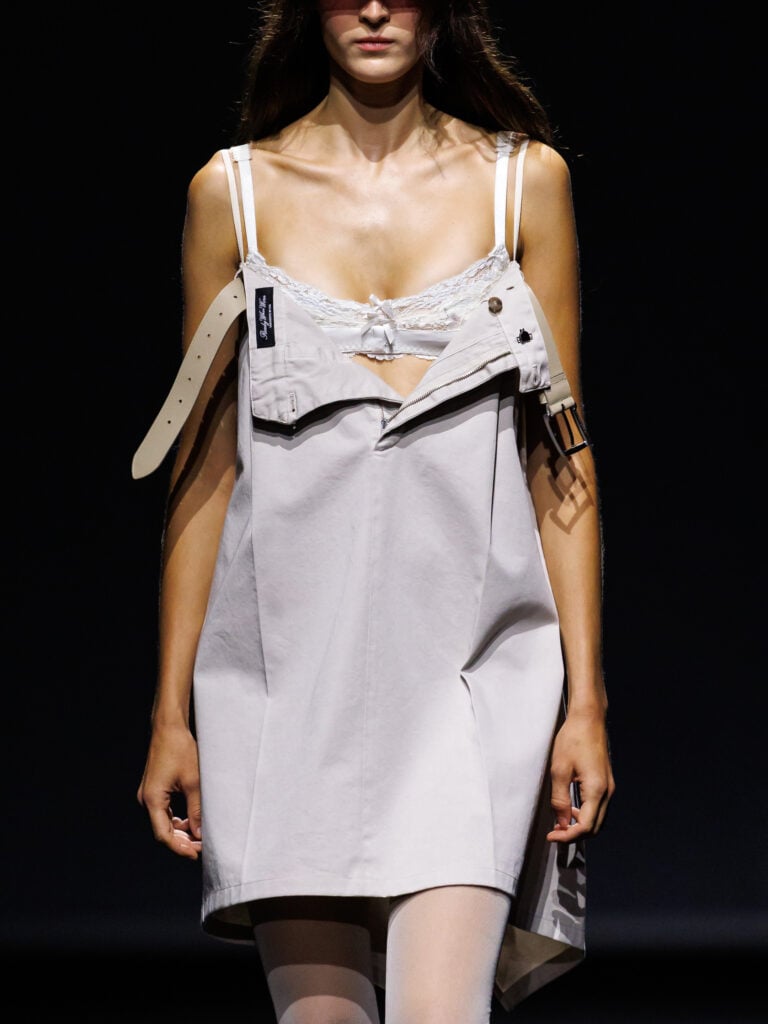
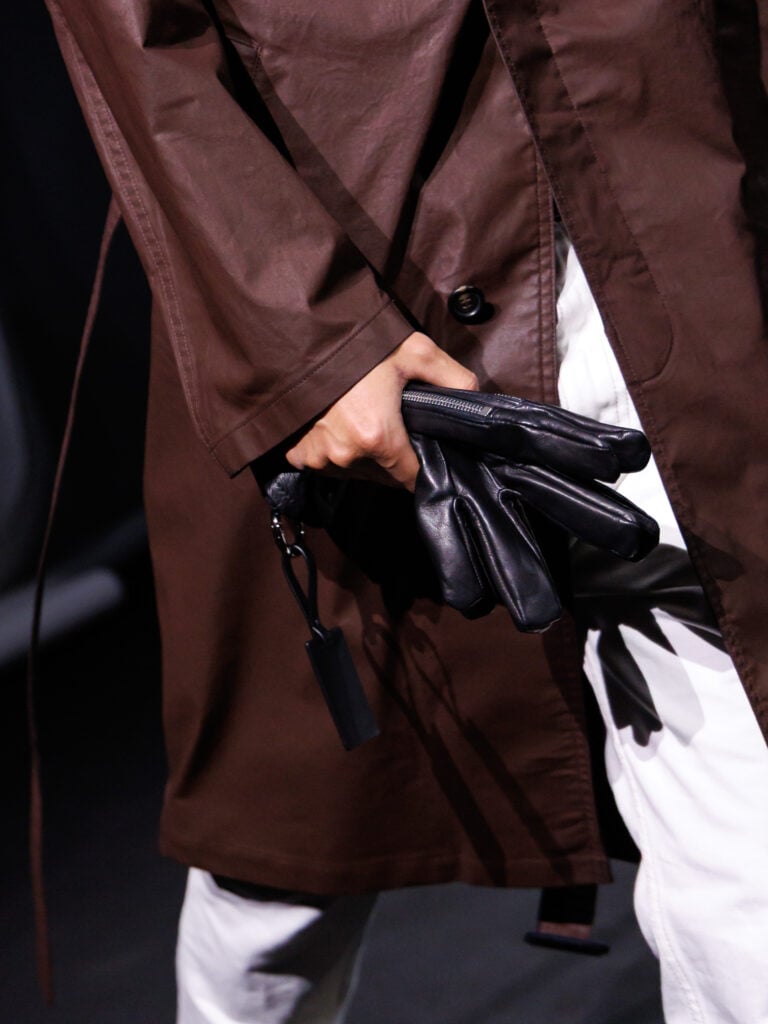
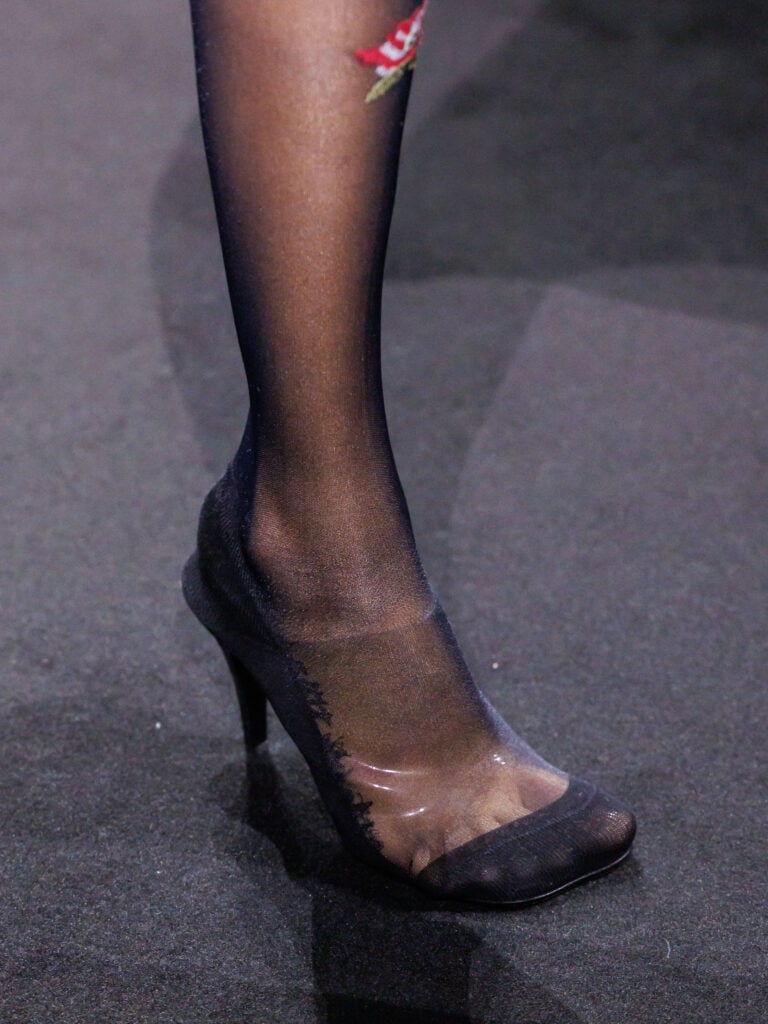
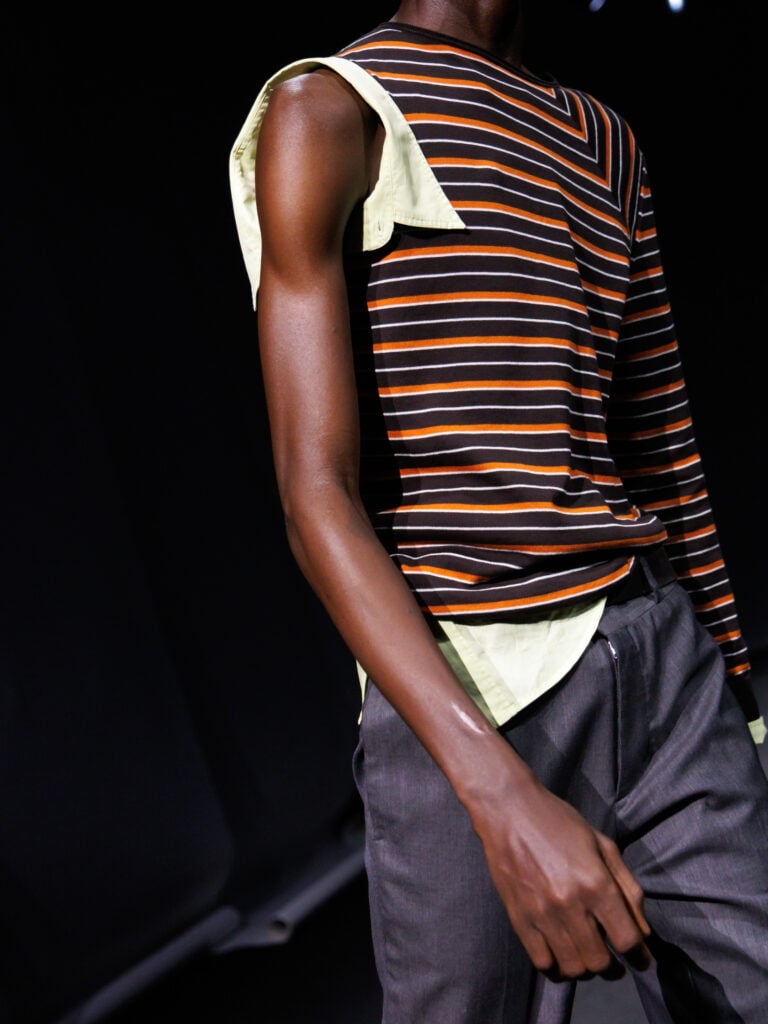
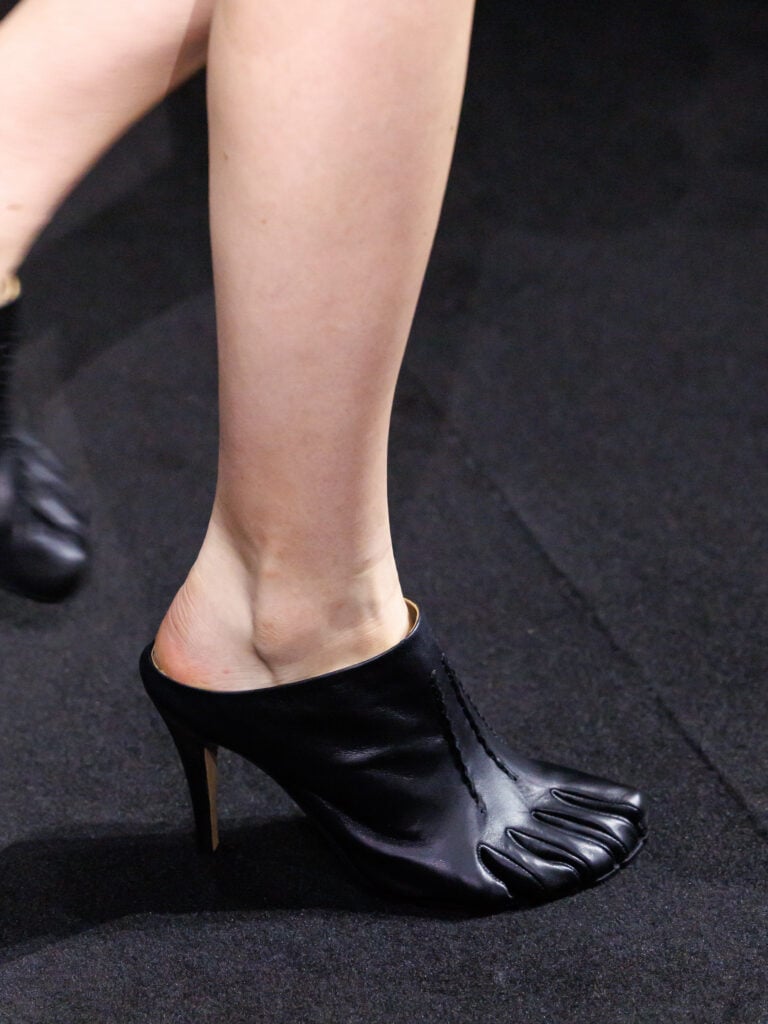
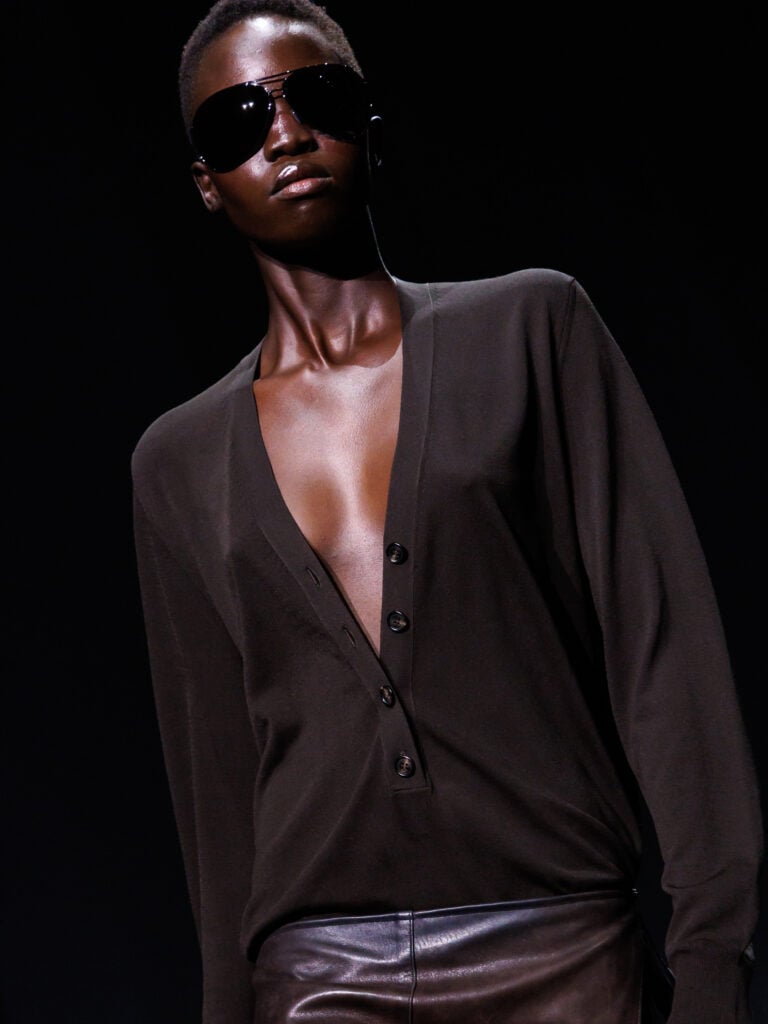
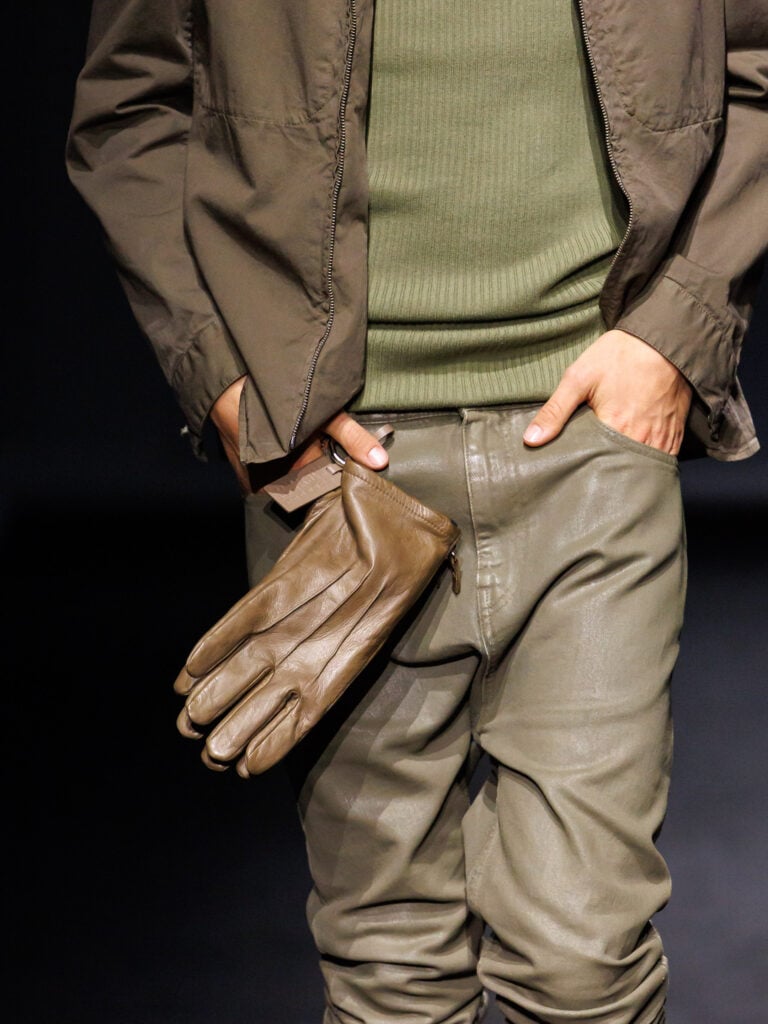
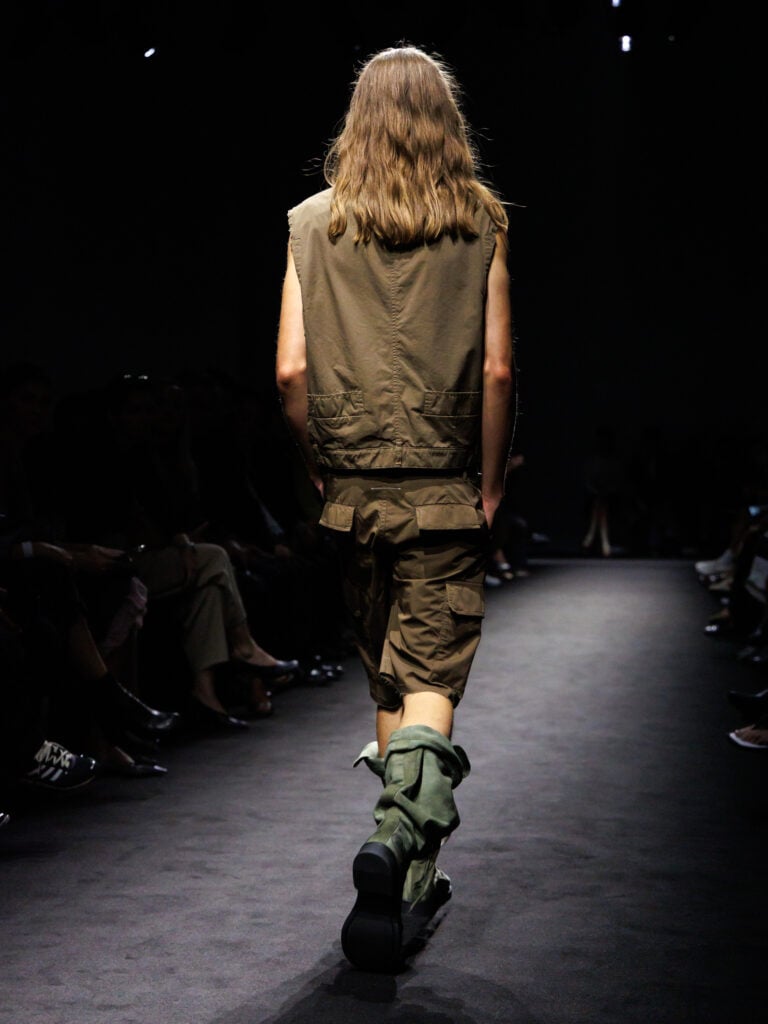
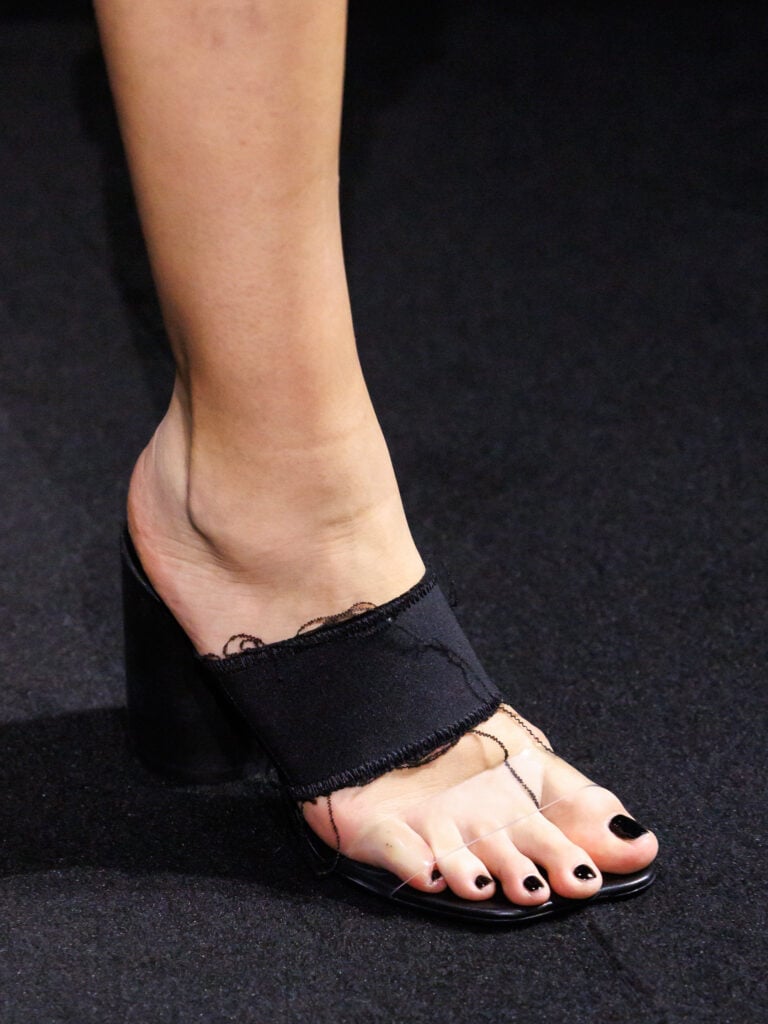
How can we rethink a shirt? Who decided that a skirt must start at the waist, or that a V-neck cannot become a bottom garment? Rather than forcing a conceptual gimmick, MM6 answers by shifting everyday garments around the human frame. A dress shirt is reconfigured into a strapless dress with its collar framing the chest, button plackets drift off-center, and leather gloves cease to be mere handwear, reimagined instead as structural footwear with individual toes or carried as fluid accessories. The intention is not to make an item unrecognizable, but to unlock what else it is capable of doing.
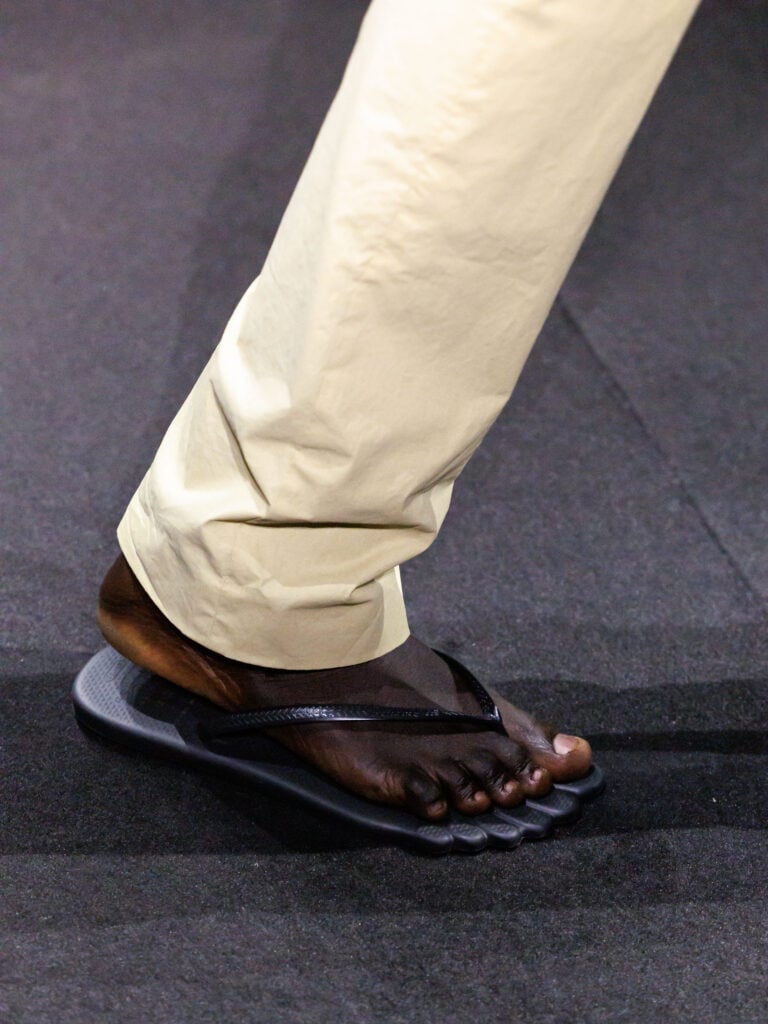
This philosophical repositioning reaches a vivid peak in the runway collaboration with Havaianas. Spotted quietly anchoring tailored looks on the catwalk, the classic rubber flip-flop is stripped of its casual context and integrated into high fashion. By treating the signature number six as an active design tool rather than a mere logo, MM6 takes one of the most ubiquitous everyday items on the planet and destabilizes its familiarity. The staple sandal is multiplied and reshaped, revealing a subtle sixth digit on the Slim 6Toe, or building an architectural, intentionally irregular platform from six stacked soles on the Top 6Layers.
MM6 does not present a rigid new rulebook for dressing. Instead, the collection offers a vocabulary of possibilities and movements, handing the authority back to the wearer to decide where each piece truly belongs.