We naturally love rhythm in everything we do. Seeing or hearing something over and over makes it feel familiar, which helps us make sense of it quickly. But have you noticed lately just how similar our world has become?
There is a subtle sense of déjà vu in daily life. Apartments of friends seem to come from the exact same catalog, everyone seems to listen to the same music, and out on the streets, fashion choices match down to the last detail. Even subcultures, which used to represent rebellions, now often look like staged online aesthetics, carefully styled and following strict micro-trends. Wasn’t there a time when people, subcultures, and styles were much more unpredictable, bold, and genuinely unique?
Part of the answer comes down to our own perception and how the brain handles familiar things. Have you ever asked yourself if you truly like the things you choose, or if you simply saw them enough times until you got used to them?
Psychology calls this the “mere-exposure effect.” When we run into something repeatedly, we begin to find it familiar, and we naturally start to view it in a positive light. Familiarity saves our brain energy and gives us a sense of calm. Today, our world moves fast, and the internet constantly hits us with new input. Push notifications, breaking news, and algorithms keep our bodies under constant stress. The result: we stay on edge. In a state like this, familiar routines, TV shows, music, or products act as a safe haven. They tell our body that nothing unexpected is happening and no danger is near. The brain finally relaxes because it knows what is coming.
Yet, this creates a subtle trap: we confuse the soothing feeling of familiarity with real personal taste. While the internet promises endless ways to be unique, algorithms end up showing millions of people the exact same trends. If you look at the same outfit style on your phone for months, it eventually feels right when you try it on in front of the mirror.
On the street, the cycle completes itself. Since so many people are guided in the same direction by their feeds, we see those exact same styles in real life. Seeing them again and again gives us the false idea that the world shares our personal taste. We view what we see outside as proof of our own free choice, even though we are just following a shared habit.
This does not mean we are all mindless followers, as nobody has a taste that is completely free from outside influence. Still, the risk of modern consumer culture is real: it knowingly uses our desire for familiarity to sell us quiet fitting-in disguised as personal expression.
When everything is just repetition, we leave no room for our true personality to grow. We forget how to ask critical questions, and that is where the real danger lies. A culture stops growing when everyone thinks, wears, and likes the exact same things. Culture has always relied on people who find the courage to step outside expected rules, say no to the familiar, and step into the unknown.
***
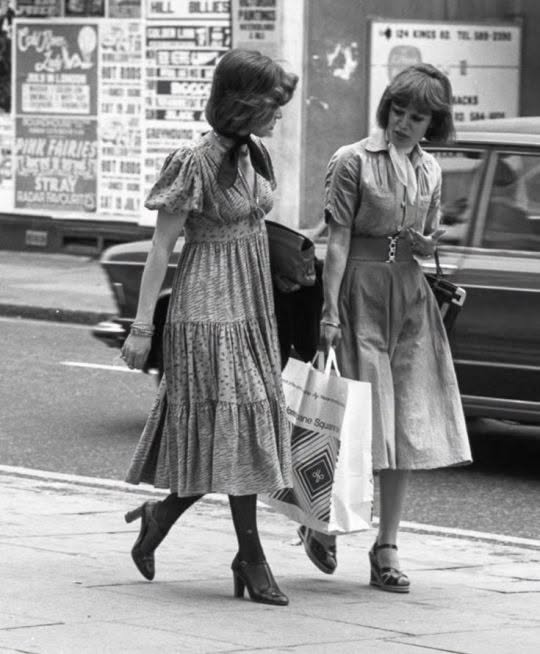
London, 1970. Great Britain was going through a tough economic period, filled with high unemployment, non-stop strikes, and a real fear about the future. To cope with this uncertainty, many people held tight to traditional values: politeness, fitting in, good manners, and keeping up neat appearances. Daily life was ruled by strict expectations and an unwritten rule to stay out of the spotlight. People just did their jobs, blended in, and showed their desire for safety to the world.
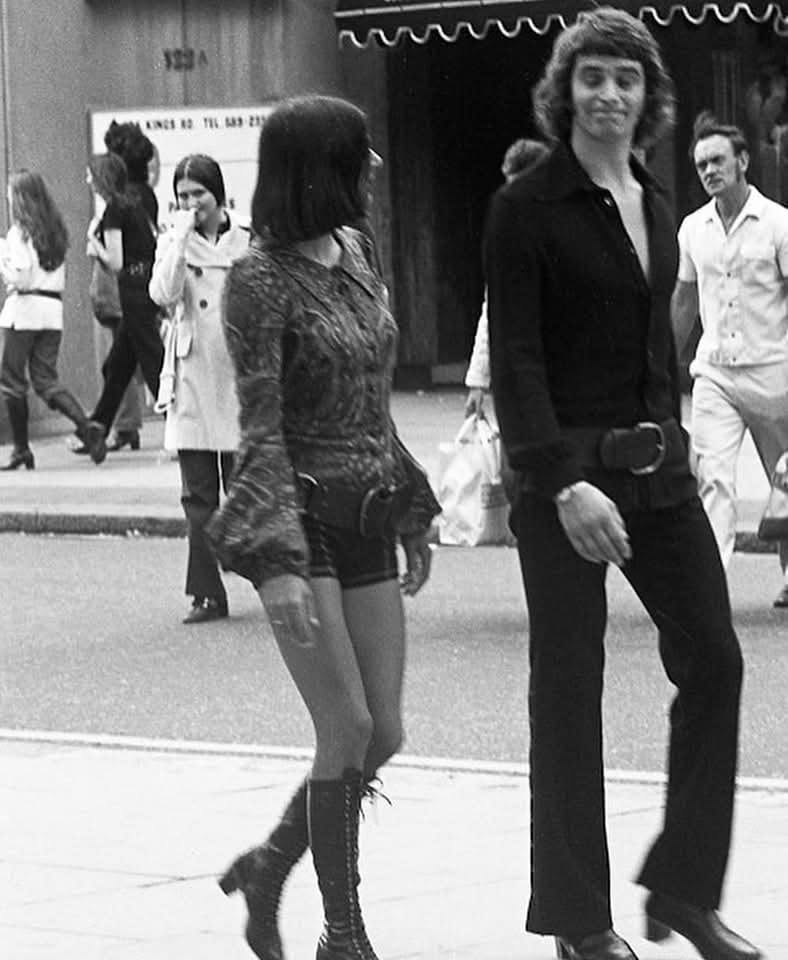
This attitude showed up clearly in fashion. While many still held onto neat, traditional dresses and modest silhouettes, early signs of a shift were already visible on the streets. Alongside classic daily wear, bolder choices like fitted tops, flared trousers, and eye-catching boots began to surface. Still, society reacted quickly whenever boundaries were crossed, authority was questioned out loud, or traditional roles were broken. Anyone who stood out too far or criticized the system was quickly seen as a threat to social peace.
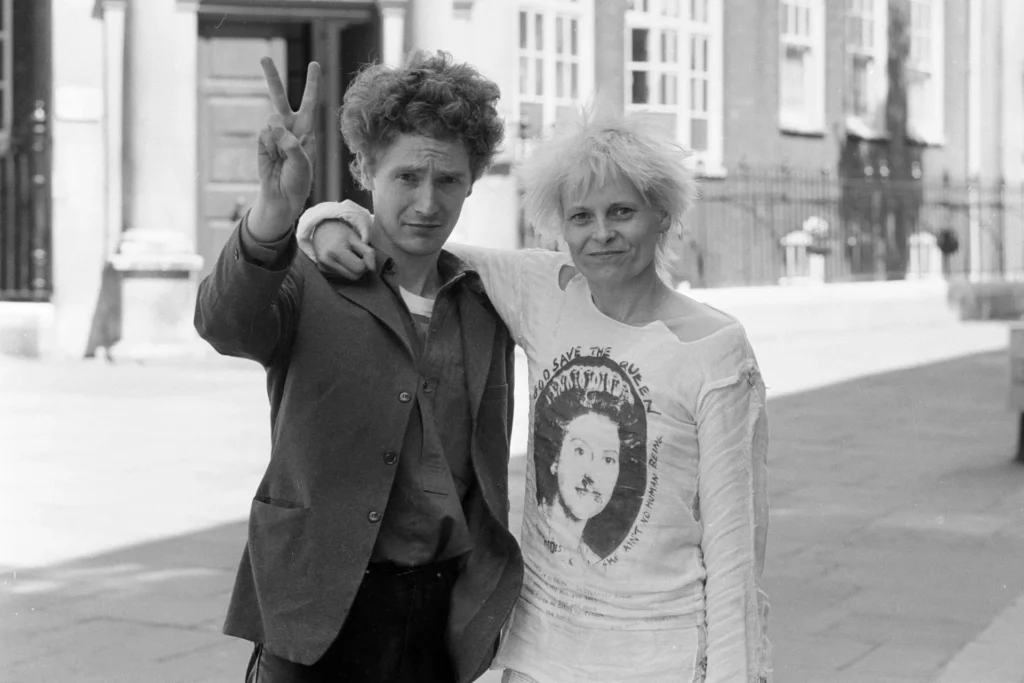
Into this very stiff scene stepped a young primary school teacher: Vivienne Westwood. At the time, she was completely unknown, had no formal training in fashion, and had no intention of joining the fashion industry. What drove her was pure frustration. She was fed up with social conformity, angry about the lack of prospects, and sick of fashion that simply wanted people to fit in.
Westwood had no desire to please; she wanted to challenge people. She saw fashion not as a pretty extra, but as a tool to shatter society’s comfort zone. She personally confronted this world in a provocative way: wearing handmade, wild clothing, messy hair, ripped tights, and T-shirts with bold slogans. For her, it was never about setting new trends. She wanted to shake people out of their complacency and push them to finally think for themselves. She wanted to prove that clothing is not meant for blending into the crowd, but for taking a stand.
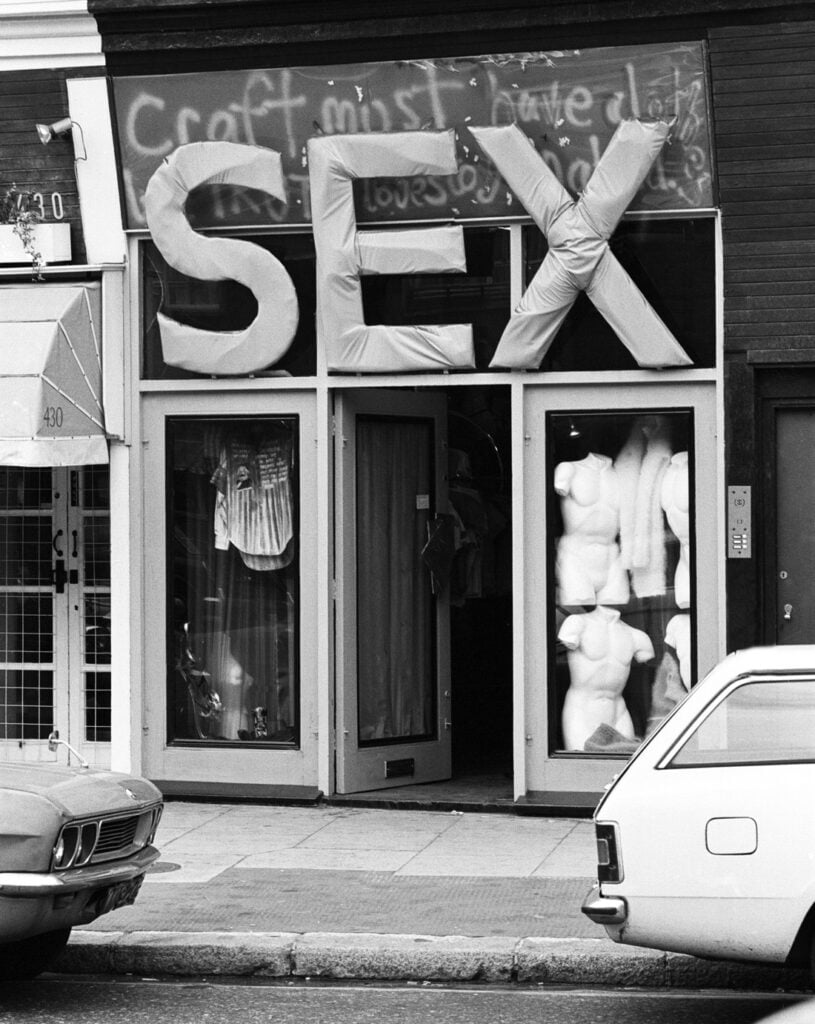
Together with her partner Malcolm McLaren, she opened a small shop at 430 King’s Road in London in 1971, which they provocatively renamed “SEX” in 1974. The name was a deliberate confrontation. It was meant to shock conventional society, break social taboos around sexuality, and position the clothing in the shop as an uncompromising rejection of established morality.
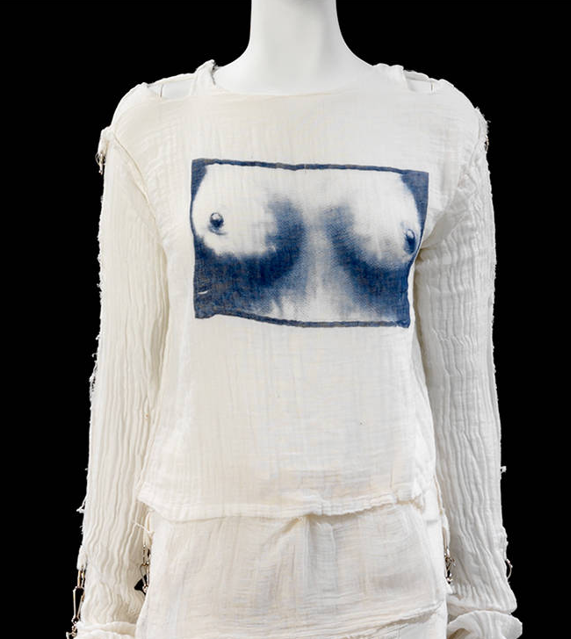
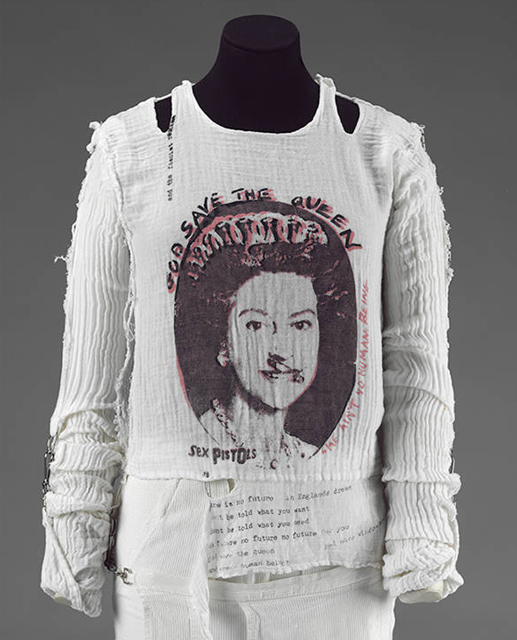
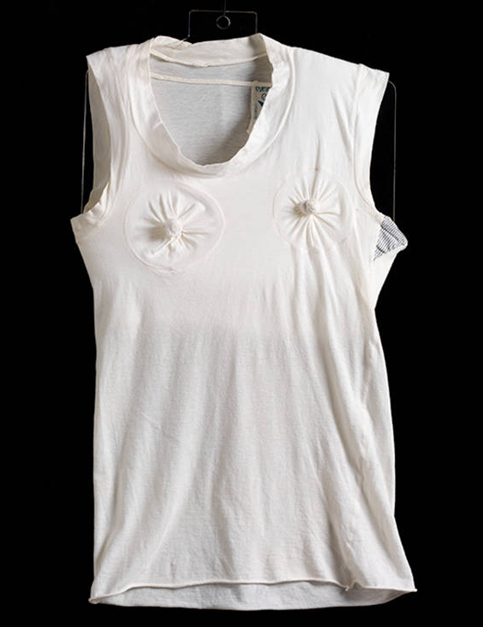
To break free from the dominant norms, Westwood took everything society considered broken, forbidden, or disgusting and made it the core of her designs. Instead of finishing clothes neatly, she slashed T-shirts, burned holes into the fabric, and held the shreds together with nothing more than safety pins. She brought BDSM elements like bondage straps, leather, and chains out of dark back rooms and straight onto the street. She printed provocative graphics and slogans on T-shirts. Instead of elegant, tailored silhouettes, she sold unfinished, asymmetrical cuts that rejected every traditional idea of beauty.
The mainstream establishment reacted with horror, newspaper outcries, and arrests. Yet the true power of her fashion lay precisely in this wave of shock: anyone who encountered someone wearing these clothes on the street back then could not simply look away. The familiar, comfortable visual order was destroyed in a single moment. Westwood did not offer people familiar, comforting patterns. Instead, she threw the unknown right in their faces and forced passersby to radically question their own ideas of propriety, beauty, and conformity.
It is at this exact point that it becomes clear why a vibrant avant-garde scene is so crucial for a critically thinking society. It provides the foundation where the extraordinary can emerge in the first place, where radical experimentation happens, and where people meet who refuse pure conformity. This very space is missing in today’s over-optimized media landscape. When digital feeds constantly mirror back only what we already know, we lose not only our power of judgment, but also our own creativity and unique taste.
An avant-garde scene is not an elite luxury, but the necessary antidote to a stiffening consumer culture. It generates impulses that initially shock, unsettle, or challenge us. Vivienne Westwood showed us back then what happens when someone dares to make that break: she did not just throw a visual statement in people’s faces, she triggered a feeling of liberation. She proved how much energy is released when you lose the fear of other people’s judgment and allow yourself to break the rules.
This invites an honest question to ask oneself: in my daily life, my clothes, and my choices, am I truly following my own taste, or just comfortable habits? Anyone who dares to look inward and take a step into the unknown quickly realizes how liberating it feels. There is hardly a better feeling than standing up for yourself, pushing your own boundaries, and sensing that true style only begins where conformity ends.
Credits
Written by Maxim Quiring @enfantpauvrehereux
Cover: Youth Punk Rockers tour the King‘s Road, around 1970