


The Bible
The sacred knowledge of the avant-garde.
One place. One source.
The essential figures, the visions, the obsessions.
This is where your initiation begins.
LEARN MORE ABOUT
Brands A-Z
Uniforms were designed to discipline. They regulate bodies, erase individuality, and reinforce hierarchies of power. Whether stitched for soldiers, schoolboys, or police officers, the uniform is meant to symbolise order and obedience. In the hands of the avant-garde, however, these garments of conformity have become ripe for subversion. Recast through a queer lens, the uniform transforms from a symbol of authority into a costume of resistance, erotic play, and identity experimentation.
The queering of uniforms is not a new gesture. Subcultural movements, from leather communities to punk, have long appropriated the rigid codes of military and institutional dress, twisting them into symbols of defiance and desire. Today, avant-garde designers are amplifying this history, pulling the uniform away from its institutional roots and thrusting it onto runways where power is reframed as performance.
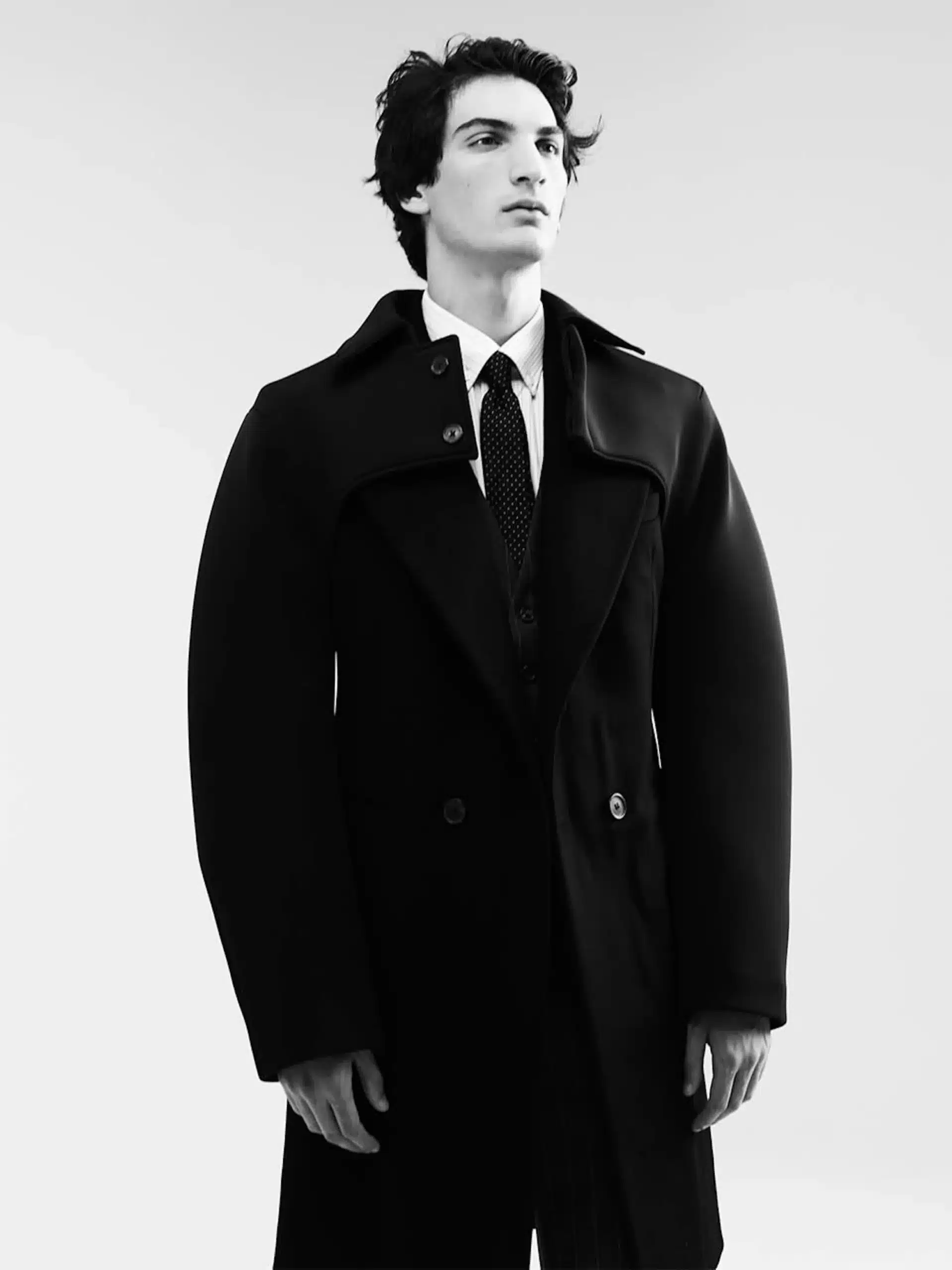
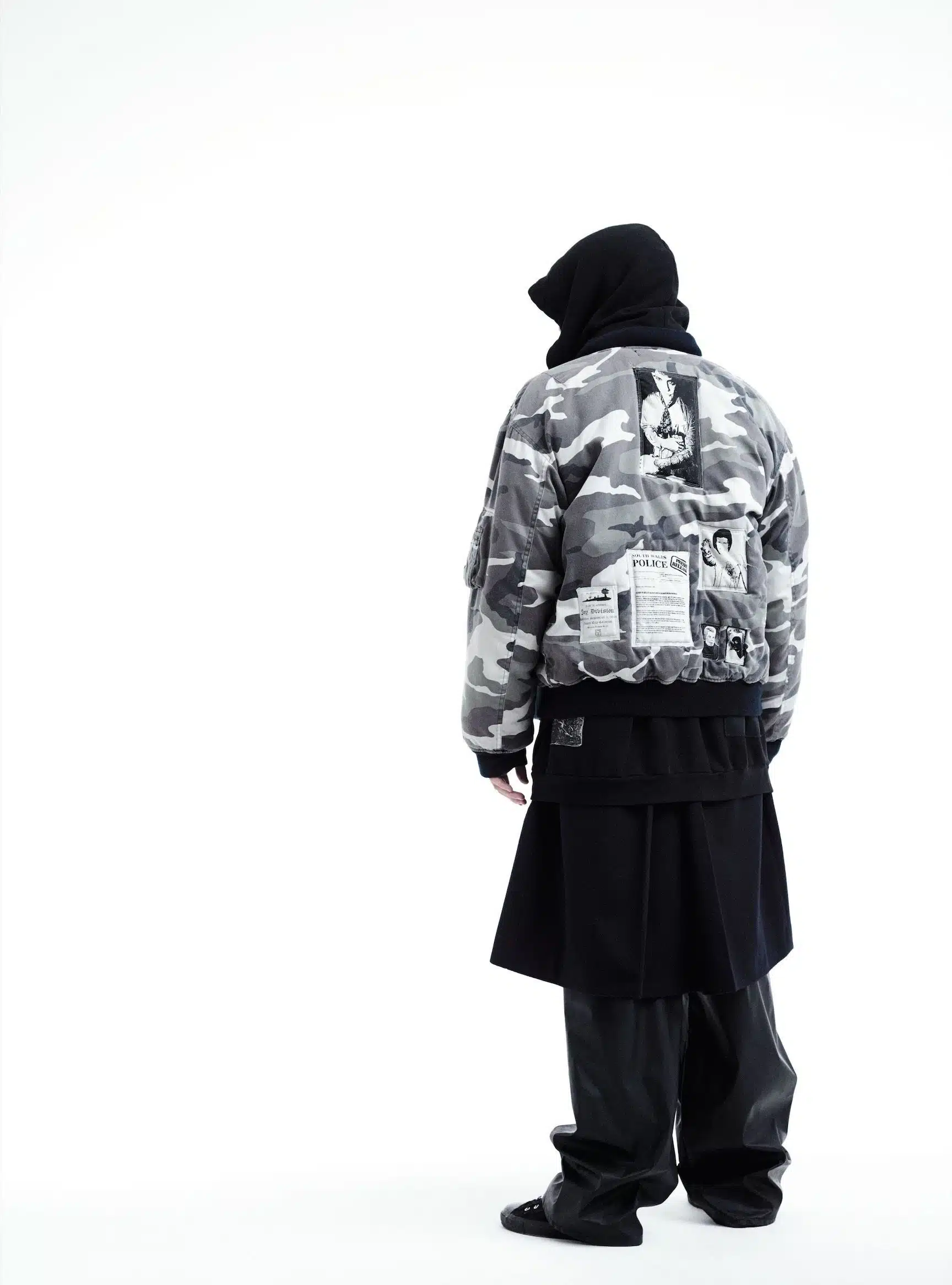
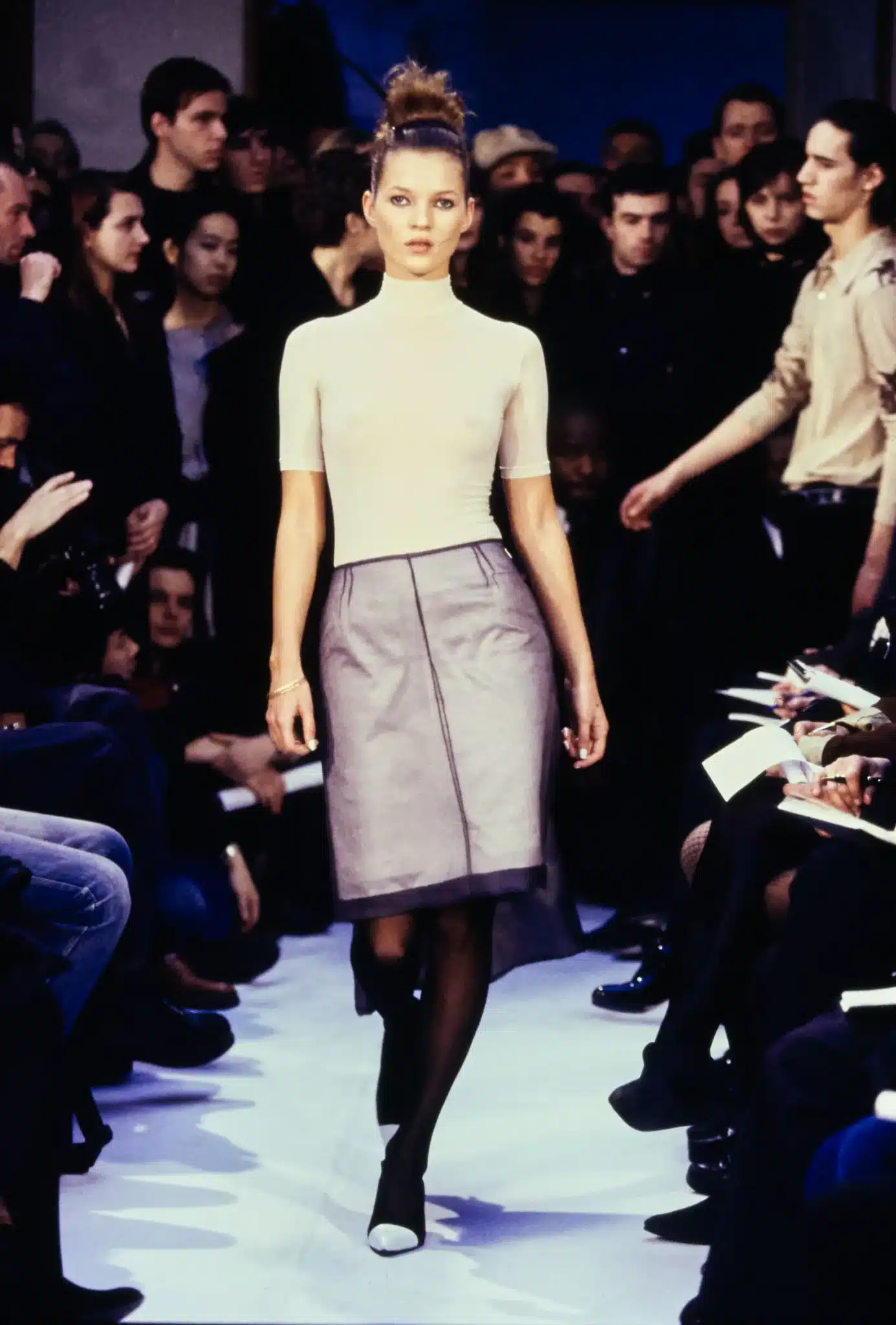
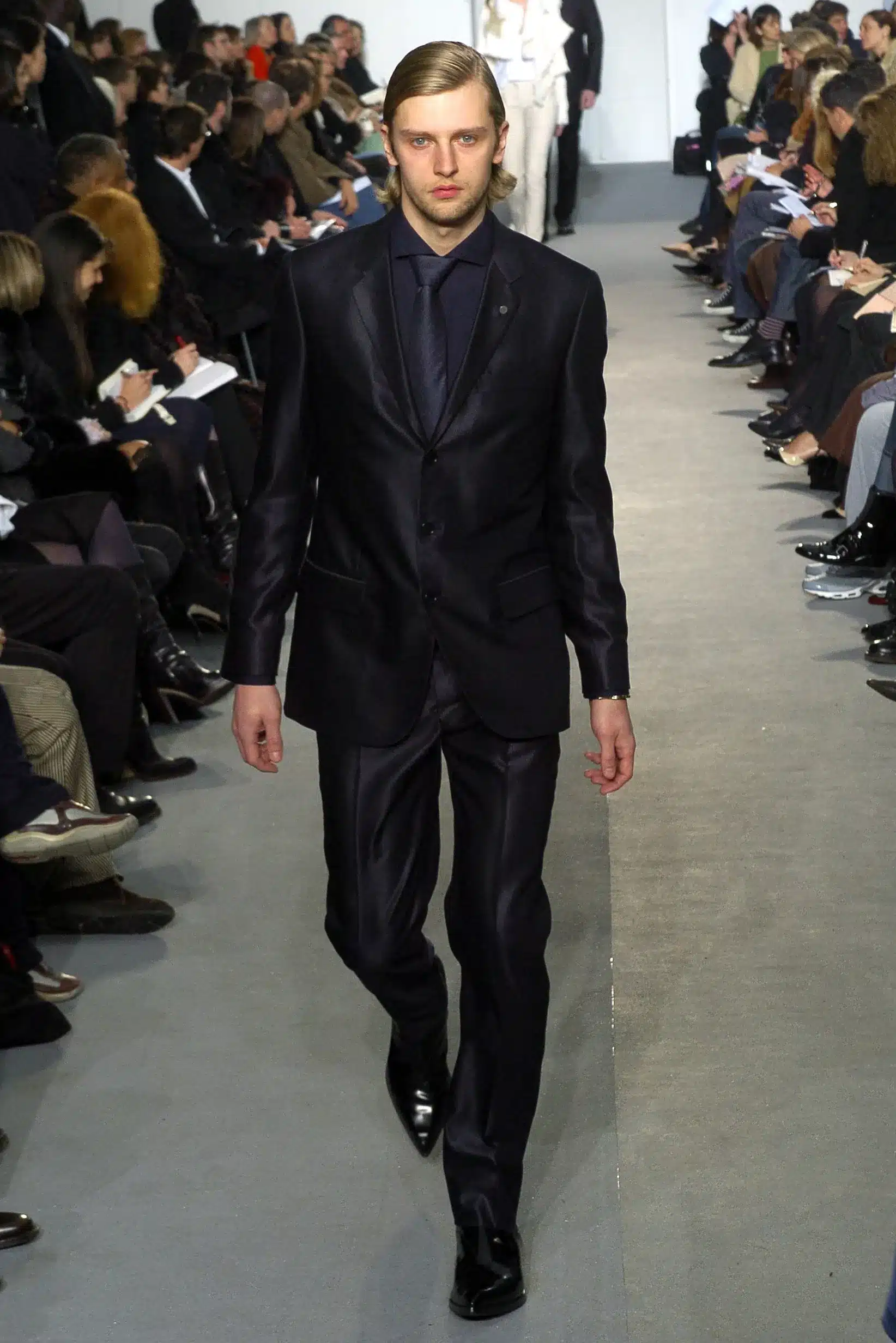
Raf Simons is perhaps the most emblematic of this move. His early menswear collections often reimagined school uniforms, tailoring, and militaristic codes through a lens of adolescent rebellion. Slim blazers, combat boots, oversized sweaters, and regimented styling were imbued with vulnerability and homoerotic undertones. The boy in uniform becomes a figure of longing, fragility, and subversion, never quite fitting into the rigid mold expected of him. For Simons, the uniform is not armor but tension: a site where obedience and rebellion coexist.
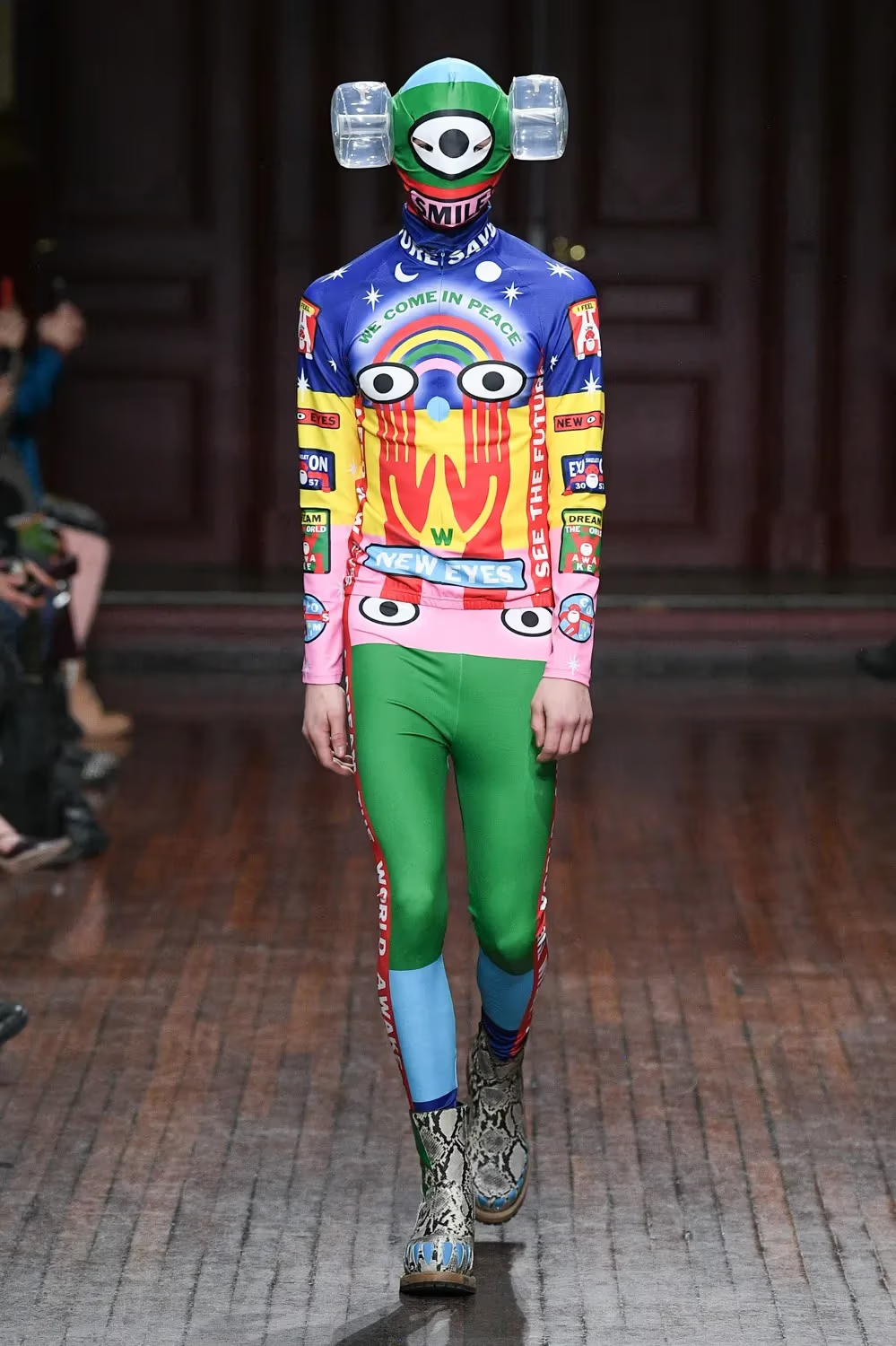
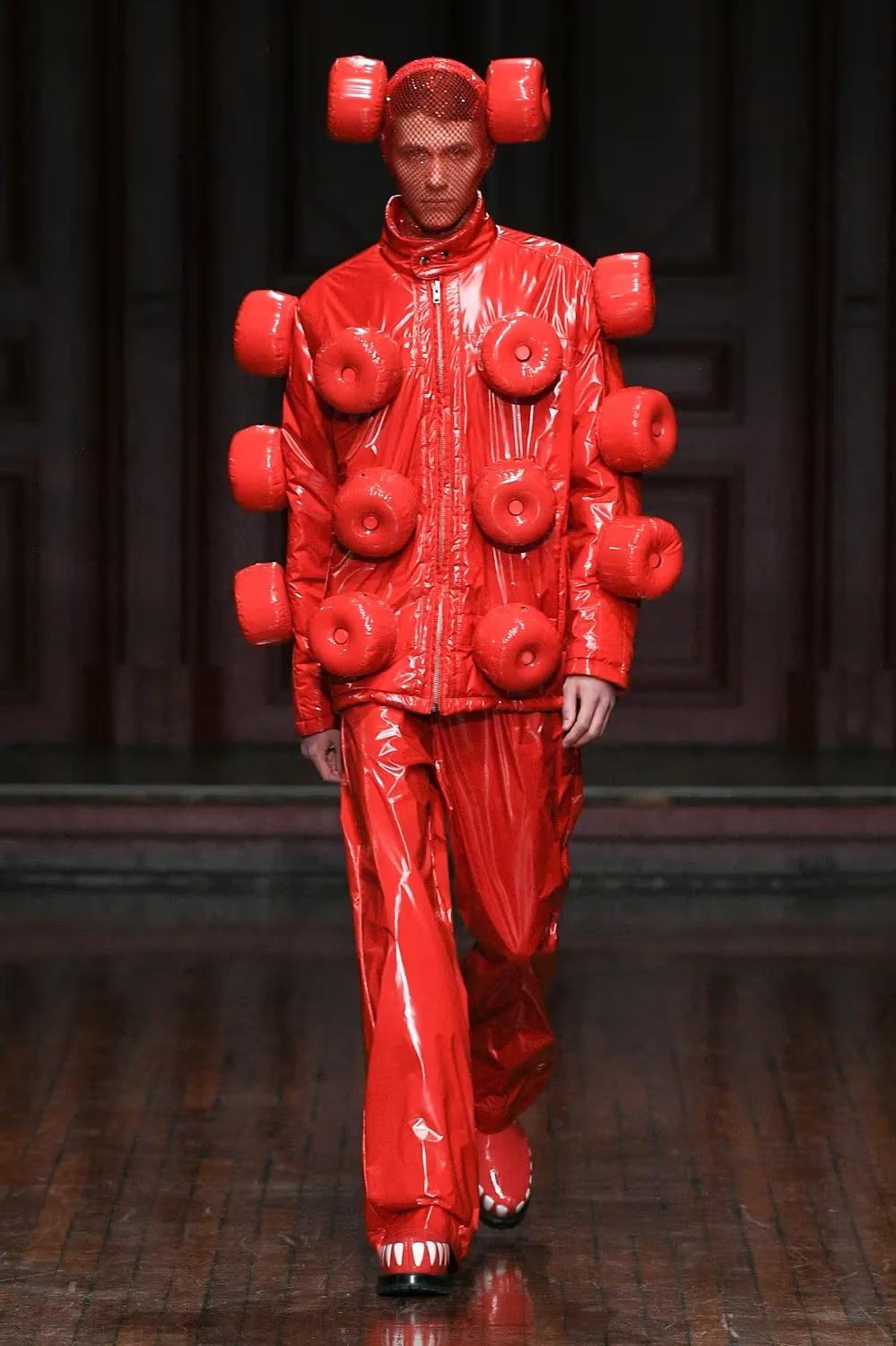
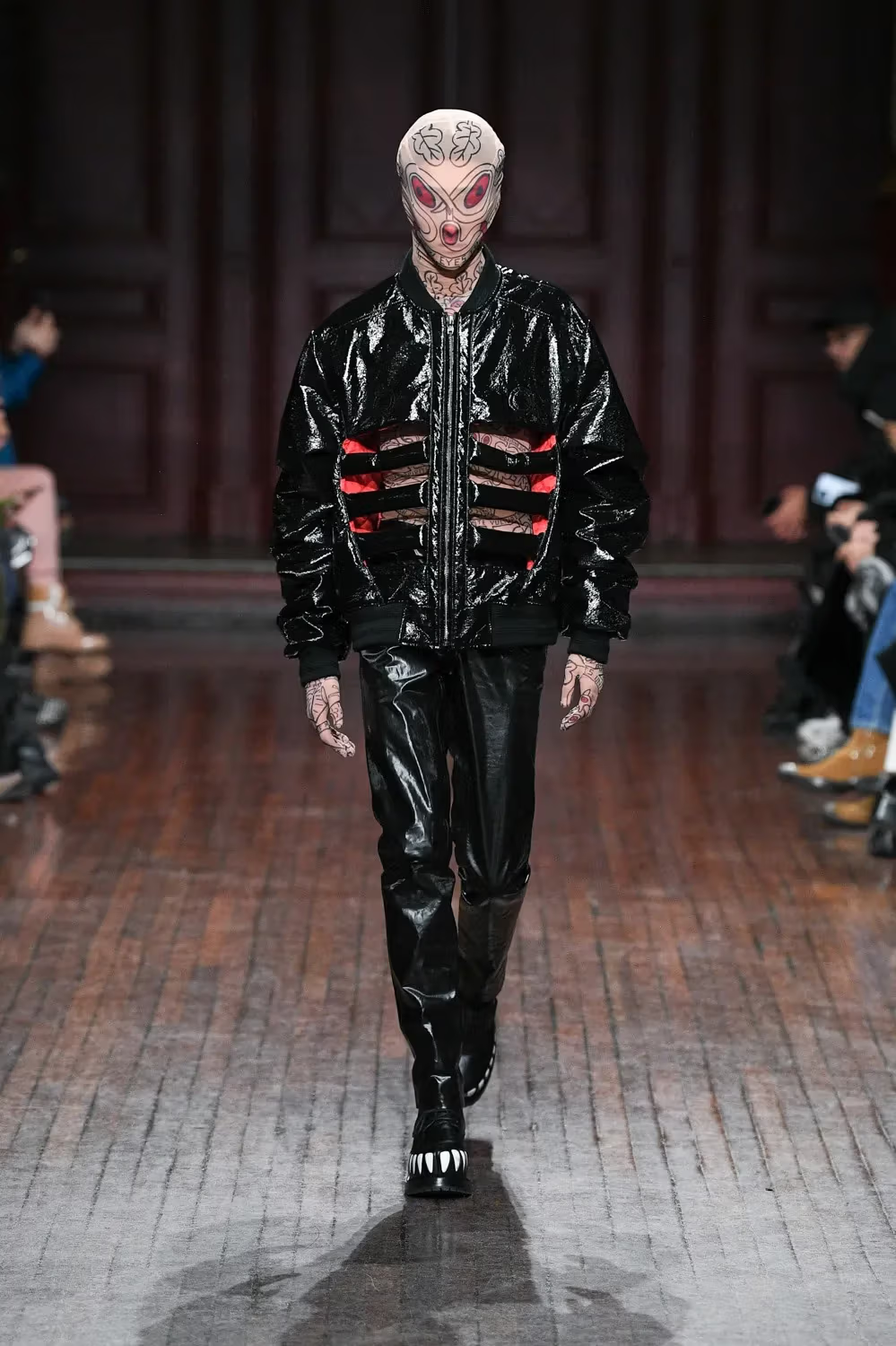
Walter van Beirendonck, by contrast, approaches uniformity with a playful and hyperqueer sensibility. Known for his explosive use of colour, fetish references, and politically charged statements, Van Beirendonck frequently incorporates elements of rubber, leather, and bondage into his collections. His uniforms do not command obedience; they invite liberation. In his hands, the military jacket is no longer a tool of authority but a garment of desire, reframed in neon hues and strapped into queer-coded symbolism. By queering the militarised body, Van Beirendonck dismantles its seriousness, exposing the absurdity and eroticism embedded in its design.
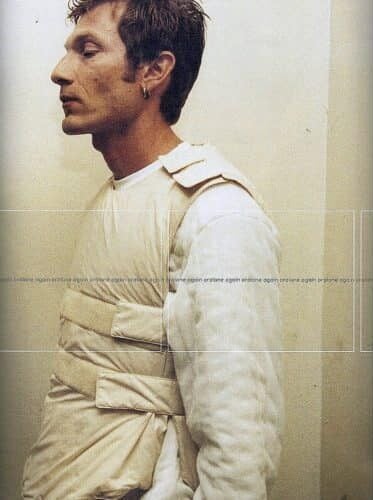
Helmut Lang’s approach is subtler but equally radical. In the 1990s, Lang transformed the aesthetics of police gear, tactical vests, and protective uniforms into high fashion. His work embraced ballistic nylon, harnesses, and body armor, items designed for control and protection, but stripped them of their institutional context. Instead, these garments became sleek, minimal, and erotic. Lang blurred the line between utilitarian gear and fetish wear, collapsing the space between military discipline and queer desire. His reinterpretations of the uniform demonstrated that power could be both seductive and destabilised, authority both mimicked and mocked.
What unites these designers is not only their appropriation of uniforms but their refusal to let uniforms retain their original function. Instead, they queer the codes, injecting kink, vulnerability, irony, or excess into garments designed to suppress individuality. This act of subversion exposes the uniform’s latent erotic charge, long visible in queer nightlife, drag culture, and fetish communities. By dragging uniforms out of barracks and classrooms and into nightclubs and runways, these designers reveal their potential as costumes of pleasure and resistance.
In a contemporary context, queering uniform carries layered political weight. Militarisation increasingly permeates civilian life through police presence, surveillance culture, and the creeping aesthetics of tactical gear in streetwear. To queer the uniform is to resist not only heteronormativity but also authoritarianism itself. It is to strip the uniform of its symbolic authority and reframe it as a suite of fluidity, play, and critique. When Walter van Beirendonck straps a model in neon bondage harnesses, or when Helmut Lang sends a bulletproof vest down the runway, they are not just aesthetic choices; they are acts of cultural sabotage.
Yet the queering of uniforms is not without tension. Once subversive, these gestures risk being co-opted by the very systems they critique. Military aesthetics circulate widely in mainstream fashion; tactical vests and combat boots are sold in malls with no reference to their queer subversions. What was once radical can quickly become diluted. The challenge for avant-garde designers is to keep pushing the uniform into spaces of discomfort, where it cannot be easily absorbed.
Still, in their most powerful iterations, queer uniforms carve out space for alternative identities and narratives. They offer a wardrobe where vulnerability is strength, where desire rewires discipline, and where the very symbols of control become costumes of freedom. They allow us to imagine a future where power is not inherited from institutions but constructed through performance.
In queering the uniform, designers remind us that clothing has always been more than fabric. It is code, language, and power. By rewriting those codes, they reveal new possibilities: not for obedience, but for resistance.
Written by Daria Slikker @daria.18